








Konecranes electric drives and strong local presence support the eco-efficient growth of South America’s ports and terminals
 20/04/26-FR-English-NL-footer
En Amérique du Sud, l’électrification portuaire passe à l’échelle industrielle
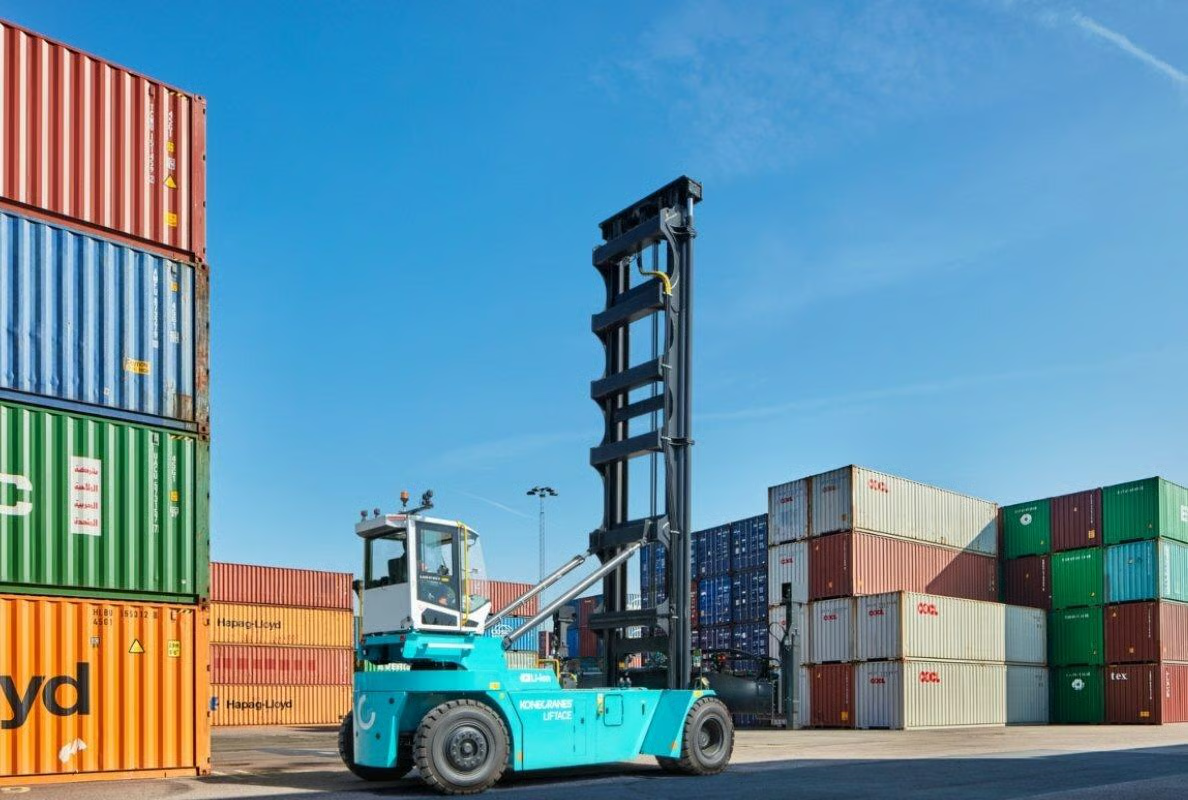
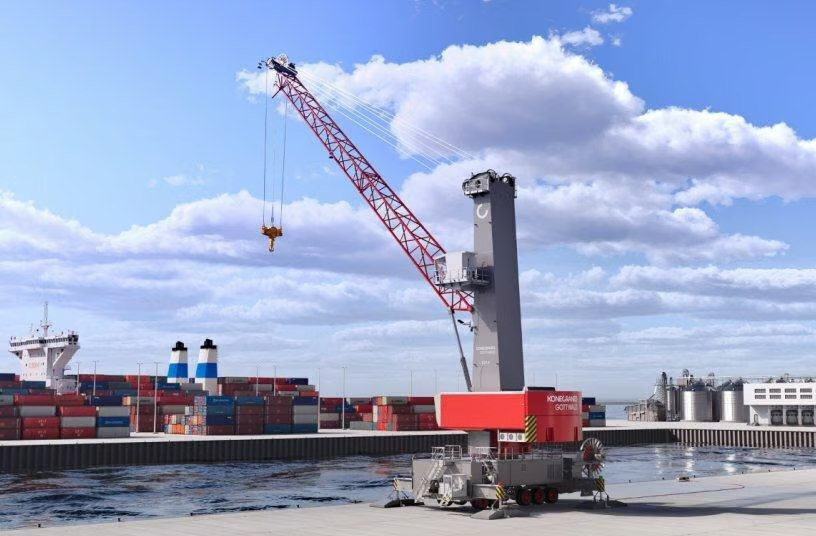 Konecranes E-ACE IMAGE SOURCE: Konecranes-Konecranes Gottwald ESP.4 IMAGE SOURCE: Konecranes
Dans les ports d’Amérique du Sud, la transition énergétique n’est plus une perspective lointaine — elle devient une réalité opérationnelle. À Port of Santos, le plus grand hub maritime du continent, une nouvelle génération d’équipements électriques entre en service, portée par Konecranes.
Là où dominaient encore récemment les motorisations diesel, les terminaux expérimentent désormais des solutions capables de concilier performance industrielle et réduction des émissions, sans compromis sur la productivité.
Des opérations quotidiennes désormais électrifiées
Le signal est fort : pour la première fois en Amérique du Sud, des empty container handlers 100 % électriques opèrent à grande échelle. Deux unités E-ACE assurent désormais les opérations de stockage et de repositionnement des conteneurs vides à Santos.
Ce déploiement dépasse la simple innovation technologique. Il traduit un basculement stratégique des opérateurs portuaires, confrontés à une double pression :
améliorer l’efficacité opérationnelle
répondre aux exigences environnementales des chaînes logistiques mondiales
Avec jusqu’à 16 heures d’autonomie et des cycles de recharge rapides, ces machines démontrent que l’électrique est désormais compatible avec les rythmes intensifs des terminaux.
Performance énergétique et intelligence opérationnelle
L’électrification ne se limite pas à la propulsion. Elle s’accompagne d’une montée en puissance des outils numériques embarqués.
Grâce au système TRUCONNECT® Remote Monitoring, les équipements deviennent des actifs connectés capables de :
remonter des données en temps réel
anticiper les besoins de maintenance
maximiser la disponibilité des machines
Dans un environnement où chaque minute d’immobilisation a un coût, cette approche transforme la maintenance en levier de performance.
Une nouvelle génération de grues portuaires
Sur les quais, la transformation se poursuit avec l’arrivée de la Gottwald ESP.4 Mobile Harbor Crane, nouvelle venue dans la génération 6.
Compacte mais polyvalente, elle s’adresse particulièrement aux ports de taille intermédiaire, avec une promesse claire :
une seule machine pour gérer conteneurs, vrac et marchandises diverses
Son architecture modulaire permet une exploitation :
entièrement électrique
hybride
ou diesel selon les contraintes locales
Une flexibilité essentielle dans une région où les infrastructures et les niveaux de maturité énergétique varient fortement d’un port à l’autre.
Un écosystème local au cœur de la performance
Au-delà des machines, la clé du déploiement réside dans le terrain. Konecranes s’appuie sur un réseau dense de partenaires locaux pour assurer :
disponibilité des pièces
support technique adapté aux conditions régionales
accompagnement des opérateurs dans la montée en compétence
Cette présence de proximité garantit un élément souvent sous-estimé : la continuité opérationnelle.
Une trajectoire claire vers le zéro émission
L’ensemble de ces initiatives s’inscrit dans la stratégie Ecolifting, feuille de route progressive vers des opérations sans émissions à l’échappement.
Plutôt qu’une transition brutale, Konecranes propose une approche par étapes :
diesel optimisé
solutions hybrides
électrification complète
et à terme, intégration de technologies émergentes comme l’hydrogène
Une trajectoire adaptée à la réalité des ports sud-américains, où chaque site avance à son propre rythme.
L’électrification comme nouveau standard portuaire
Ce qui se joue aujourd’hui à Santos dépasse le cadre d’un seul terminal. C’est un changement de paradigme pour toute la logistique portuaire régionale.
L’électrification n’est plus une expérimentation. Elle devient :
un levier de compétitivité
un facteur d’attractivité pour les chaînes logistiques internationales
et un outil concret de décarbonation
Dans cette transformation, Konecranes ne se positionne pas seulement comme fournisseur d’équipements, mais comme architecte de la transition énergétique portuaire.
Et à mesure que les terminaux s’adaptent, une évidence s’impose :
le port du futur est déjà en train de fonctionner — en silence.
NJC.© Info Konecranes
------------------------------------------------------------------------------------------------------------
20/04/26-English
In South America, Port Electrification Goes on an Industrial Scale
Konecranes E-ACE IMAGE SOURCE: Konecranes-Konecranes Gottwald ESP.4 IMAGE SOURCE: Konecranes
In South American ports, the energy transition is no longer a distant prospect—it is becoming an operational reality. At the Port of Santos, the continent's largest maritime hub, a new generation of electric equipment, powered by Konecranes, is entering service.
Where diesel engines recently dominated, terminals are now testing solutions capable of reconciling industrial performance and emissions reduction, without compromising productivity.
Daily Operations Now Electrified
The signal is clear: for the first time in South America, 100% electric empty container handlers are operating on a large scale. Two E-ACE units now handle the storage and repositioning of empty containers in Santos.
This deployment goes beyond mere technological innovation. This reflects a strategic shift for port operators, who are facing a dual pressure:
improving operational efficiency and meeting the environmental requirements of global supply chains.
With up to 16 hours of autonomy and fast charging cycles, these machines demonstrate that electric power is now compatible with the intensive pace of terminal operations.
Energy Performance and Operational Intelligence
Electrification is not limited to propulsion. It is accompanied by a rise in the power of onboard digital tools.
Thanks to the TRUCONNECT® Remote Monitoring system, equipment becomes a connected asset capable of:
referring data in real time,
anticipating maintenance needs, and
maximizing machine availability.
In an environment where every minute of downtime has a cost, this approach transforms maintenance into a performance driver.
A New Generation of Harbor Cranes
On the docks, the transformation continues with the arrival of the Gottwald ESP.4 Mobile Harbor Crane, a new addition to the 6th generation.
Compact yet versatile, it is particularly suited to medium-sized ports, with a clear promise:
a single machine to handle containers, bulk cargo, and general cargo.
Its modular architecture allows for operation:
fully electric
hybrid
or diesel, depending on local constraints.
Essential flexibility in a region where infrastructure and energy maturity levels vary significantly from one port to another.
A Local Ecosystem at the Heart of Performance
Beyond the machines, the key to deployment lies on the ground. Konecranes relies on a dense network of local partners to ensure:
spare parts availability
technical support adapted to regional conditions
operator support in skills development
This local presence guarantees an often underestimated element: operational continuity.
A Clear Path to Zero Emissions
All of these initiatives are part of the Ecolifting strategy, a progressive roadmap towards zero-emission operations.
Rather than a sudden transition, Konecranes proposes a phased approach:
optimized diesel
hybrid solutions
full electrification
and ultimately, the integration of emerging technologies such as hydrogen
A path adapted to the realities of South American ports, where each site progresses at its own pace.
Electrification as the New Port Standard
What is happening today in Santos goes beyond a single terminal. It represents a paradigm shift for the entire regional port logistics sector.
Electrification is no longer an experiment. It is becoming:
a driver of competitiveness
a factor in attracting international supply chains
and a concrete tool for decarbonization
In this transformation, Konecranes is positioning itself not only as an equipment supplier, but as the architect of the port energy transition.
And as terminals adapt, one thing becomes clear:
the port of the future is already operating—silently.
NJC.© Info Konecranes
--------------------------------------------------------------------------------------------------------------
20/04/26-NL
In Zuid-Amerika bereikt de elektrificatie van havens industriële schaal
Konecranes E-ACE IMAGE SOURCE: Konecranes-Konecranes Gottwald ESP.4 IMAGE SOURCE: Konecranes
In Zuid-Amerikaanse havens is de energietransitie geen toekomstmuziek meer, maar een operationele realiteit. In de haven van Santos, de grootste maritieme hub van het continent, wordt een nieuwe generatie elektrische apparatuur, aangedreven door Konecranes, in gebruik genomen.
Waar dieselmotoren tot voor kort de boventoon voerden, testen terminals nu oplossingen die industriële prestaties en emissiereductie combineren, zonder de productiviteit in gevaar te brengen.
Dagelijkse werkzaamheden nu geëlektrificeerd
Het signaal is duidelijk: voor het eerst in Zuid-Amerika zijn 100% elektrische lege-containerhandlers op grote schaal in gebruik. Twee E-ACE-eenheden verzorgen nu de opslag en herpositionering van lege containers in Santos.
Deze inzet gaat verder dan louter technologische innovatie. Het weerspiegelt een strategische verschuiving voor havenexploitanten, die voor een dubbele uitdaging staan:
het verbeteren van de operationele efficiëntie en het voldoen aan de milieueisen van wereldwijde toeleveringsketens.
Met een autonomie tot wel 16 uur en snelle laadcycli bewijzen deze machines dat elektrische aandrijving nu compatibel is met het intensieve tempo van terminalactiviteiten.
Energieprestaties en operationele intelligentie
Elektrificatie beperkt zich niet tot de voortstuwing. Het gaat gepaard met een toename van de mogelijkheden van digitale tools aan boord.
Dankzij het TRUCONNECT® Remote Monitoring-systeem wordt apparatuur een verbonden asset die:
in realtime gegevens kan raadplegen,
onderhoudsbehoeften kan voorspellen en
de beschikbaarheid van de machine kan maximaliseren.
In een omgeving waar elke minuut stilstand geld kost, transformeert deze aanpak onderhoud in een prestatiebevorderende factor.
Een nieuwe generatie havenkranen
Op de kades zet de transformatie zich voort met de komst van de Gottwald ESP.4 mobiele havenkraan, een nieuwe aanwinst voor de 6e generatie.
Compact maar veelzijdig, is deze kraan bijzonder geschikt voor middelgrote havens, met een duidelijke belofte:
één machine voor de behandeling van containers, bulkgoederen en stukgoederen.
De modulaire architectuur maakt de volgende werkingsmogelijkheden mogelijk:
volledig elektrisch
hybride
of diesel, afhankelijk van de lokale omstandigheden.
Essentiële flexibiliteit in een regio waar de infrastructuur en de energievoorziening sterk variëren van haven tot haven.
Een lokaal ecosysteem als kern van de prestaties
Naast de machines ligt de sleutel tot succesvolle inzet op de grond. Konecranes vertrouwt op een dicht netwerk van lokale partners om te zorgen voor:
beschikbaarheid van reserveonderdelen
technische ondersteuning aangepast aan de regionale omstandigheden
ondersteuning van operators bij de ontwikkeling van vaardigheden
Deze lokale aanwezigheid garandeert een vaak onderschat element: operationele continuïteit.
Een duidelijke weg naar nul emissies
Al deze initiatieven maken deel uit van de Ecolifting-strategie, een progressief stappenplan naar emissievrije operaties.
In plaats van een abrupte overgang stelt Konecranes een gefaseerde aanpak voor:
geoptimaliseerde diesel
hybride oplossingen
volledige elektrificatie
en uiteindelijk de integratie van opkomende technologieën zoals waterstof
Een traject aangepast aan de realiteit van Zuid-Amerikaanse havens, waar elke locatie in zijn eigen tempo vooruitgang boekt.
Elektrificatie als de nieuwe havenstandaard
Wat er vandaag in Santos gebeurt, gaat verder dan één enkele terminal. Het vertegenwoordigt een paradigmaverschuiving voor de gehele regionale havenlogistiek.
Elektrificatie is geen experiment meer. Het wordt:
een motor voor concurrentievermogen
een factor in het aantrekken van internationale toeleveringsketens
en een concreet instrument voor decarbonisatie
In deze transformatie positioneert Konecranes zich niet alleen als leverancier van apparatuur, maar als de architect van de energietransitie in de haven.
En naarmate terminals zich aanpassen, wordt één ding duidelijk:
de haven van de toekomst is al in bedrijf – geruisloos.
NJC.© Info Konecranes
------------------------------------------------------------------------------------------------------------
Date de dernière mise à jour : 17/04/2026