















Material price rises could be ‘a real headwind’ to construction activity
 23/03/26-FR-English-NL-footer
Dans l’équilibre fragile des chantiers,
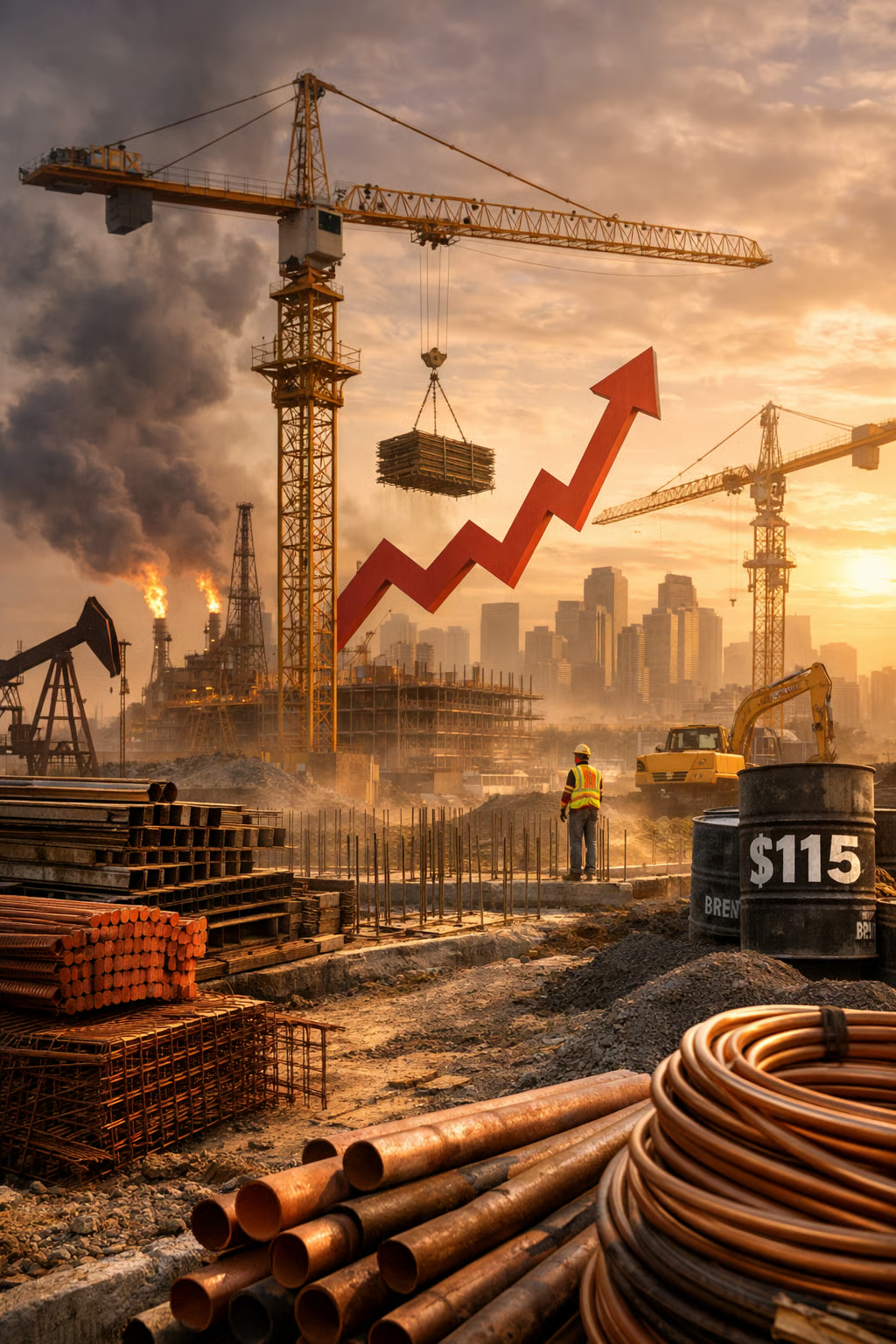 Image-R.E.News©
où chaque coût compte et chaque marge se joue au détail près, une tension monte — silencieuse mais puissante. Aux États-Unis, les prix des matériaux deviennent peu à peu un vent contraire, un véritable “headwind” capable de ralentir l’élan de toute une industrie.
Selon les analyses de Associated Builders and Contractors basées sur les données du Producer Price Index, les coûts des intrants de construction ont progressé de 1,3 % en février, portant la hausse annuelle à 3,1 % — et même 3,7 % pour le non-résidentiel. Une augmentation encore contenue en apparence, mais qui cache une accélération bien plus brutale : sur les deux premiers mois de 2026, la hausse atteint un rythme annualisé de 12,6 %.
Derrière ces chiffres, ce sont des matières premières essentielles qui s’embrasent : pétrole, cuivre, bois, acier. L’énergie, en particulier, imprime sa marque. Le gaz naturel bondit de 10,9 %, les matériaux énergétiques non transformés de 6 %, tandis que le pétrole brut grimpe de 4,7 % — avant même que les tensions géopolitiques ne viennent amplifier le phénomène.
Car depuis, la réalité s’est encore durcie. Le baril de Brent dépasse désormais les 115 dollars, poussé par le conflit au Moyen-Orient. Une onde de choc qui se propage immédiatement : carburant plus cher, transport plus coûteux, chaîne d’approvisionnement sous pression. Chaque hausse de l’énergie se répercute, directement ou indirectement, sur le coût de construire.
Les métaux, eux aussi, racontent cette inflation galopante :
+39,1 % pour l’aluminium,
+20,9 % pour l’acier,
+20 % pour les structures métalliques et armatures,
+15,1 % pour le cuivre et le laiton.
Une montée en puissance qui redéfinit les équations économiques des projets.
Pour les acteurs du secteur, l’inquiétude grandit. Associated General Contractors of America alerte : la hausse des coûts énergétiques et des métaux, déjà amorcée avant le conflit, risque désormais de freiner les décisions d’investissement. Certains maîtres d’ouvrage hésitent, reportent, attendent que la tempête passe.
Et pourtant, sur le terrain, l’optimisme résiste encore. Moins d’un quart des entrepreneurs anticipent une baisse de leurs marges à court terme. Mais cet équilibre est précaire — suspendu à l’évolution des prix.
Ainsi, le secteur avance, mais face au vent.
Un vent invisible, fait de chiffres et de matières premières,
qui pourrait, dans les mois à venir, ralentir le rythme des grues et des ambitions.
Car dans la construction, bâtir ne dépend pas seulement de la volonté —
mais aussi du coût de chaque pierre.
NJC.© Info Associated Builders and Contractors
---------------------------------------------------------------------------------------------------------------
23/03/26-English
In the delicate balance of construction projects,
Image-R.E.News©
where every cost counts and every margin hinges on the smallest detail, a tension is rising—silent but powerful. In the United States, material prices are gradually becoming a headwind, capable of slowing the momentum of an entire industry.
According to analyses by Associated Builders and Contractors based on Producer Price Index data, construction input costs rose 1.3% in February, bringing the annual increase to 3.1%—and even 3.7% for non-residential construction. This increase may still appear contained, but it masks a much more dramatic acceleration: in the first two months of 2026, the rise reached an annualized rate of 12.6%.
Behind these figures, essential raw materials are flaring up: oil, copper, wood, steel. Energy, in particular, is making its mark. Natural gas prices jumped 10.9%, raw energy materials rose 6%, while crude oil climbed 4.7%—even before geopolitical tensions amplified the phenomenon.
Since then, the reality has become even harsher. A barrel of Brent crude now exceeds $115, driven by the conflict in the Middle East. This shockwave spread immediately: more expensive fuel, more costly transportation, and a strained supply chain. Every increase in energy prices impacts, directly or indirectly, the cost of construction.
Metals, too, reflect this runaway inflation:
+39.1% for aluminum,
+20.9% for steel,
+20% for metal structures and reinforcements,
+15.1% for copper and brass.
This surge is redefining the economic equations of projects.
For industry players, the concern is growing. The Associated General Contractors of America warns that rising energy and metal costs, already underway before the conflict, now threaten to dampen investment decisions. Some project owners are hesitating, postponing, waiting for the storm to pass.
And yet, on the ground, optimism still holds. Less than a quarter of contractors anticipate a decline in their margins in the short term. But this balance is precarious—suspended on price fluctuations.
Thus, the sector moves forward, but against the wind.
An invisible wind, made of figures and raw materials,
which could, in the coming months, slow the pace of cranes and ambitions.
Because in construction, building depends not only on willpower—
but also on the cost of each stone.
NJC.© Info Associated Builders and Contractors
-----------------------------------------------------------------------------------------------------------
23/03/26-NL
In de delicate balans van bouwprojecten,
Image-R.E.News©
waar elke kostenpost telt en elke marge afhangt van het kleinste detail, neemt een spanning toe – stil maar krachtig. In de Verenigde Staten vormen materiaalprijzen geleidelijk aan een tegenwind die de groei van een hele sector kan afremmen.
Volgens analyses van Associated Builders and Contractors, gebaseerd op gegevens van de producentenprijsindex, stegen de kosten van bouwmaterialen in februari met 1,3%, waardoor de jaarlijkse stijging uitkomt op 3,1% – en zelfs 3,7% voor niet-residentiële bouw. Deze stijging lijkt misschien nog beperkt, maar verhult een veel dramatischer versnelling: in de eerste twee maanden van 2026 bereikte de stijging een geannualiseerd tempo van 12,6%.
Achter deze cijfers schuilen de stijgende prijzen van essentiële grondstoffen: olie, koper, hout en staal. Vooral energie laat zijn sporen na. De aardgasprijzen stegen met 10,9%, de prijzen van grondstoffen voor energie met 6%, terwijl de prijs van ruwe olie met 4,7% steeg – nog voordat geopolitieke spanningen dit fenomeen versterkten.
Sindsdien is de realiteit nog harder geworden. Een vat Brent-olie kost nu meer dan $115, als gevolg van het conflict in het Midden-Oosten. Deze schokgolf verspreidde zich onmiddellijk: duurdere brandstof, duurder transport en een gespannen toeleveringsketen. Elke stijging van de energieprijzen heeft direct of indirect gevolgen voor de bouwkosten.
Ook metalen weerspiegelen deze ongebreidelde inflatie:
+39,1% voor aluminium,
+20,9% voor staal,
+20% voor metalen constructies en wapening,
+15,1% voor koper en messing.
Deze stijging herdefinieert de economische berekeningen van projecten.
Voor spelers in de sector groeit de bezorgdheid. De Associated General Contractors of America waarschuwt dat de stijgende energie- en metaalkosten, die al vóór het conflict gaande waren, nu een bedreiging vormen voor investeringsbeslissingen. Sommige projecteigenaren aarzelen, stellen projecten uit en wachten tot de storm voorbij is.
En toch heerst er in de praktijk nog steeds optimisme. Minder dan een kwart van de aannemers verwacht op korte termijn een daling van hun marges. Maar dit evenwicht is precair – afhankelijk van prijsschommelingen.
De sector gaat dus vooruit, maar tegen de wind in.
Een onzichtbare wind, bestaande uit cijfers en grondstoffen,
die de komende maanden het tempo van de kranen en de ambities zou kunnen vertragen.
Want in de bouw hangt bouwen niet alleen af van wilskracht –
maar ook van de prijs van elke steen.
NJC.© Info Associated Builders and Contractors
---------------------------------------------------------------------------------------------------------------
Date de dernière mise à jour : 20/03/2026