



Neargrid Redefines Construction Site Power Supply: The End of Kilometers of Cables ?
 14/07/26-FR-English-NL-footer
Neargrid redéfinit l'alimentation électrique des chantiers : la fin des kilomètres de câbles ?
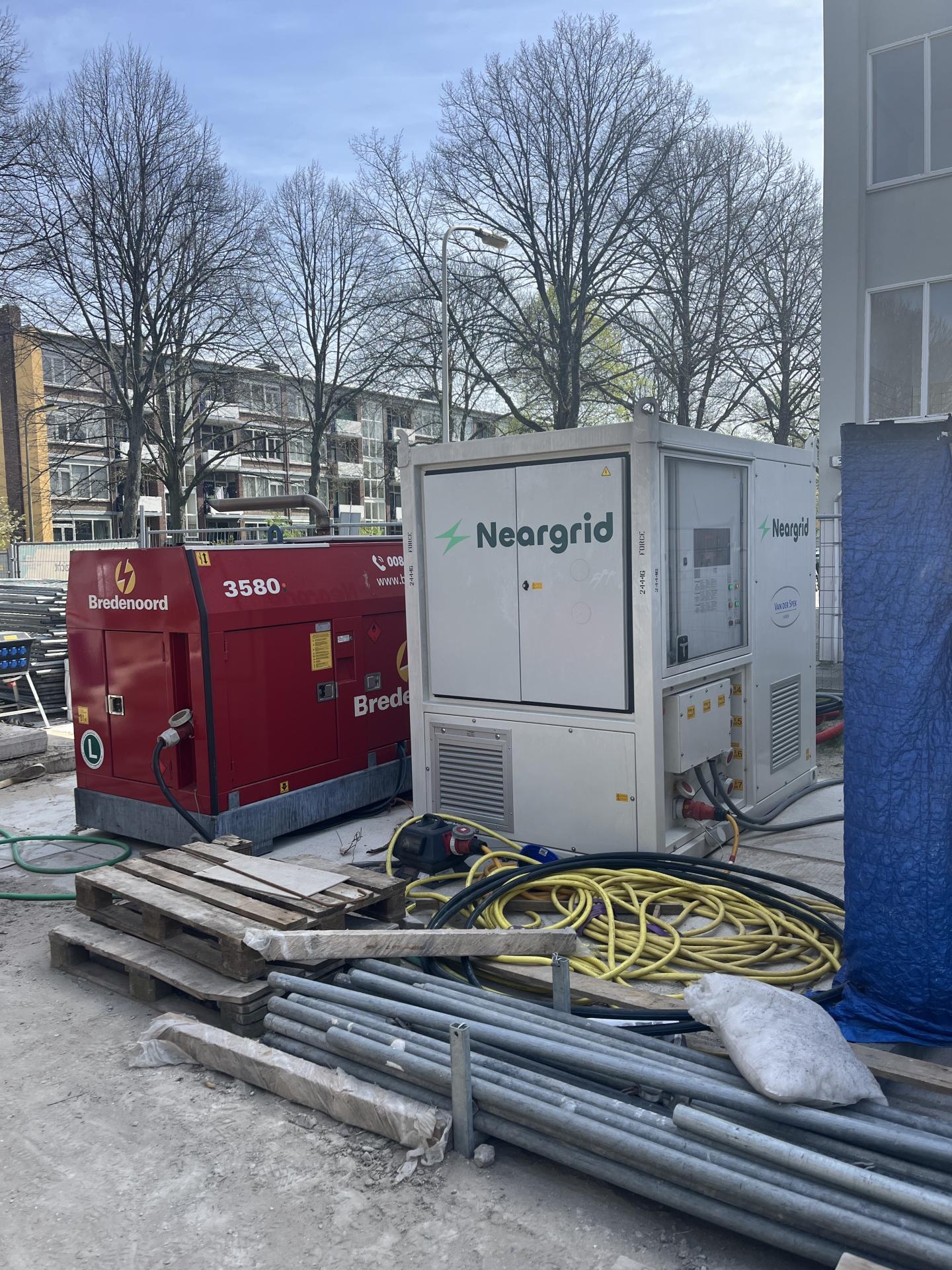
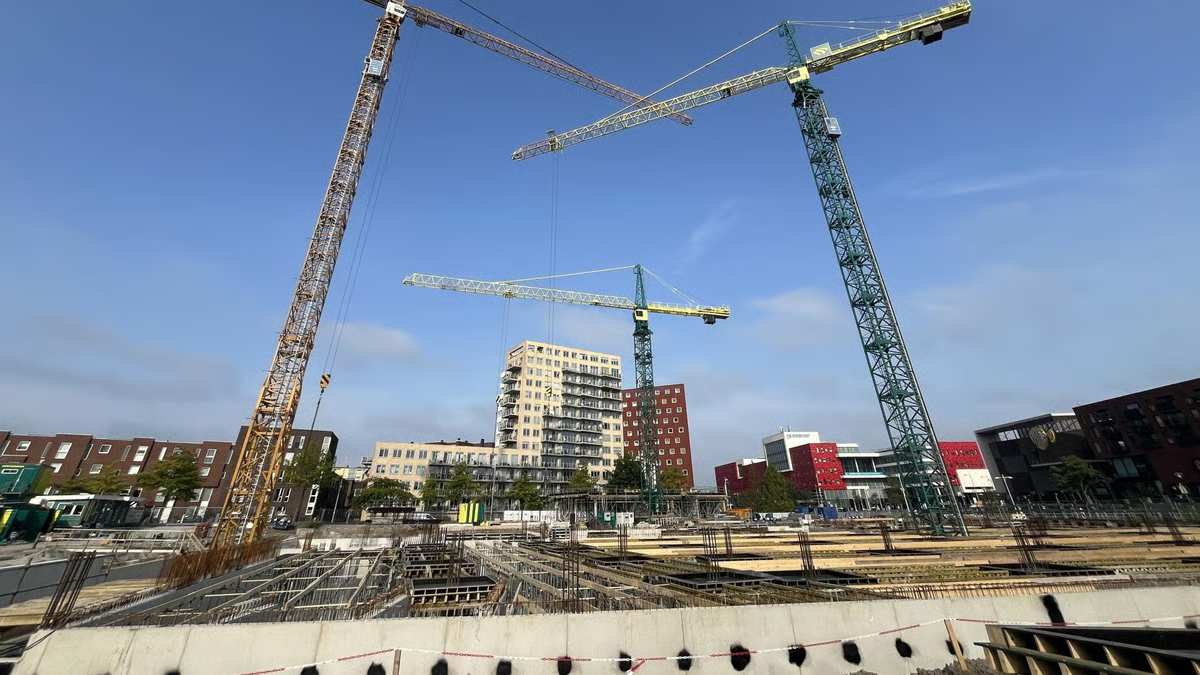
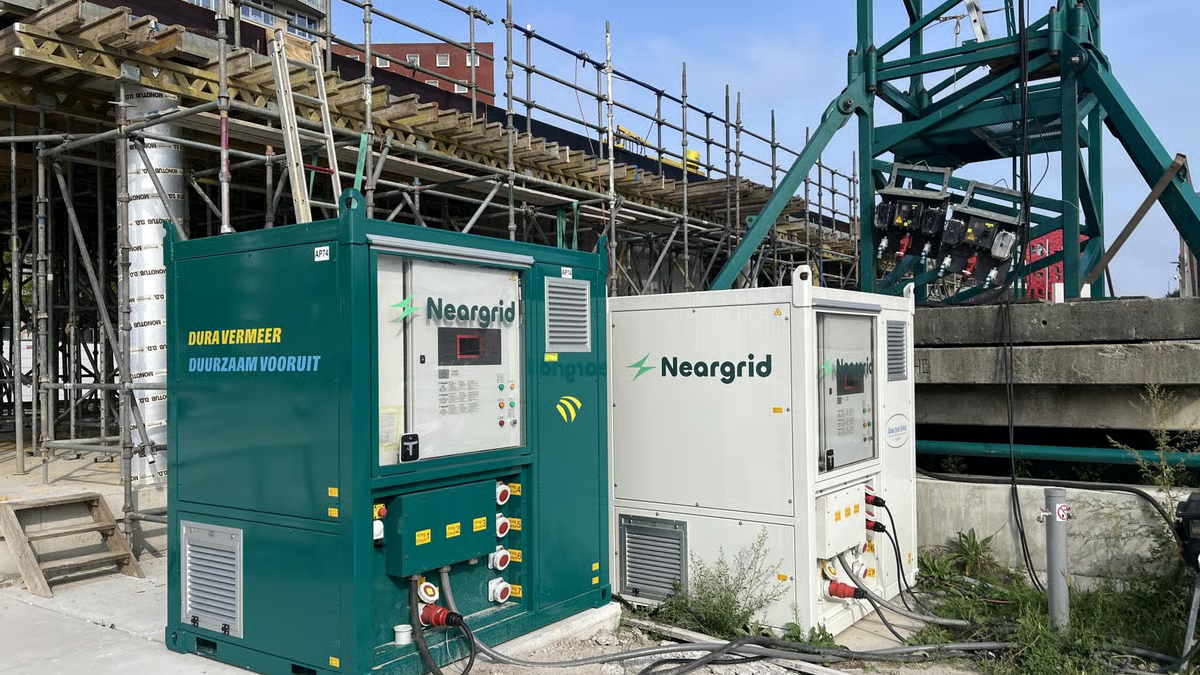 Image- Neargrid

À Beaune, Neargrid ne présentera pas simplement une nouvelle batterie mobile. L'entreprise dévoilera une nouvelle philosophie de l'alimentation électrique des chantiers, où l'énergie se déplace avec les besoins des grues plutôt que d'imposer des infrastructures provisoires coûteuses. Une approche qui séduit déjà les plus grands groupes européens de construction et pourrait rapidement transformer les pratiques sur les chantiers français.
Sur les chantiers urbains, le véritable défi n'est plus de trouver de l'électricité, mais de l'acheminer jusqu'au point où elle est nécessaire. Lorsque le raccordement se situe à plusieurs centaines de mètres des grues, les entreprises doivent encore déployer de longues lignes de câbles, installer des poteaux provisoires, obtenir des autorisations administratives et sécuriser des installations temporaires qui alourdissent considérablement le coût des projets.
C'est précisément ce modèle que Neargrid entend remettre en question. Leader du stockage d'énergie mobile au Benelux, l'entreprise a développé une solution qui rapproche l'énergie des équipements plutôt que l'inverse. Ses batteries intelligentes, installées directement au pied des grues ou des zones de travail, exploitent une alimentation électrique disponible, même limitée, puis délivrent instantanément les fortes puissances nécessaires aux opérations de levage.
Au-delà de la simple alimentation électrique, Neargrid propose une véritable plateforme de gestion énergétique. Son système intelligent analyse les besoins en temps réel, absorbe les pics de consommation et garantit une alimentation continue, limitant les risques d'interruption qui pénalisent la productivité sur les chantiers modernes.
Les bénéfices sont immédiats : réduction des infrastructures temporaires, suppression de nombreux câbles traversant les zones de circulation, diminution des démarches administratives, amélioration de la sécurité et baisse sensible du coût global d'installation.
Cette approche a déjà convaincu plusieurs centaines de chantiers à travers l'Europe. Des groupes majeurs tels que STRABAG, Boskalis, Dura Vermeer, CIT Blaton, Stadsbader, Willemen, Wyckaert, Vandenbussche, Artes Group et Eiffage Belgique utilisent aujourd'hui les solutions Neargrid pour alimenter des hôpitaux, des infrastructures ferroviaires, des immeubles de grande hauteur et des projets urbains particulièrement exigeants.
La technologie démontre également tout son potentiel sur les sites isolés. Associée à un groupe électrogène de faible puissance, la batterie ne sollicite le moteur thermique qu'en cas de besoin, prenant en charge les appels de puissance les plus élevés. Cette gestion hybride permet de réduire significativement la consommation de carburant, les émissions de CO₂, le bruit et les coûts d'exploitation, tout en garantissant une alimentation fiable.
Pour Frank Vermeulen, cette évolution dépasse largement le simple remplacement du diesel : « L'électrification des chantiers ne consiste pas seulement à remplacer un groupe électrogène par une batterie. Il s'agit de rendre l'énergie disponible exactement là où le chantier en a besoin, au moment où il en a besoin. C'est cette approche qui permet aujourd'hui aux plus grands groupes européens de réduire leurs coûts tout en gagnant en flexibilité. »
Au JDL Expo de Beaune, Neargrid entend démontrer que cette vision est déjà une réalité industrielle. Les visiteurs découvriront comment alimenter une ou plusieurs grues avec une puissance réseau limitée, éliminer les longues lignes de câbles, réduire drastiquement le recours au diesel et sécuriser l'approvisionnement électrique grâce à une gestion énergétique intelligente.
À mesure que les exigences économiques, environnementales et réglementaires se renforcent, l'énergie devient un facteur stratégique de compétitivité. Avec ses batteries mobiles, Neargrid ne propose pas seulement une solution technique : l'entreprise ouvre la voie à une nouvelle génération de chantiers où l'électricité est plus proche des machines, plus flexible et nettement plus rentable.
L'avenir de l'alimentation des chantiers ne consiste plus à amener le chantier vers l'énergie. Il consiste désormais à faire venir l'énergie jusqu'au chantier.
NJC.© Info Neargrid via Sandra De Landtsheer
--------------------------------------------------------------------------------------------------------------------
14/07/26-English
Neargrid Redefines Construction Site Power Supply: The End of Kilometers of Cables ?
Image- Neargrid
In Beaune, Neargrid will not simply be presenting a new mobile battery. The company will unveil a new philosophy for construction site power supply, where energy moves with the needs of the cranes rather than imposing costly temporary infrastructure. This approach is already attracting major European construction groups and could quickly transform practices on French construction sites.
On urban construction sites, the real challenge is no longer finding electricity, but getting it to where it's needed. When the connection is located several hundred meters from the cranes, companies still have to deploy long cable lines, install temporary poles, obtain administrative permits, and secure temporary installations, which significantly increases project costs.
It is precisely this model that Neargrid intends to challenge. A leader in mobile energy storage in the Benelux region, the company has developed a solution that brings energy closer to equipment, rather than the other way around. Its smart batteries, installed directly at the base of cranes or work areas, harness available power, even limited power, and then instantly deliver the high power required for lifting operations.
Beyond simply providing power, Neargrid offers a true energy management platform. Its intelligent system analyzes needs in real time, absorbs consumption peaks, and guarantees a continuous power supply, minimizing the risk of interruptions that negatively impact productivity on modern construction sites.
The benefits are immediate: reduced temporary infrastructure, elimination of numerous cables crossing traffic areas, fewer administrative procedures, improved safety, and a significant decrease in overall installation costs.
This approach has already convinced several hundred construction sites across Europe. Major groups such as STRABAG, Boskalis, Dura Vermeer, CIT Blaton, Stadsbader, Willemen, Wyckaert, Vandenbussche, Artes Group, and Eiffage Belgium are currently using Neargrid solutions to power hospitals, railway infrastructure, high-rise buildings, and particularly demanding urban projects.
The technology is also demonstrating its full potential on remote sites. Combined with a low-power generator, the battery only engages the internal combustion engine when needed, handling the highest power demands. This hybrid management system significantly reduces fuel consumption, CO₂ emissions, noise, and operating costs, while ensuring a reliable power supply.
For Frank Vermeulen, this development goes far beyond simply replacing diesel: “Electrifying construction sites is not just about replacing a generator with a battery.” The goal is to make energy available exactly where and when the construction site needs it. This approach is what allows the largest European groups to reduce their costs while gaining flexibility.
At the JDL Expo in Beaune, Neargrid intends to demonstrate that this vision is already an industrial reality. Visitors will discover how to power one or more cranes with limited grid power, eliminate long cable runs, drastically reduce reliance on diesel, and secure the electricity supply through intelligent energy management.
As economic, environmental, and regulatory requirements become more stringent, energy is becoming a strategic factor in competitiveness. With its mobile batteries, Neargrid offers more than just a technical solution: the company is paving the way for a new generation of construction sites where electricity is closer to the machines, more flexible, and significantly more cost-effective.
The future of powering construction sites is no longer about bringing energy to the site. It's about bringing energy to the site.
NJC.© Info Neargrid via Sandra De Landtsheer
-----------------------------------------------------------------------------------------------------------------
14/07/26-NL
Neargrid herdefinieert de stroomvoorziening op bouwplaatsen: het einde van kilometerslange kabels ?
Image- Neargrid
In Beaune presenteert Neargrid niet zomaar een nieuwe mobiele batterij. Het bedrijf onthult een nieuwe filosofie voor de stroomvoorziening op bouwplaatsen, waarbij energie meebeweegt met de behoeften van de kranen in plaats van kostbare tijdelijke infrastructuur op te leggen. Deze aanpak trekt al de aandacht van grote Europese bouwbedrijven en zou de werkwijze op Franse bouwplaatsen snel kunnen veranderen.
Op stedelijke bouwplaatsen is de echte uitdaging niet langer het vinden van elektriciteit, maar het transporteren ervan naar de juiste plek. Wanneer de aansluiting zich honderden meters van de kranen bevindt, moeten bedrijven nog steeds lange kabels uitrollen, tijdelijke masten plaatsen, vergunningen aanvragen en tijdelijke installaties beveiligen, wat de projectkosten aanzienlijk verhoogt.
Precies dit model wil Neargrid uitdagen. Als leider in mobiele energieopslag in de Benelux heeft het bedrijf een oplossing ontwikkeld die energie dichter bij de apparatuur brengt, in plaats van andersom. De slimme accu's, direct aan de voet van kranen of werkterreinen geïnstalleerd, benutten de beschikbare energie, zelfs beperkte energie, en leveren direct het hoge vermogen dat nodig is voor hijswerkzaamheden.
Nabijgrid biedt meer dan alleen stroomvoorziening; het is een compleet energiebeheerplatform. Het intelligente systeem analyseert de behoeften in realtime, absorbeert pieken in het verbruik en garandeert een continue stroomvoorziening. Dit minimaliseert het risico op onderbrekingen die de productiviteit op moderne bouwplaatsen negatief beïnvloeden.
De voordelen zijn direct merkbaar: minder tijdelijke infrastructuur, geen talloze kabels die verkeersdoorlatend zijn, minder administratieve procedures, verbeterde veiligheid en een aanzienlijke verlaging van de totale installatiekosten.
Deze aanpak heeft al honderden bouwplaatsen in heel Europa overtuigd. Grote concerns zoals STRABAG, Boskalis, Dura Vermeer, CIT Blaton, Stadsbader, Willemen, Wyckaert, Vandenbussche, Artes Group en Eiffage Belgium gebruiken momenteel Neargrid-oplossingen voor de stroomvoorziening van ziekenhuizen, spoorweginfrastructuur, hoogbouw en bijzonder veeleisende stedelijke projecten.
De technologie bewijst ook haar volledige potentieel op afgelegen locaties. In combinatie met een generator met laag vermogen schakelt de accu de verbrandingsmotor alleen in wanneer dat nodig is, en levert zo de hoogste stroombehoefte. Dit hybride beheersysteem reduceert het brandstofverbruik, de CO₂-uitstoot, het geluid en de bedrijfskosten aanzienlijk, terwijl een betrouwbare stroomvoorziening gegarandeerd blijft.
Volgens Frank Vermeulen gaat deze ontwikkeling veel verder dan alleen het vervangen van diesel: "Het elektrificeren van bouwplaatsen gaat niet alleen over het vervangen van een generator door een accu." Het doel is om energie beschikbaar te stellen precies waar en wanneer de bouwplaats die nodig heeft. Deze aanpak stelt de grootste Europese concerns in staat hun kosten te verlagen en tegelijkertijd flexibiliteit te winnen.
Op de JDL Expo in Beaune wil Neargrid aantonen dat deze visie al een industriële realiteit is. Bezoekers ontdekken hoe ze één of meerdere kranen kunnen aandrijven met beperkte netstroom, lange kabeltrajecten kunnen elimineren, de afhankelijkheid van diesel drastisch kunnen verminderen en de stroomvoorziening kunnen beveiligen door middel van intelligent energiebeheer.
Naarmate de economische, milieu- en wettelijke eisen strenger worden, wordt energie een strategische factor voor concurrentievermogen. Met zijn mobiele batterijen biedt Neargrid meer dan alleen een technische oplossing: het bedrijf effent de weg voor een nieuwe generatie bouwplaatsen waar elektriciteit dichter bij de machines is, flexibeler en aanzienlijk kosteneffectiever.
De toekomst van de energievoorziening op bouwplaatsen draait niet langer om het aanvoeren van energie naar de bouwplaats. Het draait om het aanvoeren van energie naar de bouwplaats.
NJC.© Info Neargrid via Sandra De Landtsheer
---------------------------------------------------------------------------------------------------------------
Date de dernière mise à jour : 13/07/2026