



Cemex Rethinks the Water Behind Concrete
 17/11/26-FR-English-NL-footer
CEMEX TRANSFORME LES EAUX USÉES EN RESSOURCE STRATÉGIQUE POUR LA PRODUCTION DE BÉTON !
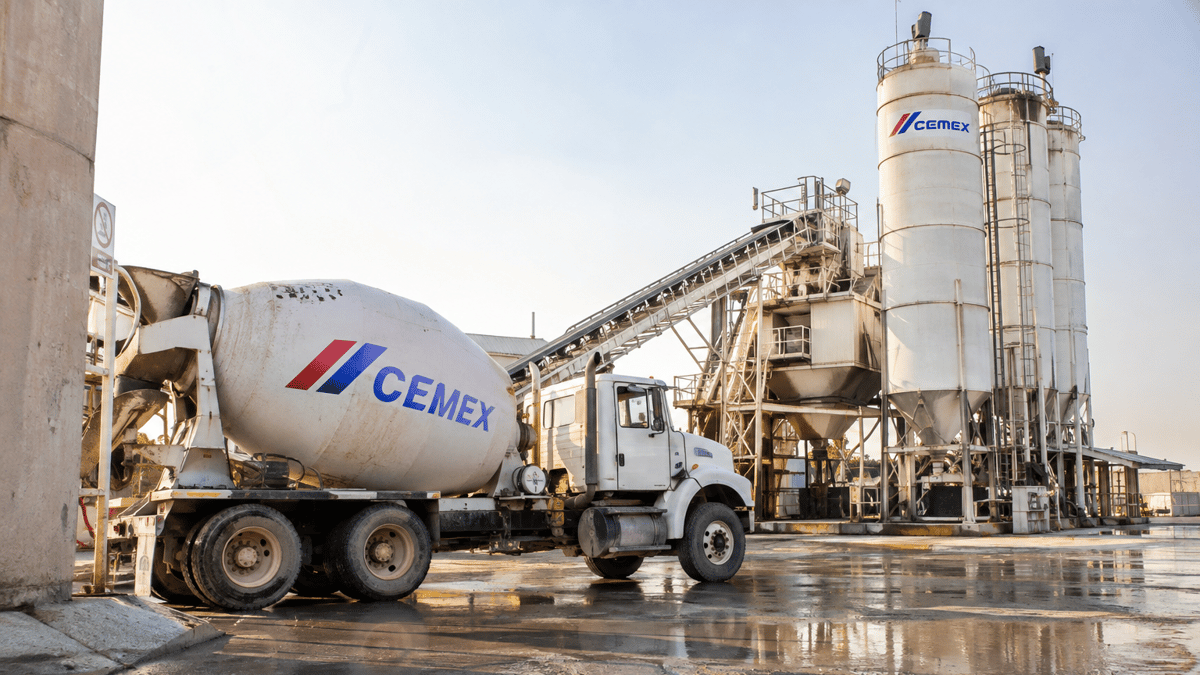 Image-création R.E.News© via IA chat GPT
Au Mexique, le spécialiste du béton prêt à l'emploi remplace 67 % de ses besoins en eau douce par des ressources alternatives. Une démarche industrielle qui pourrait redéfinir la gestion de l'eau dans les centrales à béton.
Dans une centrale à béton, l'eau est aussi indispensable que le ciment et les granulats. Mais faut-il nécessairement puiser dans les réserves d'eau potable pour produire du béton ? Cemex apporte une réponse concrète à cette question au Mexique, où le groupe a franchi une étape importante dans sa stratégie environnementale.
En 2025, ses activités de béton prêt à l'emploi ont remplacé 67 % de leur consommation habituelle d'eau douce par des ressources alternatives. Une évolution qui transforme des eaux autrefois considérées comme des déchets en véritables ressources industrielles.
Des ressources alternatives au cœur de la production
Eaux usées traitées, eaux industrielles, eaux de récupération issues des processus de production et eaux pluviales : Cemex diversifie ses approvisionnements pour réduire la pression sur les réserves d'eau douce.
Cette transformation ne s'improvise pas. Chaque ressource doit être contrôlée, traitée si nécessaire et adaptée aux exigences de fabrication. La composition de l'eau influence en effet l'hydratation du ciment, l'ouvrabilité du béton et les caractéristiques du matériau durci.
L'enjeu consiste donc à intégrer ces nouvelles sources dans les circuits industriels sans compromettre la qualité du béton ni les performances attendues sur les chantiers.
31 centrales certifiées au Mexique
Le programme prend désormais une dimension industrielle. Trente et une centrales à béton de Cemex au Mexique ont obtenu une certification AENOR dans le cadre du référentiel Zero Freshwater and Zero Discharge, consacré à la gestion de l'eau et à la réduction du recours aux ressources conventionnelles.
Cette démarche démontre que la substitution de l'eau douce peut dépasser le stade des projets pilotes pour devenir une composante intégrée de la production quotidienne.
Une réponse aux tensions sur les ressources hydriques
Les centrales à béton sont généralement implantées à proximité des grandes zones urbaines et des marchés de la construction. Elles partagent ainsi les ressources locales avec les populations, l'agriculture et les autres activités industrielles.
En utilisant des eaux traitées ou récupérées pour ses besoins de production, Cemex cherche à préserver les ressources de meilleure qualité pour les usages qui en ont réellement besoin.
Cette stratégie présente également un intérêt opérationnel : diversifier les sources d'approvisionnement permet de limiter la dépendance aux réseaux conventionnels et de mieux anticiper les périodes de sécheresse, les restrictions et les tensions sur l'eau.
Un modèle appelé à franchir les frontières
Fort de cette expérience mexicaine, Cemex commence à déployer des pratiques similaires en France, en Espagne et aux États-Unis. Chaque marché devra toutefois adapter le dispositif à ses infrastructures, à sa réglementation, à ses ressources disponibles et à ses exigences de production.
Cette initiative a également valu à Cemex une cinquième apparition dans le classement Fortune 2026 Change the World, qui distingue les entreprises développant des solutions ayant un impact positif sur la société.
Le béton de demain devra aussi économiser l'eau
Si la décarbonation du ciment et du béton reste au centre des préoccupations de l'industrie, la gestion de l'eau devient progressivement un autre enjeu stratégique.
Avec 67 % de substitution de l'eau douce dans ses activités mexicaines, Cemex démontre qu'une centrale à béton peut repenser en profondeur son approvisionnement sans renoncer à ses exigences de qualité.
L'eau ne disparaît pas de la fabrication du béton : c'est son origine qui change. Et dans une industrie appelée à produire toujours davantage avec des ressources limitées, cette évolution pourrait devenir un véritable avantage environnemental et opérationnel.
NJC.© Info CEMEX
--------------------------------------------------------------------------------------------------------------------
17/11/26-English
CEMEX TRANSFORMS WASTEWATER INTO A STRATEGIC RESOURCE FOR CONCRETE PRODUCTION!
Image-création R.E.News© via IA chat GPT
In Mexico, the ready-mix concrete specialist is replacing 67% of its freshwater requirements with alternative resources—an industrial approach that could redefine water management in concrete plants.
In a concrete plant, water is just as essential as cement and aggregates. But is it truly necessary to draw from potable water reserves to produce concrete? In Mexico, Cemex is providing a concrete answer to this question, marking a significant milestone in the group’s environmental strategy.
By 2025, its ready-mix concrete operations had replaced 67% of their typical freshwater consumption with alternative resources—a shift that transforms what was once considered waste into a valuable industrial resource.
Alternative resources at the heart of production
By utilizing treated wastewater, industrial water, recovered water from production processes, and rainwater, Cemex is diversifying its supply sources to ease the strain on freshwater reserves.
This transformation is not something that can be improvised. Each resource must be monitored, treated if necessary, and adapted to meet manufacturing requirements. The composition of the water directly influences cement hydration, the workability of the concrete, and the properties of the hardened material.
The challenge, therefore, lies in integrating these new sources into industrial processes without compromising the quality of the concrete or the performance expected on construction sites.
31 certified plants in Mexico
The program has now reached an industrial scale. Thirty-one of Cemex’s concrete plants in Mexico have earned AENOR certification under the "Zero Freshwater and Zero Discharge" standard, which focuses on water management and reducing reliance on conventional water resources. This approach demonstrates that the substitution of fresh water can move beyond the pilot-project stage to become an integrated component of daily production.
A response to water resource pressures
Concrete plants are generally located near large urban areas and construction markets. Consequently, they share local water resources with the general population, agriculture, and other industrial activities.
By using treated or reclaimed water for its production needs, Cemex aims to preserve higher-quality water resources for uses that truly require them.
This strategy also offers an operational advantage: diversifying supply sources reduces dependence on conventional utility networks and allows for better preparation for periods of drought, water restrictions, and resource scarcity.
A model destined to cross borders
Building on this experience in Mexico, Cemex has begun implementing similar practices in France, Spain, and the United States. However, each market must adapt the approach to its own infrastructure, regulations, available resources, and production requirements.
This initiative has also earned Cemex a spot—for the fifth time—on the *Fortune* "Change the World" list, which recognizes companies that develop solutions with a positive impact on society.
The concrete of the future must also conserve water
While the decarbonization of cement and concrete remains a primary focus for the industry, water management is increasingly becoming another strategic priority.
With a 67% substitution rate for fresh water in its Mexican operations, Cemex demonstrates that a concrete plant can fundamentally rethink its water sourcing without compromising quality standards.
Water remains an essential part of concrete production; what changes is its source. In an industry tasked with producing ever-greater volumes using limited resources, this shift could become a significant environmental and operational advantage.
NJC.© Info CEMEX
----------------------------------------------------------------------------------------------------------------
17/11/26-NL
CEMEX MAAKT VAN AFVALWATER EEN STRATEGISCHE BRON VOOR BETONPRODUCTIE!
Image-création R.E.News© via IA chat GPT
In Mexico vervangt de specialist in betonmixers 67% van zijn zoetwaterbehoefte door alternatieve bronnen. Deze industriële aanpak zou het waterbeheer in betonfabrieken kunnen herdefiniëren.
In een betonfabriek is water net zo essentieel als cement en toeslagmaterialen. Maar is het echt nodig om drinkwaterreserves aan te spreken voor de productie van beton? Cemex geeft in Mexico een concreet antwoord op deze vraag, waar de groep een belangrijke stap heeft gezet in haar milieustrategie.
Tegen 2025 zal de betonmixer 67% van het gebruikelijke zoetwaterverbruik vervangen door alternatieve bronnen. Deze ontwikkeling transformeert water dat ooit als afval werd beschouwd, in een waardevolle industriële grondstof.
Alternatieve bronnen in het hart van de productie
Behandeld afvalwater, industrieel water, hergebruikt water uit productieprocessen en regenwater: Cemex diversifieert zijn watervoorziening om de druk op zoetwaterreserves te verminderen.
Deze transformatie vereist een zorgvuldige planning. Elke waterbron moet worden gemonitord, indien nodig behandeld en aangepast aan de productievereisten. De samenstelling van het water beïnvloedt de cementhydratatie, de verwerkbaarheid van het beton en de eigenschappen van het uitgeharde materiaal.
De uitdaging ligt daarom in het integreren van deze nieuwe bronnen in industriële processen zonder de betonkwaliteit of de verwachte prestaties op bouwplaatsen in gevaar te brengen.
31 gecertificeerde fabrieken in Mexico
Het programma krijgt nu een industriële dimensie. Eenendertig Cemex-betonfabrieken in Mexico hebben de AENOR-certificering behaald volgens de Zero Freshwater and Zero Discharge-norm, die zich richt op waterbeheer en het verminderen van de afhankelijkheid van conventionele bronnen.
Deze aanpak laat zien dat de vervanging van zoet water verder kan gaan dan pilotprojecten en een geïntegreerd onderdeel van de dagelijkse productie kan worden.
Een antwoord op de druk op waterbronnen
Betonfabrieken bevinden zich over het algemeen in de buurt van grote stedelijke gebieden en bouwmarkten. Ze delen dus lokale waterbronnen met bewoners, de landbouw en andere industriële activiteiten.
Door behandeld of hergebruikt water te gebruiken voor de productie, streeft Cemex ernaar hoogwaardige waterbronnen te behouden voor toepassingen die ze echt nodig hebben.
Deze strategie biedt ook operationele voordelen: het diversifiëren van de leveringsbronnen vermindert de afhankelijkheid van conventionele netwerken en maakt een betere anticipatie op droogte, beperkingen en watertekorten mogelijk.
Een model klaar voor wereldwijde expansie
Voortbouwend op deze Mexicaanse ervaring begint Cemex soortgelijke praktijken te implementeren in Frankrijk, Spanje en de Verenigde Staten. Elke markt zal het systeem echter moeten aanpassen aan de eigen infrastructuur, regelgeving, beschikbare middelen en productievereisten.
Dit initiatief leverde Cemex ook zijn vijfde vermelding op in de Fortune 2026 Change the World-ranking, die bedrijven erkent die oplossingen ontwikkelen met een positieve impact op de samenleving.
Het beton van de toekomst zal ook water moeten besparen.
Hoewel het koolstofvrij maken van cement en beton een centrale zorg blijft voor de industrie, wordt waterbeheer geleidelijk aan een andere strategische kwestie.
Met 67% zoetwatervervanging in de Mexicaanse activiteiten laat Cemex zien dat een betonfabriek de watervoorziening fundamenteel kan herzien zonder de kwaliteitsnormen in gevaar te brengen.
Water verdwijnt niet uit de betonproductie; de bron verandert. En in een industrie die steeds meer moet produceren met beperkte middelen, zou deze ontwikkeling een echt milieu- en operationeel voordeel kunnen opleveren.
NJC.© Info CEMEX
-------------------------------------------------------------------------------------------------------------------
Date de dernière mise à jour : 16/11/2026