



HITACHI Nine Startups Selected for the Pitch Event of LANDCROS Innovation Studios Challenge Europe 2026
 27/11/26-FR-English-NL-footer
HITACHI MISE SUR L’INNOVATION : NEUF STARTUPS POUR DESSINER LES CHANTIERS ET MINES DE DEMAIN
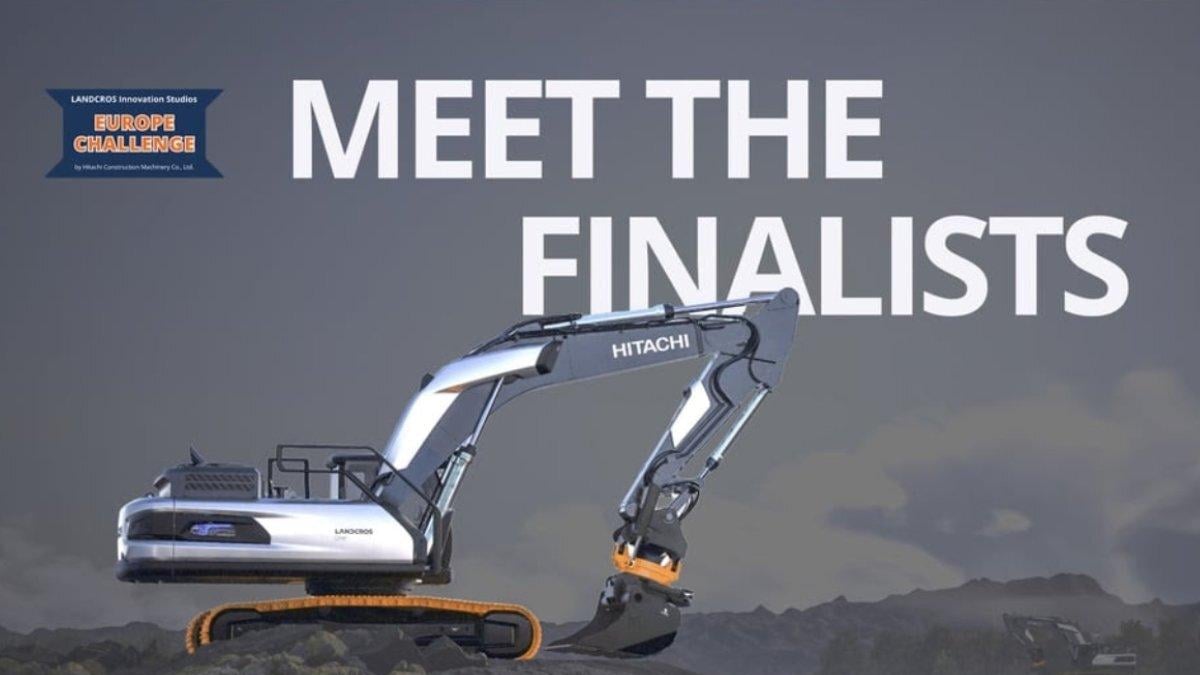 Nine Startups Selected for the Pitch Event of LANDCROS Innovation Studios Challenge Europe 2026 IMAGE SOURCE: Hitachi
139 candidatures, neuf finalistes et trois grandes thématiques technologiques : Hitachi Construction Machinery accélère sa stratégie d'innovation en associant son expertise industrielle aux nouvelles technologies développées par des startups internationales.
L'avenir des chantiers et des exploitations minières se dessine aussi dans les laboratoires des jeunes entreprises technologiques. Avec le programme LANDCROS Innovation Studios Challenge Europe 2026, Hitachi Construction Machinery franchit une nouvelle étape dans sa stratégie de transformation numérique et d'automatisation.
Sur les 139 candidatures reçues, neuf startups ont été sélectionnées pour présenter leurs solutions le 3 décembre 2026, au siège de Hitachi Construction Machinery (Europe) N.V., à Amsterdam.
Le programme s'articule autour de trois axes stratégiques : les opérations autonomes, l'intelligence et la planification des chantiers, ainsi que l'optimisation du cycle de vie des équipements.
Trois défis technologiques pour transformer les chantiers
Les neuf entreprises retenues proposent des innovations concrètes destinées à améliorer la productivité, la sécurité, la gestion des équipements et la prise de décision.
1. Opérations autonomes : vers des machines sans conducteur
L'automatisation des engins constitue l'un des principaux axes de développement. Trois startups proposent des technologies permettant de faire évoluer les machines existantes vers des systèmes téléopérés ou autonomes.
Startup – Pays Technologie proposée Application concrète
Hive Autonomy – Norvège Intelligence artificielle physique (Physical AI) adaptable aux chargeuses sur pneus existantes. Automatisation des chargeuses avec supervision à distance, sans conducteur à bord.
Flywheel AI – États-Unis Kit de rétrofit installable en quelques heures sur différentes pelles hydrauliques. Passage progressif de la téléopération à l'autonomie complète.
GoodAI – République tchèque Drones autonomes pour inspection intérieure et cartographie 3D sans GPS. Inspection de bâtiments, tunnels et espaces industriels sans pilote ni infrastructure de communication.
L'enjeu : accélérer l'automatisation sans devoir remplacer intégralement les parcs de machines existants, tout en ouvrant de nouvelles possibilités pour les interventions dans les environnements difficiles ou dangereux.
2. Site Intelligence & Planning : le chantier piloté par les données
La deuxième catégorie concerne la collecte et l'exploitation intelligente des données. L'objectif est de mieux anticiper les opérations, de visualiser les contraintes et d'optimiser l'organisation des chantiers et carrières.
Startup – Pays Technologie proposée Application concrète
abaut – Allemagne Intelligence artificielle physique associant données des machines, caméras et capteurs. Optimisation des opérations sur les chantiers et dans les carrières.
EarthVisio – Irlande Modélisation actualisée des infrastructures souterraines à partir des plans, relevés et données de chantier. Meilleure connaissance des réseaux enterrés et réduction des incertitudes lors des travaux.
BII GmbH – Allemagne Simulation 4D des séquences de construction, des machines et de la logistique à partir de données BIM/CAD. Comparaison et optimisation des scénarios de chantier avant le démarrage des travaux.
L'enjeu : passer d'une gestion réactive à une planification prédictive, grâce à une vision numérique plus précise des opérations et de leur environnement.
3. Life-cycle Decision Intelligence : mieux gérer les machines sur toute leur durée de vie
Le troisième axe concerne la rentabilité des équipements. Les startups sélectionnées développent des solutions d'intelligence artificielle capables de croiser les données techniques, financières et opérationnelles pour améliorer les décisions d'investissement et d'exploitation.
Startup – Pays Technologie proposée Application concrète
Leasi – Norvège IA intégrant données des équipements, télématique, location et maintenance. Optimisation de l'affectation des machines et de leur taux d'utilisation.
DATFID – Allemagne Analyses prédictives et recommandations concernant le coût total de possession (TCO), la valeur résiduelle et la maintenance. Décisions plus précises sur l'entretien, le renouvellement et le remplacement des machines.
Konstruq – Australie Analyses IA et tableaux de bord intégrant des données de construction dispersées. Centralisation des informations pour améliorer les décisions opérationnelles et stratégiques.
L'enjeu : exploiter les données tout au long du cycle de vie des machines afin de réduire les coûts, anticiper les besoins de maintenance et améliorer la rentabilité des flottes.
Trois lauréats attendus le 3 décembre à Amsterdam
À l'issue de la présentation des neuf projets, un lauréat sera désigné dans chacune des trois catégories. Hitachi Construction Machinery engagera ensuite des discussions en vue d'éventuelles collaborations.
Les trois startups gagnantes auront également la possibilité de présenter leurs innovations sur le stand Hitachi Construction Machinery lors d'INTERMAT 2027, organisé à Paris en avril 2027.
Le programme bénéficie du soutien de quatre partenaires industriels majeurs :
- CRH, groupe international spécialisé dans les matériaux de construction.
- Ferrovial, acteur international des infrastructures et de la construction.
- Loxam, spécialiste européen de la location de matériels.
- Leonard (VINCI), plateforme d'innovation du groupe VINCI.
LANDCROS : une plateforme mondiale de co-innovation
Avec LANDCROS Innovation Studios, Hitachi Construction Machinery souhaite dépasser le cadre traditionnel de la recherche et développement en associant constructeurs, clients, startups et acteurs industriels.
Cette initiative s'inscrit dans la continuité des programmes lancés en 2024 autour des machines connectées et en 2025 autour des défis technologiques du secteur minier.
Pour Hitachi, l'objectif est clair : accélérer le développement de solutions associant intelligence artificielle, automatisation, télématique et exploitation des données.
Cette sélection illustre une évolution majeure du secteur : la prochaine génération de machines ne se distinguera plus uniquement par sa puissance, ses performances hydrauliques ou sa capacité de production. L'intelligence embarquée, l'autonomie, la connectivité et la gestion prédictive deviendront des facteurs déterminants de compétitivité.
L'association entre les grands constructeurs et les startups pourrait ainsi accélérer considérablement la transformation des chantiers, des carrières et des mines. Le rendez-vous d'Amsterdam sera une première étape concrète vers cette nouvelle génération d'équipements intelligents.
NJC.© Info Hitachi
-------------------------------------------------------------------------------------------------------------------
27/11/26-English
HITACHI BETS ON INNOVATION: NINE STARTUPS TO SHAPE THE CONSTRUCTION SITES AND MINING AREAS OF TOMORROW
Nine Startups Selected for the Pitch Event of LANDCROS Innovation Studios Challenge Europe 2026 IMAGE SOURCE: Hitachi
139 applications, nine finalists, and three major technological themes: Hitachi Construction Machinery is accelerating its innovation strategy by combining its industrial expertise with new technologies developed by international startups.
The future of construction sites and mining operations is also being shaped in the laboratories of young technology companies. With the LANDCROS Innovation Studios Challenge Europe 2026 program, Hitachi Construction Machinery is taking another step in its digital transformation and automation strategy.
Of the 139 applications received, nine startups were selected to present their solutions on December 3, 2026, at the headquarters of Hitachi Construction Machinery (Europe) N.V. in Amsterdam.
The program is structured around three strategic pillars: autonomous operations, intelligent site planning, and equipment lifecycle optimization. Three Technological Challenges to Transform Construction Sites
The nine selected companies offer concrete innovations designed to improve productivity, safety, equipment management, and decision-making.
1. Autonomous Operations: Towards Driverless Machines
Automation of machinery is one of the main areas of development. Three startups offer technologies that enable existing machines to evolve into remotely operated or autonomous systems.
Startup – Country | Technology Offered | Concrete Application
Hive Autonomy – Norway: Physical AI adaptable to existing wheel loaders. Loader automation with remote supervision, without an onboard operator.
Flywheel AI – United States: Retrofit kit installable in a few hours on various hydraulic excavators. Gradual transition from remote operation to full autonomy.
GoodAI – Czech Republic: Autonomous drones for indoor inspection and 3D mapping without GPS. Inspection of buildings, tunnels, and industrial spaces without a pilot or communication infrastructure.
The challenge: to accelerate automation without having to completely replace existing machine fleets, while opening up new possibilities for operations in difficult or hazardous environments.
2. Site Intelligence & Planning: the data-driven construction site
The second category concerns the intelligent collection and use of data. The goal is to better anticipate operations, visualize constraints, and optimize the organization of construction sites and quarries.
Startup – Country | Technology offered | Concrete application
abaut – Germany: Physical artificial intelligence combining data from machines, cameras, and sensors. Optimization of operations on construction sites and in quarries.
EarthVisio – Ireland: Updated modeling of underground infrastructure based on plans, surveys, and site data. Improved understanding of buried networks and reduced uncertainties during construction.
BII GmbH – Germany: 4D simulation of construction sequences, machines, and logistics using BIM/CAD data. Comparison and optimization of construction scenarios before work begins.
The challenge: to move from reactive management to predictive planning, thanks to a more precise digital view of operations and their environment.
3. Lifecycle Decision Intelligence: better managing machines throughout their entire lifespan
The third focus area concerns equipment profitability. The selected startups are developing artificial intelligence solutions capable of combining technical, financial, and operational data to improve investment and operating decisions.
Startup – Country | Technology Offered | Concrete Application
Leasi – Norway: AI integrating equipment data, telematics, leasing, and maintenance. Optimization of machine allocation and utilization rates.
DATFID – Germany: Predictive analytics and recommendations regarding total cost of ownership (TCO), residual value, and maintenance. More precise decisions on machine maintenance, renewal, and replacement.
Konstruq – Australia: AI analytics and dashboards integrating dispersed construction data. Centralization of information to improve operational and strategic decisions.
The challenge: to leverage data throughout the machine lifecycle to reduce costs, anticipate maintenance needs, and improve fleet profitability.
Three winners expected on December 3 in Amsterdam
Following the presentation of the nine projects, one winner will be selected in each of the three categories. Hitachi Construction Machinery will then initiate discussions regarding potential collaborations.
The three winning startups will also have the opportunity to showcase their innovations at the Hitachi Construction Machinery booth during INTERMAT 2027, held in Paris in April 2027.
The program is supported by four major industrial partners:
- CRH, an international group specializing in construction materials.
- Ferrovial, an international player in infrastructure and construction.
- Loxam, a European specialist in equipment rental.
- Leonard (VINCI), the VINCI Group's innovation platform.
LANDCROS: A Global Co-Innovation Platform
With LANDCROS Innovation Studios, Hitachi Construction Machinery aims to go beyond the traditional framework of research and development by bringing together manufacturers, customers, startups, and industry players.
This initiative follows on from programs launched in 2024 focusing on connected machines and in 2025 addressing the technological challenges of the mining sector.
For Hitachi, the objective is clear: to accelerate the development of solutions combining artificial intelligence, automation, telematics, and data analytics.
This selection illustrates a major shift in the sector: the next generation of machines will no longer be distinguished solely by their power, hydraulic performance, or production capacity. Embedded intelligence, autonomy, connectivity, and predictive management will become key drivers of competitiveness.
The partnership between major manufacturers and startups could thus significantly accelerate the transformation of construction sites, quarries, and mines. The Amsterdam event will be a first concrete step towards this new generation of smart equipment.
NJC.© Info Hitachi
-----------------------------------------------------------------------------------------------------------------------
27/11/26-NL
HITACHI ZET IN OP INNOVATIE: NEGEN STARTUPS GEVEN VORM AAN DE BOUWPLAATSEN EN MIJNBOUWGEBIEDEN VAN DE TOEKOMST
Nine Startups Selected for the Pitch Event of LANDCROS Innovation Studios Challenge Europe 2026 IMAGE SOURCE: Hitachi
139 aanmeldingen, negen finalisten en drie belangrijke technologische thema's: Hitachi Construction Machinery versnelt zijn innovatiestrategie door zijn industriële expertise te combineren met nieuwe technologieën ontwikkeld door internationale startups.
De toekomst van bouwplaatsen en mijnbouwactiviteiten wordt ook vormgegeven in de laboratoria van jonge technologiebedrijven. Met het LANDCROS Innovation Studios Challenge Europe 2026-programma zet Hitachi Construction Machinery een volgende stap in zijn digitale transformatie- en automatiseringsstrategie.
Van de 139 ontvangen aanmeldingen zijn negen startups geselecteerd om hun oplossingen te presenteren op 3 december 2026 op het hoofdkantoor van Hitachi Construction Machinery (Europe) N.V. in Amsterdam.
Het programma is gestructureerd rond drie strategische pijlers: autonome bedrijfsvoering, intelligente locatieplanning en optimalisatie van de levenscyclus van apparatuur. Drie technologische uitdagingen voor de transformatie van bouwplaatsen
De negen geselecteerde bedrijven bieden concrete innovaties die zijn ontworpen om de productiviteit, veiligheid, het beheer van materieel en de besluitvorming te verbeteren.
1. Autonome operaties: Op weg naar zelfrijdende machines
Automatisering van machines is een van de belangrijkste ontwikkelingsgebieden. Drie startups bieden technologieën die het mogelijk maken om bestaande machines te laten evolueren naar op afstand bediende of autonome systemen.
Startup – Land | Aangeboden technologie | Concrete toepassing
Hive Autonomy – Noorwegen: Fysieke AI aanpasbaar aan bestaande wielladers. Automatisering van de lader met bewaking op afstand, zonder operator aan boord.
Flywheel AI – Verenigde Staten: Retrofitkit die in enkele uren op diverse hydraulische graafmachines kan worden geïnstalleerd. Geleidelijke overgang van bediening op afstand naar volledige autonomie.
GoodAI – Tsjechië: Autonome drones voor inspectie binnenshuis en 3D-mapping zonder GPS. Inspectie van gebouwen, tunnels en industriële ruimtes zonder piloot of communicatie-infrastructuur.
De uitdaging: automatisering versnellen zonder de bestaande machineparken volledig te hoeven vervangen, en tegelijkertijd nieuwe mogelijkheden creëren voor werkzaamheden in moeilijke of gevaarlijke omgevingen.
2. Site Intelligence & Planning: de datagestuurde bouwplaats
De tweede categorie betreft het intelligent verzamelen en gebruiken van data. Het doel is om werkzaamheden beter te voorspellen, beperkingen te visualiseren en de organisatie van bouwplaatsen en steengroeven te optimaliseren.
Startup – Land | Aangeboden technologie | Concrete toepassing
abaut – Duitsland: Fysieke kunstmatige intelligentie die data van machines, camera's en sensoren combineert. Optimalisatie van werkzaamheden op bouwplaatsen en in steengroeven.
EarthVisio – Ierland: Geactualiseerde modellering van ondergrondse infrastructuur op basis van plannen, metingen en locatiegegevens. Verbeterd inzicht in ondergrondse netwerken en minder onzekerheden tijdens de bouw.
BII GmbH – Duitsland: 4D-simulatie van bouwprocessen, machines en logistiek met behulp van BIM/CAD-data. Vergelijking en optimalisatie van bouwscenario's vóór aanvang van de werkzaamheden.
De uitdaging: overstappen van reactief beheer naar voorspellende planning, dankzij een nauwkeuriger digitaal beeld van werkzaamheden en hun omgeving.
3. Lifecycle Decision Intelligence: beter beheer van machines gedurende hun gehele levensduur
Het derde aandachtsgebied betreft de winstgevendheid van apparatuur. De geselecteerde startups ontwikkelen oplossingen met kunstmatige intelligentie die technische, financiële en operationele data combineren om investerings- en operationele beslissingen te verbeteren.
Startup – Land | Aangeboden technologie | Concrete toepassing
Leasi – Noorwegen: AI die apparatuurdata, telematica, leasing en onderhoud integreert. Optimalisatie van machineallocatie en benutting.
DATFID – Duitsland: Voorspellende analyses en aanbevelingen met betrekking tot de totale eigendomskosten (TCO), restwaarde en onderhoud. Nauwkeurigere beslissingen over machineonderhoud, vernieuwing en vervanging.
Konstruq – Australië: AI-analyses en dashboards die verspreide bouwdata integreren. Centralisatie van informatie om operationele en strategische beslissingen te verbeteren.
The challenge: to leverage data throughout the machine lifecycle to reduce costs, anticipate maintenance needs, and improve fleet profitability.
Three winners expected on December 3 in Amsterdam
Following the presentation of the nine projects, one winner will be selected in each of the three categories. Hitachi Construction Machinery will then initiate discussions regarding potential collaborations.
The three winning startups will also have the opportunity to showcase their innovations at the Hitachi Construction Machinery booth during INTERMAT 2027, held in Paris in April 2027.
The program is supported by four major industrial partners:
- CRH, an international group specializing in construction materials.
- Ferrovial, an international player in infrastructure and construction.
- Loxam, a European specialist in equipment rental.
- Leonard (VINCI), the VINCI Group's innovation platform.
LANDCROS: A Global Co-Innovation Platform
With LANDCROS Innovation Studios, Hitachi Construction Machinery aims to go beyond the traditional framework of research and development by bringing together manufacturers, customers, startups, and industry players.
This initiative follows on from programs launched in 2024 focusing on connected machines and in 2025 addressing the technological challenges of the mining sector.
For Hitachi, the objective is clear: to accelerate the development of solutions combining artificial intelligence, automation, telematics, and data analytics.
This selection illustrates a major shift in the sector: the next generation of machines will no longer be distinguished solely by their power, hydraulic performance, or production capacity. Embedded intelligence, autonomy, connectivity, and predictive management will become key drivers of competitiveness.
The partnership between major manufacturers and startups could thus significantly accelerate the transformation of construction sites, quarries, and mines. The Amsterdam event will be a first concrete step towards this new generation of smart equipment.
NJC.© Info Hitachi
-------------------------------------------------------------------------------------------------------------------------
Date de dernière mise à jour : 26/11/2026