



R.E.News future Technology-Humanoids Summit 2026 Brings Tesla Optimus and Industrial Robotics to Silicon Valley
 26/11/26-FR-English-NL-footer
HUMANOID ROBOTS : TESLA OPTIMUS ET L’IA PHYSIQUE À LA CONQUÊTE DE L’INDUSTRIE
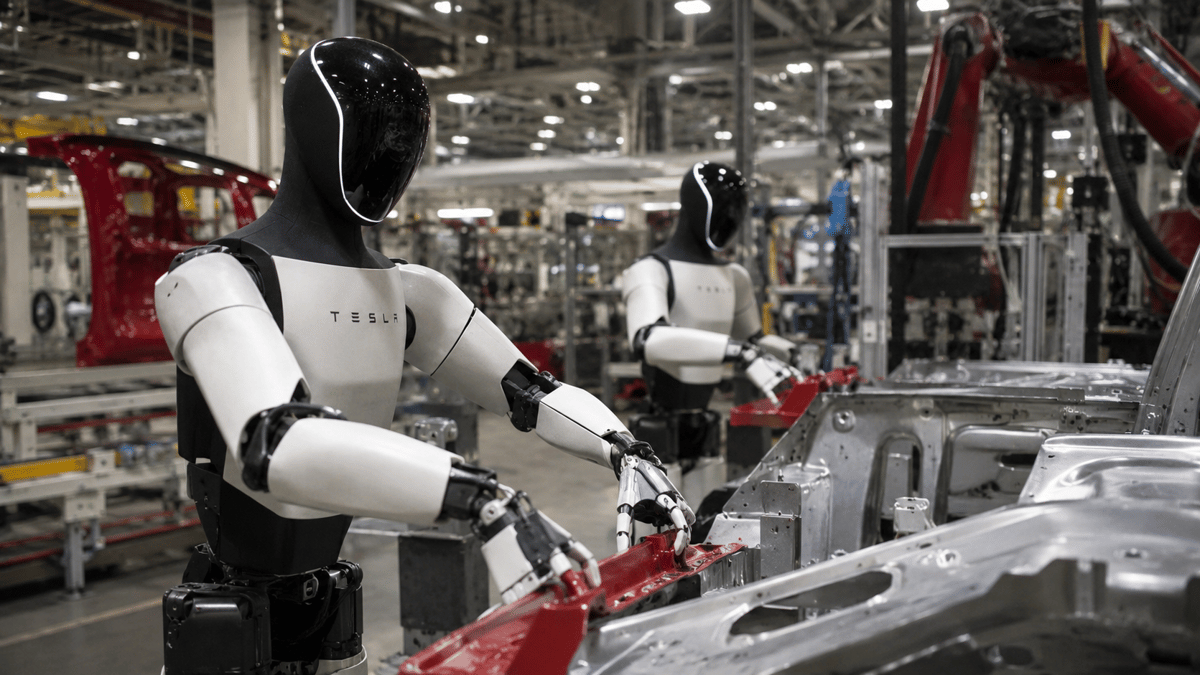 Image-creation R.E.News© via IA chat GPT
Les robots humanoïdes quittent progressivement les laboratoires pour entrer dans les usines. Les 1er et 2 décembre 2026, le Humanoids Summit réunira à San Mateo, au cœur de la Silicon Valley, les principaux acteurs mondiaux de la robotique et de l'intelligence artificielle. Parmi les attractions attendues : le robot Optimus de Tesla, aux côtés de nouvelles générations de machines autonomes conçues pour transformer les environnements industriels.
Organisé par ALM Ventures, cet événement mettra l'accent sur un enjeu majeur : passer des démonstrations technologiques à des robots capables de travailler de manière fiable, répétitive et rentable dans des conditions réelles.
Tesla Optimus au cœur des démonstrations
La participation de Tesla constitue l'un des temps forts du rendez-vous. Son robot humanoïde Optimus illustre les ambitions du constructeur américain dans la robotique polyvalente, en associant intelligence artificielle, capteurs, actionneurs et systèmes de contrôle des mouvements.
L'objectif est de développer une machine capable de se déplacer, manipuler des objets et réaliser différentes opérations dans des environnements initialement conçus pour les humains.
Tesla proposera également des démonstrations de sa technologie Full Self-Driving (Supervised). Le programme réunira notamment Apptronik, Google DeepMind, Honda R&D, 1X Technologies, Unitree, AGIBOT et FieldAI, ainsi que des représentants de la NASA et du NIST.
L'intelligence artificielle prend le contrôle du mouvement
La nouvelle génération de robots repose sur l'IA physique (Physical AI), qui permet aux machines de percevoir leur environnement, d'interpréter les situations et d'adapter leurs mouvements.
Derrière cette évolution se trouvent plusieurs technologies essentielles : moteurs électriques de précision, actionneurs compacts, capteurs, systèmes de vision, transmissions et logiciels de commande.
L'enjeu consiste à coordonner simultanément l'équilibre, la locomotion et la manipulation d'objets, tout en permettant au robot de réagir aux imprévus.
Pour les industriels, la véritable performance ne se mesure toutefois pas à une démonstration spectaculaire, mais à la capacité de travailler pendant plusieurs heures, avec précision, sécurité et un minimum d'interventions humaines.
Les usines deviennent les premiers terrains d'essai
Les applications industrielles commencent à se concrétiser. En septembre 2026, Boston Dynamics a inauguré son Robotics Metaplant Application Center au sein du complexe industriel Hyundai Motor Group Metaplant America, en Géorgie.
Les robots humanoïdes Atlas y sont entraînés pour des opérations liées à la préparation, au déplacement et à l'organisation de composants destinés aux chaînes de production automobile.
Ces environnements relativement structurés permettent de répéter les opérations, d'analyser les performances et d'améliorer progressivement les mouvements des machines.
Mais entre réussir une manipulation isolée et assurer une production continue, le chemin reste important. Fiabilité mécanique, autonomie énergétique, maintenance et rentabilité seront déterminantes.
Le secteur de la construction, prochain défi ?
Pour le monde des travaux publics et du génie civil, ces développements ouvrent des perspectives intéressantes.
Manutention de matériaux, transport de composants, inspection de zones difficiles d'accès ou assistance aux opérations répétitives : les applications potentielles sont nombreuses.
Cependant, un chantier est beaucoup moins prévisible qu'une usine. Sols irréguliers, boue, poussière, obstacles mobiles, changements permanents de configuration et présence simultanée de plusieurs équipes imposent des exigences particulièrement élevées.
Les robots quadrupèdes spécialisés dans l'inspection et la surveillance sont déjà mieux adaptés à certaines de ces missions. Les robots humanoïdes devront encore démontrer leur capacité à évoluer en sécurité dans ces environnements complexes.
Sécurité et collaboration avec les travailleurs
La cohabitation entre humains et robots constitue un autre défi majeur. Les machines devront reconnaître les personnes, anticiper leurs déplacements et interrompre immédiatement leurs mouvements lorsqu'une situation dangereuse apparaît.
Les systèmes de détection, les commandes d'arrêt d'urgence et l'évaluation permanente des risques seront indispensables, notamment lorsqu'un robot manipule des charges lourdes.
L'objectif n'est pas simplement de remplacer une opération humaine, mais de développer des équipements capables de réduire l'exposition des travailleurs aux tâches dangereuses et physiquement contraignantes.
De la technologie à la production industrielle
La fabrication en série représente désormais l'un des principaux enjeux économiques. Les constructeurs doivent parvenir à produire des robots fiables, accessibles financièrement et faciles à entretenir.
La précision des articulations, la résistance des composants, l'autonomie des batteries et la disponibilité des pièces détachées conditionneront leur adoption.
Les organisateurs annoncent une fréquentation en hausse d'environ 50 % par rapport à 2025. Le sommet abordera notamment les actionneurs, la dextérité robotique, les modèles d'intelligence artificielle, la sécurité et les stratégies de commercialisation.
Une révolution à suivre pour les constructeurs d'engins
Le Humanoids Summit 2026 témoigne de l'accélération d'un secteur qui pourrait progressivement transformer l'industrie manufacturière, la logistique et, à terme, les infrastructures et les travaux publics.
Pour les constructeurs d'engins de chantier, les avancées en matière de perception, d'autonomie, de navigation intelligente et de manipulation robotisée présentent un intérêt direct, même avant l'arrivée de véritables robots humanoïdes sur les chantiers.
La prochaine étape de la robotique ne sera plus seulement de montrer ce qu'une machine est capable de faire, mais de prouver qu'elle peut le faire chaque jour, en toute sécurité et avec une véritable rentabilité industrielle.
NJC.© Info Humanoids Summit Silicon Valley
--------------------------------------------------------------------------------------------------------------
26/11/26-English
HUMANOID ROBOTS: TESLA OPTIMUS AND PHYSICAL AI SET TO CONQUER THE INDUSTRIAL SECTOR
Image-creation R.E.News© via IA chat GPT
Humanoid robots are gradually moving out of the laboratory and into the factory. On December 1–2, 2026, the Humanoids Summit will bring together key global players in robotics and artificial intelligence in San Mateo, in the heart of Silicon Valley. Among the highly anticipated attractions is Tesla’s Optimus robot, showcased alongside a new generation of autonomous machines designed to transform industrial environments.
Organized by ALM Ventures, the event will focus on a critical challenge: transitioning from mere technological demonstrations to robots capable of working reliably, consistently, and cost-effectively in real-world conditions.
Tesla’s Optimus at the heart of the demonstrations
Tesla’s participation is a major highlight of the summit. Its humanoid robot, Optimus, embodies the American manufacturer’s ambitions in the field of versatile robotics, integrating artificial intelligence, sensors, actuators, and motion-control systems.
The goal is to develop a machine capable of navigating, manipulating objects, and performing various tasks within environments originally designed for humans.
Tesla will also offer demonstrations of its "Full Self-Driving (Supervised)" technology. The event will feature participants including Apptronik, Google DeepMind, Honda R&D, 1X Technologies, Unitree, AGIBOT, and FieldAI, as well as representatives from NASA and NIST.
Artificial intelligence takes command of movement
This new generation of robots is built on "Physical AI," which enables machines to perceive their surroundings, interpret situations, and adapt their movements accordingly.
Driving this evolution are several essential technologies: precision electric motors, compact actuators, sensors, vision systems, transmission mechanisms, and control software. The challenge lies in simultaneously coordinating balance, locomotion, and the manipulation of objects, while enabling the robot to react to unforeseen events.
For industrial players, however, true performance is not measured by a spectacular demonstration, but by the ability to operate for several hours with precision, safety, and minimal human intervention.
Factories are becoming the primary testing grounds.
Industrial applications are beginning to take shape. In September 2026, Boston Dynamics inaugurated its "Robotics Metaplant Application Center" within the Hyundai Motor Group Metaplant America industrial complex in Georgia.
There, Atlas humanoid robots are being trained for tasks involving the preparation, movement, and organization of components for automotive production lines.
These relatively structured environments allow for the repetition of operations, the analysis of performance, and the incremental improvement of the machines' movements.
However, there is still a long way to go between successfully performing an isolated task and ensuring continuous production. Mechanical reliability, energy autonomy, maintenance, and cost-effectiveness will be the deciding factors.
The construction sector: the next challenge?
For the public works and civil engineering sectors, these developments open up interesting possibilities.
From handling materials and transporting components to inspecting hard-to-reach areas or assisting with repetitive tasks, the potential applications are numerous.
Yet, a construction site is far less predictable than a factory. Uneven ground, mud, dust, moving obstacles, constantly changing layouts, and the simultaneous presence of multiple teams impose particularly demanding requirements.
Quadrupedal robots—specialized in inspection and surveillance—are already better suited for some of these missions. Humanoid robots have yet to demonstrate their ability to navigate these complex environments safely.
Safety and collaboration with workers
The coexistence of humans and robots presents another major challenge. Machines must be able to recognize people, anticipate their movements, and immediately halt their own motion whenever a dangerous situation arises.
Detection systems, emergency stop controls, and continuous risk assessment are essential—especially when a robot is handling heavy loads.
The goal is not merely to replace human labor, but to develop equipment that reduces workers' exposure to dangerous or physically demanding tasks.
From technology to industrial production
Mass production has become a key economic priority. Manufacturers must succeed in producing robots that are reliable, affordable, and easy to maintain.
The precision of joints, the durability of components, battery life, and the availability of spare parts will determine the extent of their adoption.
Organizers report an expected increase in attendance of approximately 50% compared to 2025. The summit will cover topics including actuators, robotic dexterity, artificial intelligence models, safety, and commercialization strategies.
A revolution for equipment manufacturers to watch
The Humanoids Summit 2026 highlights the rapid growth of a sector that could gradually transform manufacturing, logistics, and—eventually—infrastructure and public works.
For construction equipment manufacturers, advancements in perception, autonomy, intelligent navigation, and robotic manipulation are of direct interest, even before the arrival of true humanoid robots on construction sites.
The next phase in robotics will move beyond simply demonstrating what a machine is capable of; it will be about proving that it can perform those tasks day in and day out—safely and with genuine industrial profitability.
NJC.© Info Humanoids Summit Silicon Valley
-------------------------------------------------------------------------------------------------------------------------
26/11/26-NL
HUMANOÏDE ROBOTS: TESLA OPTIMUS EN FYSISCHE AI VEROVEREN DE INDUSTRIE
Image-creation R.E.News© via IA chat GPT
Humanoïde robots verlaten geleidelijk aan de laboratoria en betreden fabrieken. Op 1 en 2 december 2026 brengt de Humanoids Summit de belangrijkste spelers in de robotica en kunstmatige intelligentie ter wereld samen in San Mateo, in het hart van Silicon Valley. Een van de hoogtepunten is de Optimus-robot van Tesla, naast nieuwe generaties autonome machines die ontworpen zijn om industriële omgevingen te transformeren.
Dit evenement, georganiseerd door ALM Ventures, richt zich op een grote uitdaging: de overgang van technologische demonstraties naar robots die betrouwbaar, herhaaldelijk en winstgevend kunnen werken in de praktijk.
Tesla Optimus centraal tijdens de demonstraties
De deelname van Tesla is een van de hoogtepunten van het evenement. De humanoïde robot Optimus illustreert de ambities van de Amerikaanse fabrikant op het gebied van veelzijdige robotica, waarbij kunstmatige intelligentie, sensoren, actuatoren en bewegingsbesturingssystemen worden gecombineerd.
Het doel is om een machine te ontwikkelen die in staat is om te bewegen, objecten te manipuleren en diverse handelingen uit te voeren in omgevingen die oorspronkelijk voor mensen zijn ontworpen.
Tesla zal ook demonstraties geven van zijn Full Self-Driving (Supervised) technologie. Het programma brengt bedrijven samen zoals Apptronik, Google DeepMind, Honda R&D, 1X Technologies, Unitree, AGIBOT en FieldAI, evenals vertegenwoordigers van NASA en NIST.
Kunstmatige intelligentie neemt de controle over de beweging over
De nieuwe generatie robots is gebaseerd op Physical AI, waardoor machines hun omgeving kunnen waarnemen, situaties kunnen interpreteren en hun bewegingen kunnen aanpassen.
Achter deze evolutie schuilen verschillende essentiële technologieën: precisie-elektromotoren, compacte actuatoren, sensoren, vision-systemen, transmissies en besturingssoftware.
De uitdaging ligt in het gelijktijdig coördineren van balans, voortbeweging en objectmanipulatie, terwijl de robot moet kunnen reageren op onvoorziene gebeurtenissen.
Voor fabrikanten wordt de werkelijke prestatie echter niet gemeten aan de hand van een spectaculaire demonstratie, maar aan het vermogen om urenlang nauwkeurig, veilig en met minimale menselijke tussenkomst te werken.
Fabrieken worden steeds vaker de belangrijkste testlocaties.
Industriële toepassingen beginnen zich af te tekenen. In september 2026 opende Boston Dynamics zijn Robotics Metaplant Application Center binnen het industriële complex Metaplant America van Hyundai Motor Group in Georgia.
Hier worden Atlas humanoïde robots getraind voor taken die te maken hebben met de voorbereiding, het transport en de organisatie van componenten bestemd voor autoproductielijnen.
Deze relatief gestructureerde omgevingen maken herhaling van handelingen, prestatieanalyse en de geleidelijke verbetering van machinebewegingen mogelijk.
Maar er is nog een lange weg te gaan van het succesvol uitvoeren van een enkele handeling naar het garanderen van continue productie. Mechanische betrouwbaarheid, energieautonomie, onderhoud en winstgevendheid zullen cruciaal zijn.
De bouwsector: de volgende uitdaging?
Voor de wereld van openbare werken en civiele techniek openen deze ontwikkelingen spannende mogelijkheden.
Materiaalbehandeling, transport van componenten, inspectie van moeilijk bereikbare plaatsen of ondersteuning bij repetitieve taken: de potentiële toepassingen zijn talloos.
Een bouwplaats is echter veel minder voorspelbaar dan een fabriek. Oneffen terrein, modder, stof, bewegende obstakels, constante veranderingen in de lay-out en de gelijktijdige aanwezigheid van meerdere teams stellen bijzonder hoge eisen.
Vierpotige robots die gespecialiseerd zijn in inspectie en monitoring zijn al beter geschikt voor sommige van deze taken. Humanoïde robots moeten echter nog bewijzen dat ze veilig kunnen werken in deze complexe omgevingen.
Veiligheid en samenwerking met werknemers
De co-existentie van mens en robot is een andere grote uitdaging. Machines moeten mensen herkennen, hun bewegingen kunnen voorspellen en onmiddellijk stoppen wanneer zich een gevaarlijke situatie voordoet.
Detectiesystemen, noodstopcommando's en continue risicobeoordeling zijn essentieel, vooral wanneer een robot zware lasten moet hanteren.
Het doel is niet alleen om menselijke arbeid te vervangen, maar om apparatuur te ontwikkelen die de blootstelling van werknemers aan gevaarlijke en fysiek zware taken vermindert.
Van technologie naar industriële productie
Massaproductie is nu een van de grootste economische uitdagingen. Fabrikanten moeten erin slagen robots te produceren die betrouwbaar, betaalbaar en gemakkelijk te onderhouden zijn.
De precisie van de gewrichten, de duurzaamheid van de componenten, de levensduur van de accu en de beschikbaarheid van reserveonderdelen zullen bepalen of ze worden geaccepteerd.
De organisatoren kondigen een toename van het aantal deelnemers aan van ongeveer 50% ten opzichte van 2025. De top zal zich met name richten op actuatoren, robotische behendigheid, kunstmatige intelligentiemodellen, veiligheid en marketingstrategieën.
Een revolutie om in de gaten te houden voor fabrikanten van bouwmachines
De Humanoids Summit 2026 laat de versnelling zien van een sector die de productie, logistiek en uiteindelijk infrastructuur en openbare werken geleidelijk aan zou kunnen transformeren.
Voor fabrikanten van bouwmachines zijn de ontwikkelingen op het gebied van perceptie, autonomie, intelligente navigatie en robotmanipulatie van direct belang, zelfs vóór de komst van echte humanoïde robots op bouwplaatsen.
De volgende stap in robotica zal niet langer alleen zijn om te laten zien waartoe een machine in staat is, maar om te bewijzen dat hij dat elke dag, veilig en met daadwerkelijke industriële winstgevendheid kan doen.
NJC.© Info Humanoids Summit Silicon Valley
-----------------------------------------------------------------------------------------------------------------
Date de dernière mise à jour : 25/11/2026