


R.E.News future Technology-Leybold vacuum technology ensures efficient recycling of lithium-ion batteries
 02/11/26-FR-English-NL-footer
Batteries lithium-ion : Leybold mise sur le vide pour récupérer jusqu'à 95 % des matières premières précieuses !
RECYCLAGE | TECHNOLOGIES DU VIDE | ÉCONOMIE CIRCULAIRE
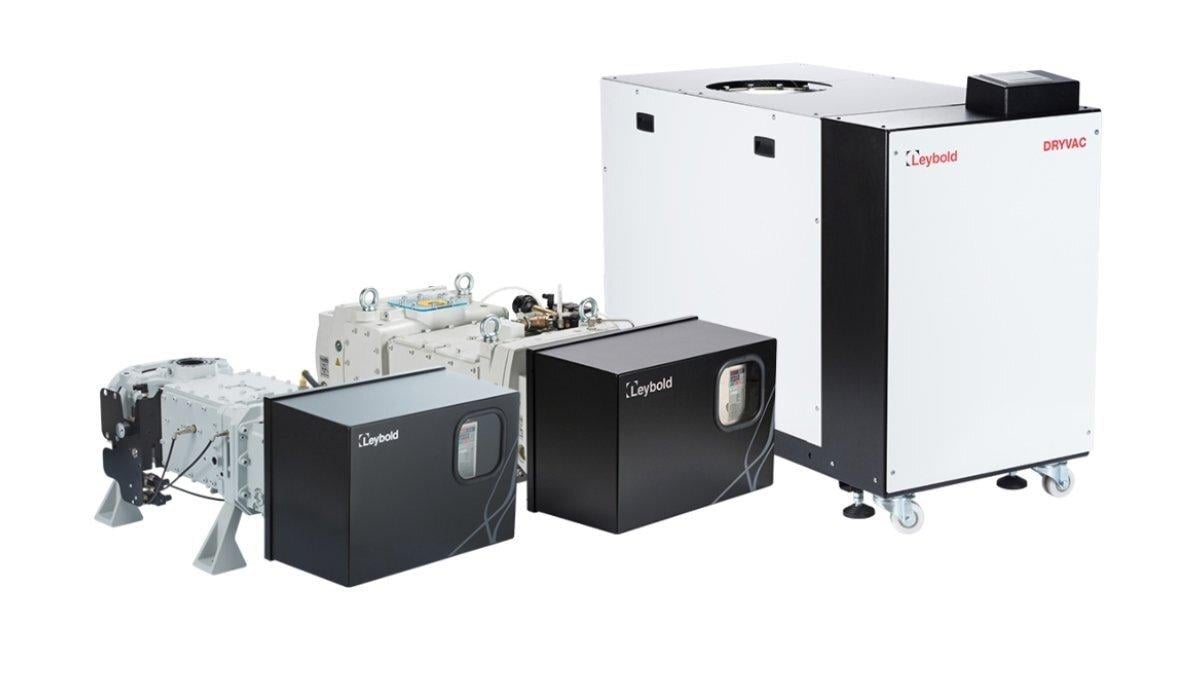
 Leybold DRYVAC Family IMAGE SOURCE: Leybold GmbH
Derrière chaque voiture électrique, smartphone ou outil sans fil se cache un défi industriel majeur : que deviennent les batteries lorsqu'elles arrivent en fin de vie ? Alors que leur nombre ne cesse d'augmenter, leur recyclage devient un enjeu stratégique pour récupérer le lithium, le nickel et le cobalt, sans dépendre exclusivement de nouvelles exploitations minières.
Dans cette course aux matières premières, Leybold apporte une technologie essentielle : le vide industriel. Grâce à des systèmes de pompage et de séchage spécialement conçus pour les batteries, le constructeur contribue à sécuriser les opérations et à atteindre des taux de récupération pouvant aller jusqu'à 95 % avec le recyclage mécanique.
Trois procédés pour récupérer les métaux précieux
L'industrie utilise principalement trois méthodes. La pyrométallurgie, qui repose sur le traitement thermique des batteries, permet de récupérer jusqu'à 50 % de leur masse. La pyrolyse, réalisée sans oxygène à des températures plus basses, peut atteindre 60 %.
Mais c'est le recyclage mécanique qui offre les perspectives les plus intéressantes, avec des taux pouvant atteindre 95 %.
Après décharge et démontage, les batteries sont broyées sous atmosphère d'azote ou sous vide afin d'éviter tout risque d'inflammation des solvants contenus dans l'électrolyte.
Le vide industriel : sécurité et efficacité au cœur du processus
L'étape déterminante consiste à éliminer les solvants inflammables avant la séparation des matériaux.
Leybold utilise des systèmes de séchage sous vide dans lesquels la pression est abaissée pendant que le matériau est chauffé. Les vapeurs d'électrolyte sont ainsi extraites, condensées puis récupérées pour être éventuellement réutilisées.
Cette technologie permet de travailler à des températures plus faibles et dans un environnement fermé, limitant les risques d'inflammation.
DRYVAC, SCREWLINE et RUVAC : trois technologies complémentaires
Pour répondre aux contraintes de ces installations, Leybold propose plusieurs solutions spécialisées.
- DRYVAC : pompes à vis sèches hermétiques, capables de traiter les vapeurs condensables et agressives.
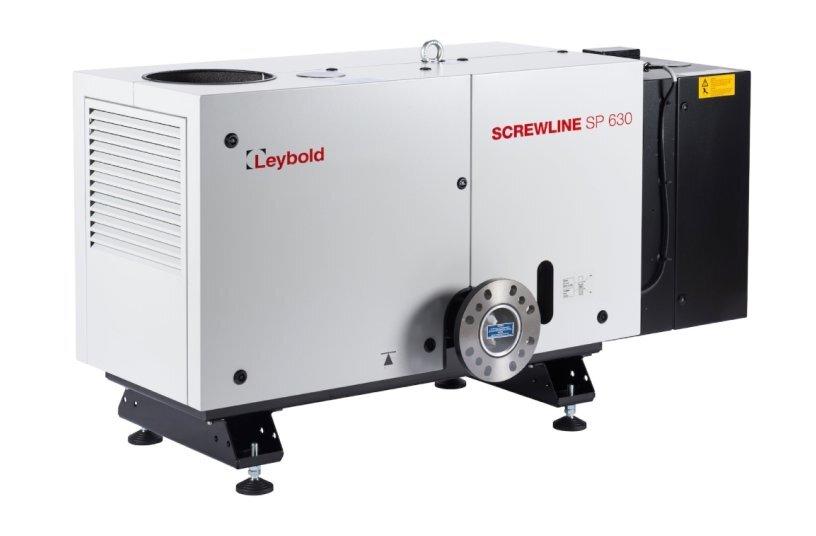
- SCREWLINE : conçues pour les applications difficiles, avec des rotors refroidis et une chambre de compression démontable facilitant le nettoyage.
- RUVAC WH : surpresseurs Roots permettant d'augmenter les capacités d'aspiration lors des opérations de séchage sous basse pression.
Le dimensionnement précis des pompes et des condenseurs reste essentiel pour garantir un séchage régulier, limiter la consommation énergétique et éviter les arrêts de production.
La Black Mass, un véritable trésor industriel
Après séchage et séparation mécanique, les installations récupèrent la fameuse Black Mass, une poudre concentrant une grande partie des matières premières stratégiques : lithium, nickel, cobalt, cuivre et graphite.
Ces matériaux peuvent ensuite être valorisés par des procédés hydrométallurgiques afin de retrouver des matières réutilisables dans la fabrication de nouvelles batteries.
Leybold accompagne les industriels depuis les installations prototypes jusqu'aux unités de production à grande échelle, avec des systèmes adaptés aux contraintes de chaque processus.
Recycler plutôt que toujours extraire
Pour Sebastian Rosensträter, responsable des applications industrielles chez Leybold, le potentiel économique du recyclage est considérable. Le nombre de batteries issues des véhicules électriques et des équipements électroniques devrait fortement augmenter dans les prochaines années.
Les solutions de seconde vie, notamment pour le stockage stationnaire d'énergie, peuvent prolonger leur utilisation, mais ne constituent qu'une étape intermédiaire avant leur recyclage final.
Le message industriel est clair : les batteries usagées représentent une nouvelle réserve de matières premières. En associant sécurité, efficacité énergétique et récupération des matériaux, Leybold entend contribuer à transformer ce défi environnemental en véritable opportunité industrielle.
NJC.© Info Leybold GmbH
----------------------------------------------------------------------------------------------------------------------
02/11/26-English
Lithium-ion batteries: Leybold relies on vacuum technology to recover up to 95% of valuable raw materials!
RECYCLING | VACUUM TECHNOLOGIES | CIRCULAR ECONOMY
Leybold DRYVAC Family IMAGE SOURCE: Leybold GmbH
Behind every electric car, smartphone, or cordless tool lies a major industrial challenge: what happens to batteries when they reach the end of their life? As their numbers continue to grow, their recycling is becoming a strategic imperative to recover lithium, nickel, and cobalt without relying solely on new mining operations.
In this race for raw materials, Leybold brings an essential technology: industrial vacuum technology. Thanks to pumping and drying systems specifically designed for batteries, the manufacturer helps to secure operations and achieve recovery rates of up to 95% with mechanical recycling.
Three processes for recovering precious metals
The industry primarily uses three methods. Pyrometallurgy, which relies on the thermal treatment of batteries, allows for the recovery of up to 50% of their mass. Pyrolysis, carried out without oxygen at lower temperatures, can achieve up to 60% recovery.
However, mechanical recycling offers the most promising prospects, with rates reaching up to 95%.
After discharge and disassembly, the batteries are shredded under a nitrogen atmosphere or vacuum to prevent any risk of ignition of the solvents contained in the electrolyte.
Industrial vacuum: safety and efficiency at the heart of the process
The crucial step is to eliminate flammable solvents before separating the materials.
Leybold uses vacuum drying systems in which the pressure is lowered while the material is heated. The electrolyte vapors are thus extracted, condensed, and then recovered for potential reuse.
This technology allows operation at lower temperatures and in a closed environment, limiting the risk of ignition.
DRYVAC, SCREWLINE, and RUVAC: three complementary technologies
To meet the requirements of these installations, Leybold offers several specialized solutions.
- DRYVAC: Hermetically sealed dry screw pumps capable of handling condensable and aggressive vapors.
- SCREWLINE: Designed for demanding applications, with cooled rotors and a removable compression chamber for easy cleaning.
- RUVAC WH: Roots blowers that increase suction capacity during low-pressure drying operations.
Precise sizing of pumps and condensers remains essential to ensure consistent drying, minimize energy consumption, and prevent production downtime.
Black Mass: A true industrial treasure
After drying and mechanical separation, the facilities recover the renowned Black Mass, a powder containing a high concentration of strategic raw materials: lithium, nickel, cobalt, copper, and graphite.
These materials can then be processed using hydrometallurgical methods to recover reusable materials for the manufacture of new batteries.
Leybold supports manufacturers from prototype installations to large-scale production units, with systems tailored to the specific requirements of each process.
Recycle rather than always extract
For Sebastian Rosensträter, Head of Industrial Applications at Leybold, the economic potential of recycling is considerable. The number of batteries from electric vehicles and electronic equipment is expected to increase significantly in the coming years.
Second-life solutions, particularly for stationary energy storage, can extend their lifespan, but are only an intermediate step before final recycling.
The industrial message is clear: used batteries represent a new source of raw materials. By combining safety, energy efficiency, and material recovery, Leybold aims to help transform this environmental challenge into a genuine industrial opportunity.
NJC.© Info Leybold GmbH
------------------------------------------------------------------------------------------------------------
02/11/26-NL
Lithium-ionbatterijen: Leybold zet in op vacuümtechnologie om tot 95% van waardevolle grondstoffen terug te winnen!
RECYCLING | VACUÜMTECHNOLOGIEËN | CIRCULAIRE ECONOMIE
Leybold DRYVAC Family IMAGE SOURCE: Leybold GmbH
Achter elke elektrische auto, smartphone of draadloos gereedschap schuilt een grote industriële uitdaging: wat gebeurt er met batterijen aan het einde van hun levensduur? Naarmate hun aantal blijft groeien, wordt recycling een strategische noodzaak om lithium, nikkel en kobalt terug te winnen zonder volledig afhankelijk te zijn van nieuwe mijnbouwactiviteiten.
In deze race om grondstoffen brengt Leybold een essentiële technologie: industriële vacuümtechnologie. Dankzij pomp- en droogsystemen die speciaal voor batterijen zijn ontworpen, helpt de fabrikant de bedrijfsvoering te waarborgen en terugwinningspercentages tot 95% te bereiken met mechanische recycling.
Drie processen voor het terugwinnen van edelmetalen
De industrie maakt hoofdzakelijk gebruik van drie methoden. Pyrometallurgie, waarbij batterijen thermisch worden behandeld, maakt het mogelijk om tot 50% van hun massa terug te winnen. Pyrolyse, uitgevoerd zonder zuurstof bij lagere temperaturen, kan een terugwinning tot 60% opleveren.
Mechanische recycling biedt echter de meest veelbelovende vooruitzichten, met terugwinningspercentages tot 95%.
Na ontlading en demontage worden de batterijen versnipperd onder een stikstofatmosfeer of vacuüm om elk risico op ontsteking van de oplosmiddelen in het elektrolyt te voorkomen.
Industrieel vacuüm: veiligheid en efficiëntie staan centraal in het proces
De cruciale stap is het verwijderen van brandbare oplosmiddelen vóór de scheiding van de materialen.
Leybold gebruikt vacuümdroogsystemen waarbij de druk wordt verlaagd terwijl het materiaal wordt verwarmd. De elektrolytdampen worden zo afgezogen, gecondenseerd en vervolgens teruggewonnen voor eventueel hergebruik.
Deze technologie maakt werken bij lagere temperaturen en in een gesloten omgeving mogelijk, waardoor het risico op ontsteking wordt beperkt.
DRYVAC, SCREWLINE en RUVAC: drie complementaire technologieën
Om aan de eisen van deze installaties te voldoen, biedt Leybold verschillende specialistische oplossingen.
- DRYVAC: Hermetisch afgesloten droge schroefpompen die geschikt zijn voor condenseerbare en agressieve dampen.
- SCREWLINE: Ontworpen voor veeleisende toepassingen, met gekoelde rotoren en een verwijderbare compressiekamer voor eenvoudige reiniging.
- RUVAC WH: Roots-blowers die de zuigkracht verhogen tijdens droogprocessen onder lage druk.
Nauwkeurige dimensionering van pompen en condensatoren blijft essentieel om een consistente droging te garanderen, het energieverbruik te minimaliseren en productiestilstand te voorkomen.
Zwarte massa: Een ware industriële schat
Na het drogen en de mechanische scheiding wordt de befaamde zwarte massa teruggewonnen, een poeder met een hoge concentratie strategische grondstoffen: lithium, nikkel, kobalt, koper en grafiet.
Deze materialen kunnen vervolgens met behulp van hydrometallurgische methoden worden verwerkt tot herbruikbare materialen voor de productie van nieuwe batterijen.
Leybold ondersteunt fabrikanten van prototype-installaties tot grootschalige productie-eenheden, met systemen die zijn afgestemd op de specifieke eisen van elk proces.
Recyclen in plaats van altijd maar te onttrekken
Voor Sebastian Rosensträter, hoofd Industriële Toepassingen bij Leybold, is het economische potentieel van recycling aanzienlijk. Het aantal batterijen van elektrische voertuigen en elektronische apparatuur zal naar verwachting de komende jaren sterk toenemen.
Oplossingen voor hergebruik, met name voor stationaire energieopslag, kunnen de levensduur verlengen, maar vormen slechts een tussenstap vóór de uiteindelijke recycling.
De boodschap voor de industrie is duidelijk: gebruikte batterijen vormen een nieuwe bron van grondstoffen. Door veiligheid, energie-efficiëntie en materiaalherwinning te combineren, wil Leybold deze milieu-uitdaging omzetten in een echte industriële kans.
NJC.© Info Leybold GmbH
---------------------------------------------------------------------------------------------------------------
Date de dernière mise à jour : 02/11/2026