



R.E.News International- CECE Congress 2026 calls for a stronger and more competitive European industry
 06/11/26-FR-English-NL-footer
CECE Congress 2026 à Londres : l’industrie européenne des machines appelle à un nouvel élan de compétitivité
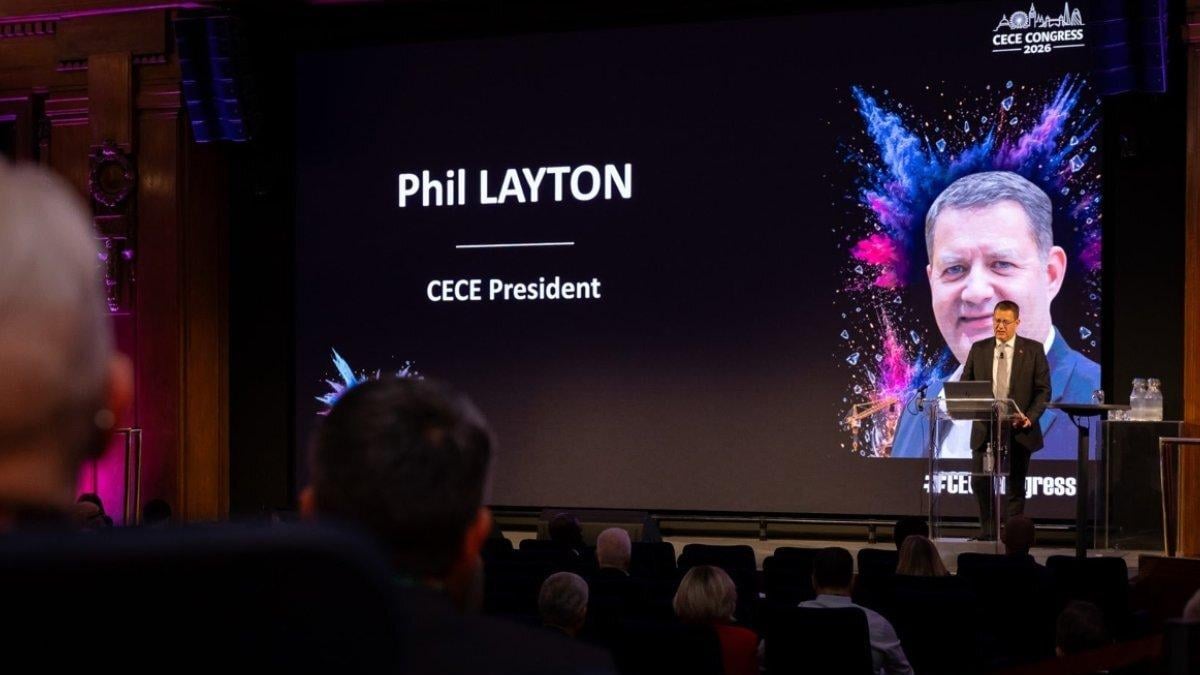 CECE President Phil Layton opens the CECE Congress 2026 IMAGE SOURCE: CECE
« Create. Innovate. Inspire. » C’est autour de cette ambition que près de 200 délégués venus d’Europe et du monde entier se sont retrouvés à Londres pour le CECE Congress 2026. Pendant deux jours, les acteurs du secteur des machines de construction et de manutention ont débattu des défis économiques, de l’innovation technologique, de la digitalisation et surtout de l’avenir industriel européen.
Une industrie européenne à renforcer
Après le fort ralentissement du marché en 2024, le secteur des équipements de construction a montré des signes de reprise en 2025, avec une confiance qui s'est maintenue en 2026. Mais les fabricants restent confrontés aux incertitudes économiques, aux tensions sur les chaînes d’approvisionnement et à une concurrence internationale croissante.
Dans son discours d’ouverture, Phil Layton, président du CECE, a défendu la nécessité d’une politique industrielle européenne ambitieuse, capable de soutenir l’investissement, l’innovation et une concurrence équitable. Il a également insisté sur l’importance d’un marché unique efficace et de contrôles adaptés pour garantir les mêmes règles à tous les fabricants.
Europe et Royaume-Uni : construire des passerelles
Organisé à Londres avec le soutien de la CEA (Construction Equipment Association), le congrès a également souligné l’importance de maintenir des relations industrielles étroites entre l’Union européenne et le Royaume-Uni, malgré le Brexit.
Lord Richard Harrington, président de Make UK, a rappelé que le Royaume-Uni demeure un partenaire industriel majeur. L’harmonisation des exigences techniques et la coopération réglementaire représentent des enjeux importants pour les constructeurs opérant sur les marchés internationaux. Les participants ont d'ailleurs exprimé de fortes attentes concernant un rapprochement industriel entre les deux territoires au cours des cinq prochaines années.
L’intelligence humaine au cœur de l’innovation
La digitalisation et l’intelligence artificielle transforment progressivement l’industrie, mais le congrès a rappelé que la créativité humaine reste un moteur essentiel de compétitivité.
Plusieurs intervenants issus du design, du cinéma et du monde professionnel ont partagé leurs expériences sur la manière de transformer les idées en solutions concrètes. Les débats ont également abordé la sécurité, les perspectives du marché mondial, le financement des équipements et les opportunités de coopération entre l’Europe et l’Inde.
Attirer les jeunes talents : un défi majeur
Autre sujet central : le recrutement et la formation des nouvelles générations. Des jeunes professionnels et apprentis de JCB, du groupe Kiesel et d'Agoria en Belgique ont partagé leurs expériences et leurs attentes.
Leur message est clair : les entreprises doivent renforcer leurs liens avec les écoles, mieux utiliser les réseaux sociaux et surtout montrer concrètement les possibilités de carrière offertes par l’industrie des machines. Le secteur doit moderniser son image et ses méthodes de recrutement pour attirer les futurs conducteurs, techniciens et ingénieurs.
L’humain, un avantage que l’intelligence artificielle ne remplace pas
En conclusion, Stewart Hill, ancien officier de l’armée britannique ayant surmonté un grave traumatisme crânien, a livré un témoignage personnel sur la résilience, les capacités cognitives et la force collective.
Son intervention a rappelé une idée forte : au-delà des technologies et de l’intelligence artificielle, le véritable avantage concurrentiel d’une entreprise réside aussi dans les capacités, la créativité et l’engagement de ses collaborateurs.
À Londres, le CECE Congress 2026 a ainsi lancé un message fort : pour rester compétitive à l’échelle mondiale, l’industrie européenne des machines doit investir dans son avenir industriel, renforcer ses partenariats et surtout placer l’innovation humaine au même niveau que le progrès technologique.
NJC.© Info CECE
----------------------------------------------------------------------------------------------------------------
06/11/26-English
CECE Congress 2026 in London: The European Machinery Industry Calls for a New Boost to Competitiveness
CECE President Phil Layton opens the CECE Congress 2026 IMAGE SOURCE: CECE
“Create. Innovate. Inspire.” This was the ambition around which nearly 200 delegates from Europe and around the world gathered in London for the CECE Congress 2026. For two days, stakeholders in the construction and materials handling machinery sector discussed economic challenges, technological innovation, digitalization, and above all, the future of European industry.
A European Industry to Strengthen
After the sharp market slowdown in 2024, the construction equipment sector showed signs of recovery in 2025, with confidence continuing into 2026. However, manufacturers still face economic uncertainties, supply chain tensions, and increasing international competition.
In his opening address, Phil Layton, President of the CECE, argued for the need for an ambitious European industrial policy capable of supporting investment, innovation, and fair competition. He also emphasized the importance of an efficient single market and appropriate controls to ensure a level playing field for all manufacturers.
Europe and the UK: Building Bridges
Organized in London with the support of the CEA (Construction Equipment Association), the congress also highlighted the importance of maintaining close industrial relations between the European Union and the United Kingdom, despite Brexit.
Lord Richard Harrington, President of Make UK, reiterated that the United Kingdom remains a key industrial partner. Harmonizing technical requirements and regulatory cooperation are crucial for manufacturers operating in international markets. Participants expressed strong expectations for closer industrial ties between the two countries over the next five years.
Human Intelligence at the Heart of Innovation
Digitalization and artificial intelligence are gradually transforming industry, but the congress emphasized that human creativity remains a key driver of competitiveness.
Several speakers from the fields of design, film, and industry shared their experiences on how to transform ideas into concrete solutions. Discussions also addressed safety, global market prospects, equipment financing, and opportunities for cooperation between Europe and India.
Attracting Young Talent: A Major Challenge
Another key topic was the recruitment and training of new generations. Young professionals and apprentices from JCB, the Kiesel Group, and Agoria in Belgium shared their experiences and expectations.
Their message was clear: companies must strengthen their ties with schools, make better use of social media, and, above all, showcase the career opportunities offered by the machinery industry. The sector must modernize its image and recruitment methods to attract future operators, technicians, and engineers.
Humanity: An Advantage That Artificial Intelligence Cannot Replace
In conclusion, Stewart Hill, a former British Army officer who overcame a severe traumatic brain injury, shared a personal account of resilience, cognitive abilities, and collective strength.
His presentation underscored a powerful idea: beyond technology and artificial intelligence, a company's true competitive advantage also lies in the skills, creativity, and commitment of its employees.
In London, the CECE Congress 2026 delivered a strong message: to remain globally competitive, the European machine industry must invest in its industrial future, strengthen its partnerships, and, above all, place human innovation on the same level as technological progress.
NJC.© Info CECE
------------------------------------------------------------------------------------------------------------------------
06/11/26-NL
CECE Congres 2026 in Londen: De Europese machine-industrie roept op tot een nieuwe impuls voor concurrentievermogen
CECE President Phil Layton opens the CECE Congress 2026 IMAGE SOURCE: CECE
"Creëren. Innoveren. Inspireren." Dit was de ambitie waarmee bijna 200 afgevaardigden uit Europa en de rest van de wereld bijeenkwamen in Londen voor het CECE Congres 2026. Gedurende twee dagen bespraken belanghebbenden in de sector van bouw- en material handling machines economische uitdagingen, technologische innovatie, digitalisering en vooral de toekomst van de Europese industrie.
Een Europese industrie om te versterken
Na de scherpe marktvertraging in 2024 vertoonde de sector van bouwmachines in 2025 tekenen van herstel, en dit vertrouwen zette zich voort in 2026. Fabrikanten worden echter nog steeds geconfronteerd met economische onzekerheden, spanningen in de toeleveringsketen en toenemende internationale concurrentie.
In zijn openingsrede pleitte Phil Layton, voorzitter van de CECE, voor de noodzaak van een ambitieus Europees industriebeleid dat investeringen, innovatie en eerlijke concurrentie ondersteunt. Hij benadrukte ook het belang van een efficiënte interne markt en passende controlemechanismen om een gelijk speelveld voor alle fabrikanten te garanderen.
Europa en het VK: Bruggen bouwen
Het congres, georganiseerd in Londen met steun van de CEA (Construction Equipment Association), benadrukte het belang van nauwe industriële betrekkingen tussen de Europese Unie en het Verenigd Koninkrijk, ondanks de Brexit.
Lord Richard Harrington, voorzitter van Make UK, herhaalde dat het Verenigd Koninkrijk een belangrijke industriële partner blijft. Harmonisering van technische eisen en samenwerking op het gebied van regelgeving zijn cruciaal voor fabrikanten die actief zijn op internationale markten. De deelnemers spraken de sterke verwachting uit dat de industriële banden tussen beide landen de komende vijf jaar verder zullen worden versterkt.
Menselijke intelligentie als kern van innovatie
Digitalisering en kunstmatige intelligentie transformeren de industrie geleidelijk, maar het congres benadrukte dat menselijke creativiteit een belangrijke drijfveer blijft voor concurrentievermogen.
Verschillende sprekers uit de wereld van design, film en industrie deelden hun ervaringen over hoe ideeën kunnen worden omgezet in concrete oplossingen. Er werd ook gesproken over veiligheid, de vooruitzichten op de wereldmarkt, financiering van apparatuur en mogelijkheden voor samenwerking tussen Europa en India.
Jong talent aantrekken: een grote uitdaging
Een ander belangrijk thema was de werving en opleiding van nieuwe generaties. Jonge professionals en leerlingen van JCB, de Kiesel Group en Agoria in België deelden hun ervaringen en verwachtingen.
Hun boodschap was duidelijk: bedrijven moeten hun banden met scholen versterken, beter gebruikmaken van sociale media en, bovenal, de carrièremogelijkheden in de machine-industrie onder de aandacht brengen. De sector moet zijn imago en wervingsmethoden moderniseren om toekomstige machinisten, technici en ingenieurs aan te trekken.
Menselijkheid: een voordeel dat kunstmatige intelligentie niet kan vervangen
Tot slot deelde Stewart Hill, een voormalig officier van het Britse leger die een ernstig traumatisch hersenletsel overwon, een persoonlijk verhaal over veerkracht, cognitieve vaardigheden en collectieve kracht.
Zijn presentatie onderstreepte een krachtig idee: naast technologie en kunstmatige intelligentie ligt het ware concurrentievoordeel van een bedrijf ook in de vaardigheden, creativiteit en betrokkenheid van zijn medewerkers.
In Londen gaf het CECE Congres 2026 een krachtige boodschap af: om wereldwijd concurrerend te blijven, moet de Europese machine-industrie investeren in haar industriële toekomst, haar partnerschappen versterken en, bovenal, menselijke innovatie op hetzelfde niveau plaatsen als technologische vooruitgang.
NJC.© Info CECE
---------------------------------------------------------------------------------------------------------------
Date de dernière mise à jour : 05/11/2026