



R.E.News future Technology-30 years of 3D-machine control: digital technology that changed the face of construction sites
 25/09/26-FR-English-NL-footer
WIRTGEN — 30 ANS QUI ONT CHANGÉ LE CHANTIER Quand la ligne disparaît… et que la machine commence à voir
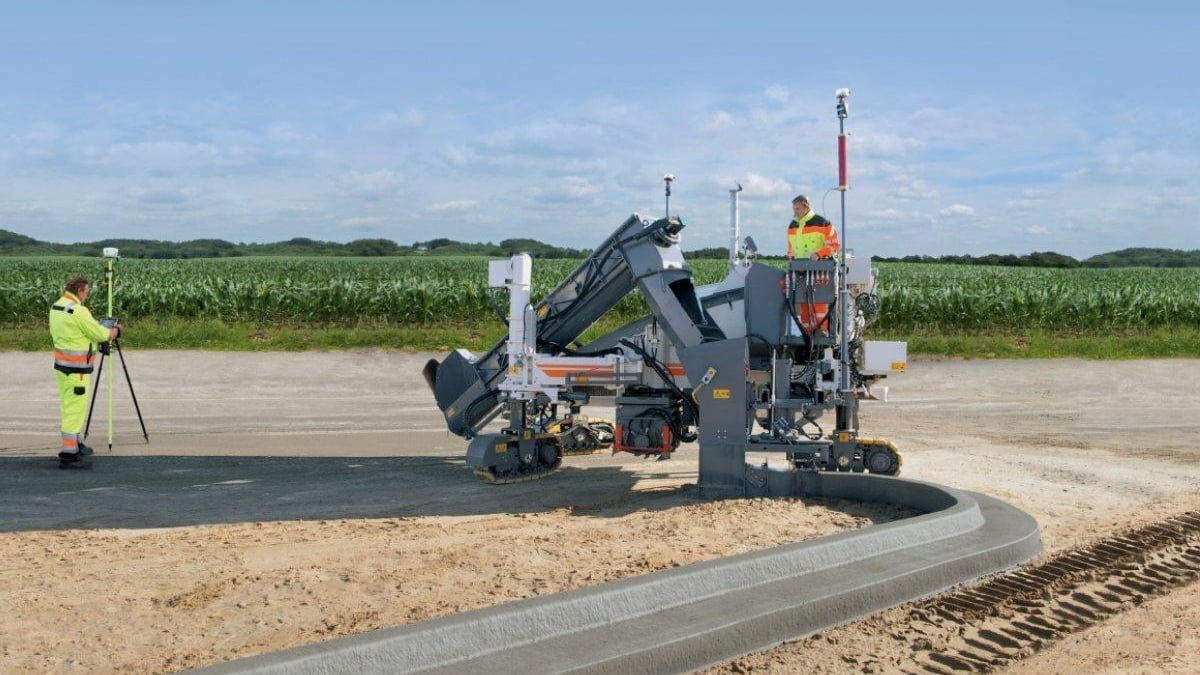
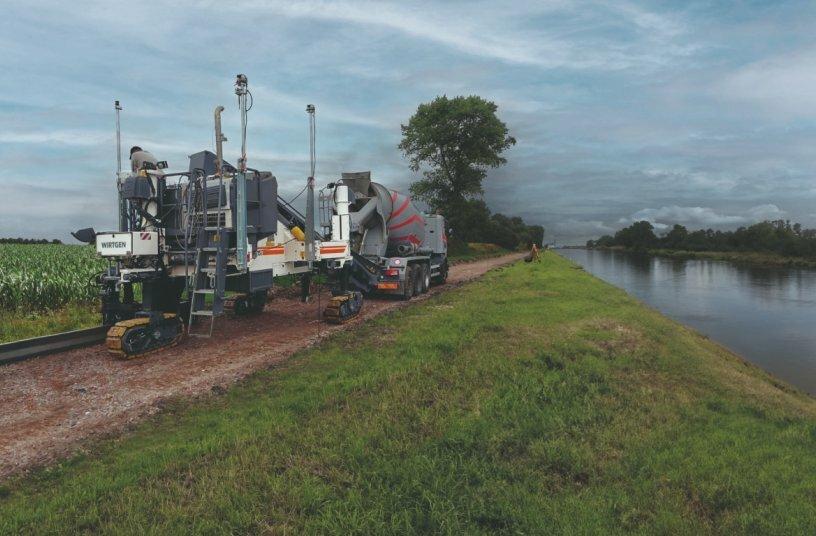 Stringless control with the 3D system celebrated its breakthrough during the construction of the ICE high-speed rail link between Frankfurt and Cologne in 1999. IMAGE SOURCE: WIRTGEN GROUP-Launched in 2018, AutoPilot 2.0 continues to impress users with an improved combination of hardware and software. IMAGE SOURCE: WIRTGEN GROUP
Il y a trente ans, un chantier routier se construisait avec des repères physiques, des cordeaux tendus et une précision largement dépendante de l’œil humain. Puis une idée allait progressivement changer cette réalité : et si la machine pouvait elle-même comprendre où elle devait travailler ?
Au milieu des années 1990, Wirtgen ouvre cette nouvelle ère avec le développement de sa première interface 3D destinée aux finisseurs à coffrage glissant. Une technologie encore pionnière, mais qui allait devenir l’un des fondements du chantier numérique moderne.
Le véritable tournant survient en 1999, lors de la construction de la ligne ferroviaire à grande vitesse ICE entre Francfort et Cologne. Les exigences de précision sont alors inédites. Wirtgen et Leica Geosystems développent une interface capable de relier directement mesure, données 3D et commande de la machine.
Sur le chantier, plusieurs finisseurs travaillent alors sans cordeau physique. La référence n’est plus matérialisée sur le terrain : elle devient numérique.
Du cordeau physique au cordeau virtuel
Cette révolution ne s’arrête pas là. L’arrivée du GNSS et l’intégration progressive du contrôle directement dans la machine permettent de franchir une nouvelle étape.
Le cordeau disparaît définitivement au profit d’une ligne virtuelle. Les temps d’installation diminuent, la précision progresse et l’opérateur bénéficie d’un environnement de travail plus simple et plus confortable.
En 2013, Wirtgen présente à Bauma son système AutoPilot, une nouvelle génération de contrôle hybride pour finisseurs à coffrage glissant, récompensée par le Bauma Innovation Award.
Puis vient AutoPilot 2.0, lancé en 2018 : une technologie capable de guider avec une grande précision des profils complexes — bordures, barrières de sécurité ou dalles routières — sans nécessiter la mise en place fastidieuse de cordeaux traditionnels.
La machine entre dans l’ère numérique
Aujourd’hui, la technologie ne consiste plus simplement à automatiser une fonction. Elle vise à faire dialoguer la machine, les données et l’environnement de travail.
Grâce aux interfaces CAN bus standardisées, différentes technologies de mesure peuvent être intégrées, tandis que les données numériques poursuivent leur chemin vers les plateformes de gestion et de planification.
Trente ans après les premières expérimentations, la philosophie reste pourtant étonnamment simple : la technologie doit simplifier le travail, et non le compliquer.
De la première interface 3D des années 1990 à AutoPilot 2.0, Wirtgen raconte ainsi une transformation plus profonde qu'une simple évolution technique.
Le chantier est passé du repère que l’on voyait… au modèle numérique que la machine comprend.
Et quelque part entre les deux, une nouvelle génération de construction routière est née.
NJC.© Info WIRTGEN GROUP
---------------------------------------------------------------------------------------------------------------
25/09/26-English
WIRTGEN — 30 YEARS THAT CHANGED THE CONSTRUCTION SITE When the line disappears… and the machine begins to see
Stringless control with the 3D system celebrated its breakthrough during the construction of the ICE high-speed rail link between Frankfurt and Cologne in 1999. IMAGE SOURCE: WIRTGEN GROUP-Launched in 2018, AutoPilot 2.0 continues to impress users with an improved combination of hardware and software. IMAGE SOURCE: WIRTGEN GROUP
Thirty years ago, road construction sites relied on physical markers, taut string lines, and precision largely dependent on the human eye. Then, an idea gradually changed this reality: what if the machine could understand where it needed to work?
In the mid-1990s, Wirtgen ushered in this new era with the development of its first 3D interface for slipform pavers. This technology was still pioneering, but it would become one of the cornerstones of the modern digital construction site.
The real turning point came in 1999, during the construction of the ICE high-speed rail line between Frankfurt and Cologne. The precision requirements were unprecedented. Wirtgen and Leica Geosystems developed an interface capable of directly linking measurement, 3D data, and machine control.
On the construction site, several pavers were working without physical string lines. The reference point is no longer physically present on the ground: it has become digital.
From physical string line to virtual string line
This revolution doesn't stop there. The arrival of GNSS and the progressive integration of control directly into the machine allow us to take another step forward.
The string line disappears completely, replaced by a virtual line. Setup times decrease, accuracy improves, and the operator benefits from a simpler and more comfortable working environment.
In 2013, Wirtgen presented its AutoPilot system at Bauma, a new generation of hybrid control for slipform pavers, which won the Bauma Innovation Award.
Then came AutoPilot 2.0, launched in 2018: a technology capable of guiding complex profiles—curbs, safety barriers, or road slabs—with high precision, without requiring the time-consuming installation of traditional string lines.
The Machine Enters the Digital Age
Today, technology is no longer simply about automating a function. It aims to create communication between the machine, data, and the work environment.
Thanks to standardized CAN bus interfaces, various measurement technologies can be integrated, while digital data continues its journey to management and planning platforms.
Thirty years after the first experiments, the philosophy remains surprisingly simple: technology should simplify work, not complicate it.
From the first 3D interface of the 1990s to AutoPilot 2.0, Wirtgen recounts a transformation that goes beyond mere technical evolution.
The construction site has gone from a visual reference point… to a digital model that the machine understands.
And somewhere in between, a new generation of road construction has emerged.
NJC.© Info WIRTGEN GROUP
------------------------------------------------------------------------------------------------------------
25/09/26-NL
WIRTGEN — 30 JAAR DIE DE BOUWPLAATS VERANDERDEN Wanneer de lijn verdwijnt… en de machine begint te zien
Stringless control with the 3D system celebrated its breakthrough during the construction of the ICE high-speed rail link between Frankfurt and Cologne in 1999. IMAGE SOURCE: WIRTGEN GROUP-Launched in 2018, AutoPilot 2.0 continues to impress users with an improved combination of hardware and software. IMAGE SOURCE: WIRTGEN GROUP
Dertig jaar geleden waren wegenbouwplaatsen afhankelijk van fysieke markeringen, strak gespannen touwen en precisie die grotendeels afhing van het menselijk oog. Toen veranderde een idee deze realiteit geleidelijk: wat als de machine zou kunnen begrijpen waar hij moest werken?
Midden jaren negentig luidde Wirtgen dit nieuwe tijdperk in met de ontwikkeling van zijn eerste 3D-interface voor slipform-asfaltmachines. Deze technologie was nog baanbrekend, maar zou een van de hoekstenen van de moderne digitale bouwplaats worden.
Het echte keerpunt kwam in 1999, tijdens de aanleg van de ICE-hogesnelheidslijn tussen Frankfurt en Keulen. De precisie-eisen waren ongekend. Wirtgen en Leica Geosystems ontwikkelden een interface die metingen, 3D-gegevens en machinebesturing rechtstreeks met elkaar kon verbinden.
Op de bouwplaats werkten verschillende asfaltmachines zonder fysieke touwen. Het referentiepunt is niet langer fysiek aanwezig op de grond: het is digitaal geworden.
Van fysieke naar virtuele meetlijn
Deze revolutie stopt hier niet. De komst van GNSS en de geleidelijke integratie van de besturing direct in de machine stellen ons in staat een volgende stap te zetten.
De meetlijn verdwijnt volledig en wordt vervangen door een virtuele lijn. De insteltijden worden korter, de nauwkeurigheid verbetert en de machinist profiteert van een eenvoudigere en comfortabelere werkomgeving.
In 2013 presenteerde Wirtgen op Bauma zijn AutoPilot-systeem, een nieuwe generatie hybride besturing voor slipform-asfaltmachines, waarmee het de Bauma Innovation Award won.
Daarna volgde AutoPilot 2.0, gelanceerd in 2018: een technologie die complexe profielen – stoepranden, vangrails of wegdekken – met hoge precisie kan geleiden, zonder de tijdrovende installatie van traditionele meetlijnen.
De machine betreedt het digitale tijdperk
Tegenwoordig draait technologie niet meer alleen om het automatiseren van een functie. Het doel is om communicatie te creëren tussen de machine, data en de werkomgeving.
Dankzij gestandaardiseerde CAN-businterfaces kunnen diverse meettechnologieën worden geïntegreerd, terwijl digitale data hun weg vervolgen naar management- en planningsplatformen.
Dertig jaar na de eerste experimenten blijft de filosofie verrassend eenvoudig: technologie moet het werk vereenvoudigen, niet ingewikkelder maken.
Van de eerste 3D-interface uit de jaren negentig tot AutoPilot 2.0 beschrijft Wirtgen een transformatie die verder gaat dan louter technische evolutie.
De bouwplaats is van een visueel referentiepunt… veranderd in een digitaal model dat de machine begrijpt.
En ergens daartussenin is een nieuwe generatie wegenbouw ontstaan.
NJC.© Info WIRTGEN GROUP
---------------------------------------------------------------------------------------------------------------
Date de dernière mise à jour : 24/09/2026