














R.E.News future Technology-Argonne’s ChemGraph is Reshaping Materials Research
 23/07/26-FR-English-NL-footer
ChemGraph : l'IA qui accélère la révolution des matériaux
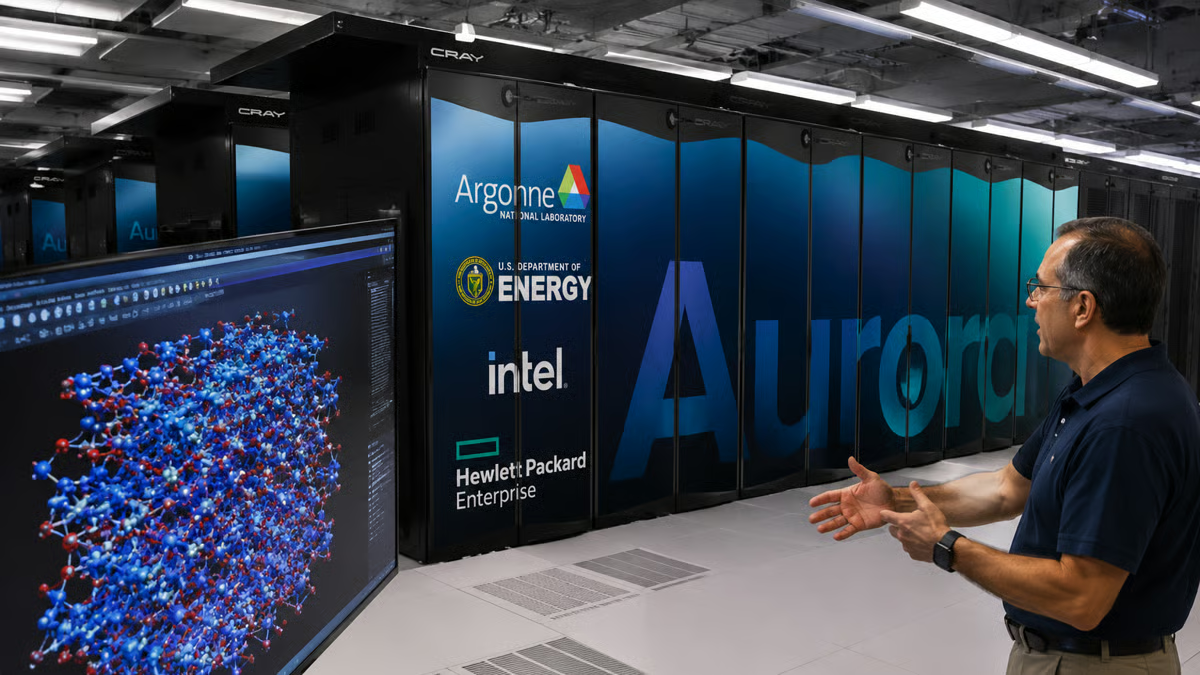 Image-R.E.News©
La prochaine génération de batteries, de matériaux critiques et de solutions de décarbonation pourrait ne plus naître uniquement dans les laboratoires, mais être conçue par l'intelligence artificielle. Avec ChemGraph, l'Argonne National Laboratory franchit une étape stratégique en démocratisant la simulation atomique grâce à une plateforme open source qui automatise les processus les plus complexes de la chimie computationnelle.
En combinant grands modèles de langage, réseaux neuronaux de graphes et calcul haute performance sur le supercalculateur exascale Aurora, ChemGraph transforme une expertise autrefois réservée à quelques spécialistes en un outil accessible aux industriels. Les simulations reposent sur de véritables modèles physiques plutôt que sur les seules prédictions de l'IA, garantissant des résultats fiables pour des applications stratégiques telles que les batteries de nouvelle génération, les carburants à faibles émissions, les matériaux critiques ou encore le captage du CO₂.
Au-delà de la prouesse technologique, ChemGraph s'inscrit dans la stratégie américaine Genesis Mission, qui fait de l'IA un moteur de l'innovation scientifique et industrielle. En réduisant le temps nécessaire à la découverte de nouveaux matériaux, cette plateforme pourrait accélérer l'électrification des équipements, renforcer la résilience des chaînes d'approvisionnement et soutenir la transition énergétique mondiale. Pour les industriels, l'enjeu dépasse le logiciel : il s'agit d'acquérir un avantage compétitif dans la course aux technologies qui façonneront les infrastructures de demain.
NJC.© Info http://Argonne National Laboratory
----------------------------------------------------------------------------------------------------------------
23/07/26-English
ChemGraph: AI Accelerating the Materials Revolution
Image-R.E.News©
The next generation of batteries, critical materials, and decarbonization solutions may no longer be born solely in laboratories, but be designed by artificial intelligence. With ChemGraph, Argonne National Laboratory is taking a strategic step by democratizing atomic simulation through an open-source platform that automates the most complex processes in computational chemistry.
By combining large language models, graph neural networks, and high-performance computing on the Aurora exascale supercomputer, ChemGraph is transforming expertise once reserved for a select few specialists into a tool accessible to industry. The simulations are based on real physical models rather than solely on AI predictions, ensuring reliable results for strategic applications such as next-generation batteries, low-emission fuels, critical materials, and CO₂ capture.
Beyond its technological prowess, ChemGraph aligns with the American Genesis Mission strategy, which positions AI as a driver of scientific and industrial innovation. By reducing the time required to discover new materials, this platform could accelerate the electrification of equipment, strengthen the resilience of supply chains, and support the global energy transition. For manufacturers, the stakes extend beyond the software itself: it's about gaining a competitive edge in the race for the technologies that will shape the infrastructure of tomorrow.
NJC.© Info http://Argonne National Laboratory
-----------------------------------------------------------------------------------------------------------------
23/07/26-NL
ChemGraph: AI versnelt de materiaalrevolutie
Image-R.E.News©
De volgende generatie batterijen, essentiële materialen en oplossingen voor decarbonisatie zullen wellicht niet langer uitsluitend in laboratoria ontstaan, maar ontworpen worden door kunstmatige intelligentie. Met ChemGraph zet Argonne National Laboratory een strategische stap door atoomsimulatie te democratiseren via een open-source platform dat de meest complexe processen in de computationele chemie automatiseert.
Door grote taalmodellen, grafische neurale netwerken en high-performance computing op de Aurora exascale supercomputer te combineren, transformeert ChemGraph expertise die voorheen alleen was voorbehouden aan een selecte groep specialisten, naar een instrument dat toegankelijk is voor de industrie. De simulaties zijn gebaseerd op echte fysieke modellen in plaats van uitsluitend op AI-voorspellingen, wat betrouwbare resultaten garandeert voor strategische toepassingen zoals batterijen van de volgende generatie, emissiearme brandstoffen, essentiële materialen en CO₂-afvang.
Naast de technologische kracht sluit ChemGraph aan bij de Amerikaanse Genesis Mission-strategie, die AI positioneert als een drijvende kracht achter wetenschappelijke en industriële innovatie. Door de tijd die nodig is om nieuwe materialen te ontdekken te verkorten, kan dit platform de elektrificatie van apparatuur versnellen, de veerkracht van toeleveringsketens versterken en de wereldwijde energietransitie ondersteunen. Voor fabrikanten gaat het niet alleen om de software zelf: het gaat erom een concurrentievoordeel te behalen in de race om de technologieën die de infrastructuur van morgen zullen vormgeven.
NJC.© Info http://Argonne National Laboratory
---------------------------------------------------------------------------------------------------------------
Date de dernière mise à jour : 22/07/2026