



R.E.News future Technology-China Pushes Autonomous Mining to New Heights
 18/12/25-FR-English-NL-footer
La Chine repousse les limites de l’exploitation minière autonome
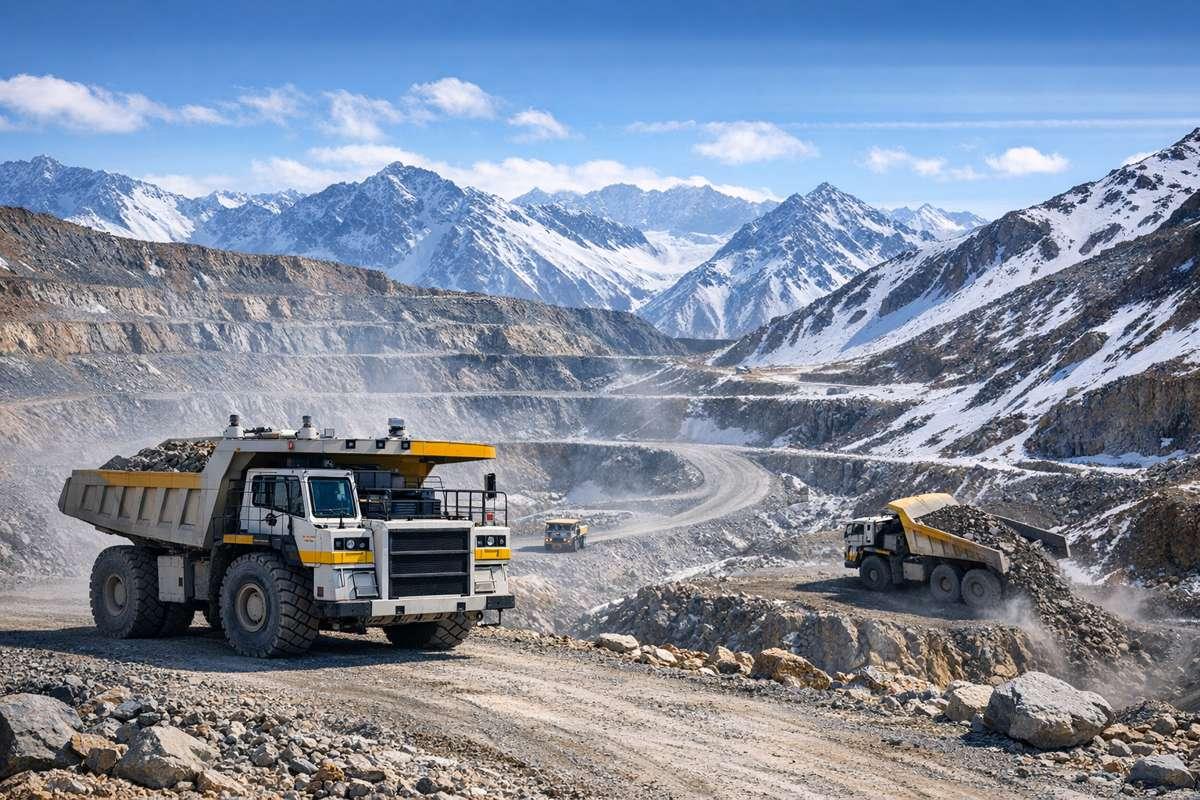 Image- China Railway 19th Bureau Group.
Là où l’air se raréfie, où le froid mord et où la présence humaine devient un risque en soi, la Chine vient de franchir un seuil symbolique pour l’industrie minière mondiale. À 5 600 mètres d’altitude, sur le site de Huoshaoyun, dans les montagnes du Kunlun au Xinjiang, des camions miniers autonomes de conception nationale ont achevé avec succès leurs essais opérationnels — une première mondiale à une telle hauteur.
Située au-dessus du plus haut habitat humain permanent, la mine évolue dans un environnement où l’oxygène n’atteint que la moitié de son niveau au niveau de la mer. Pourtant, malgré les vents violents, le pergélisol et des températures extrêmes, les véhicules sans conducteur ont démontré leur fiabilité, confirmant la capacité de l’autonomie à remplacer l’homme là où il ne peut plus travailler durablement.
Le site de Huoshaoyun n’a rien d’anodin. Il abrite les plus grandes réserves chinoises de plomb et de zinc, avec plus de 21 millions de tonnes de métaux identifiés, pour une valeur estimée à plus de 52 milliards de dollars. Exploiter un tel gisement dans ces conditions extrêmes relevait jusqu’ici du défi humain ; il devient désormais un défi technologique.
Les camions ne sont ni importés ni adaptés a posteriori. Ils sont le fruit d’un développement 100 % domestique, issu d’une collaboration entre l’exploitant minier et Beijing Linghang Zhitu Technology, filiale technologique du groupe China Railway 19th Bureau. Plus qu’un simple véhicule, il s’agit d’un système minier intelligent intégré, combinant plateformes autonomes, capteurs de haute précision, coordination cloud et connectivité 5G.
Grâce à la fusion de données lidar, radar, caméras et géolocalisation, les camions perçoivent leur environnement en temps réel et sont orchestrés via une plateforme centralisée assurant planification, circulation et prévention des collisions. Les opérateurs, eux, peuvent intervenir à distance depuis des postes situés à plus basse altitude, hors de danger.
L’objectif est clair : retirer l’homme des zones les plus hostiles tout en assurant des opérations continues, plus sûres et plus efficaces. Les essais ont validé l’ensemble du cycle — chargement, transport et déversement — marquant le passage d’une démonstration technologique à une réalité opérationnelle crédible.
À l’échelle mondiale, cette avancée envoie un signal fort. Si l’autonomie minière existe déjà ailleurs, jamais elle n’avait été déployée dans un environnement aussi extrême, ni avec un tel niveau d’intégration entre véhicules, logiciels et infrastructures télécoms. Huoshaoyun illustre la stratégie chinoise consistant à maîtriser toute la chaîne technologique, de la machine au réseau.
Pour Pékin, ce projet n’est qu’un début. Il préfigure l’exploitation de ressources jusqu’ici inaccessibles, notamment dans les régions reculées de l’ouest du pays. À 5 600 mètres d’altitude, la Chine démontre que là où l’homme s’arrête, l’autonomie, la connectivité et l’ambition industrielle peuvent continuer d’avancer.
NJC.© Info Science and Technology Daily, China Railway 19th Bureau Group.
---------------------------------------------------------------------------------------------------------------------
18/12/25-English
China Pushes the Boundaries of Autonomous Mining
Image- China Railway 19th Bureau Group.
Where the air is thin, the cold bites, and human presence becomes a risk in itself, China has just crossed a symbolic threshold for the global mining industry. At an altitude of 5,600 meters, at the Huoshaoyun site in the Kunlun Mountains of Xinjiang, domestically designed autonomous mining trucks have successfully completed their operational trials—a world first at such a high altitude.
Located above the highest permanent human settlement, the mine operates in an environment where oxygen levels are only half those at sea level. Yet, despite strong winds, permafrost, and extreme temperatures, the driverless vehicles have demonstrated their reliability, confirming the ability of autonomy to replace humans where they can no longer work sustainably.
The Huoshaoyun site is anything but ordinary. It holds China’s largest reserves of lead and zinc, with over 21 million tons of identified metals, valued at over $52 billion. Mining such a deposit under these extreme conditions has historically been a human challenge; it is now becoming a technological one.
The trucks are neither imported nor retrofitted. They are the result of entirely domestic development, stemming from a collaboration between the mining company and Beijing Linghang Zhitu Technology, the technology subsidiary of the China Railway 19th Bureau Group. More than just a vehicle, it is an integrated intelligent mining system, combining autonomous platforms, high-precision sensors, cloud coordination, and 5G connectivity.
Thanks to the fusion of lidar, radar, camera, and geolocation data, the trucks perceive their environment in real time and are orchestrated via a centralized platform that manages planning, traffic flow, and collision avoidance. Operators can intervene remotely from lower-altitude, safe locations.
The objective is clear: to remove humans from the most hostile areas while ensuring continuous, safer, and more efficient operations. The trials validated the entire cycle—loading, transport, and unloading—marking the transition from a technological demonstration to a credible operational reality.
Globally, this advancement sends a strong signal. While autonomous mining already exists elsewhere, it has never before been deployed in such an extreme environment, nor with such a high level of integration between vehicles, software, and telecommunications infrastructure. Huoshaoyun exemplifies China's strategy of controlling the entire technological chain, from the machine to the network.
For Beijing, this project is just the beginning. It foreshadows the exploitation of previously inaccessible resources, particularly in remote regions of western China. At an altitude of 5,600 meters, China demonstrates that where humans stop, autonomy, connectivity, and industrial ambition can continue to advance.
NJC.© Info Science and Technology Daily, China Railway 19th Bureau Group.
--------------------------------------------------------------------------------------------------------------
18/12/25-NL
China verlegt de grenzen van autonome mijnbouw
Image- China Railway 19th Bureau Group.
Waar de lucht ijler is, de kou bijt en de aanwezigheid van mensen op zich al een risico vormt, heeft China een symbolische drempel overschreden voor de wereldwijde mijnbouwsector. Op een hoogte van 5600 meter, in de Huoshaoyun-mijn in het Kunlun-gebergte in Xinjiang, hebben in China ontworpen autonome mijnbouwtrucks met succes hun operationele tests voltooid – een wereldprimeur op zo'n grote hoogte.
De mijn, gelegen boven de hoogstgelegen permanente nederzetting, opereert in een omgeving waar het zuurstofgehalte slechts de helft is van dat op zeeniveau. Ondanks sterke wind, permafrost en extreme temperaturen hebben de zelfrijdende voertuigen hun betrouwbaarheid bewezen, waarmee ze aantonen dat autonomie mensen kan vervangen waar ze niet langer duurzaam kunnen werken.
De Huoshaoyun-mijn is allesbehalve gewoon. Het bevat China's grootste reserves aan lood en zink, met meer dan 21 miljoen ton geïdentificeerde metalen, ter waarde van meer dan 52 miljard dollar. Het ontginnen van een dergelijke afzetting onder deze extreme omstandigheden is historisch gezien een uitdaging voor mensen geweest; Het wordt nu een technologisch hoogstandje.
De trucks zijn niet geïmporteerd of achteraf aangepast. Ze zijn het resultaat van een volledig binnenlandse ontwikkeling, voortkomend uit een samenwerking tussen het mijnbouwbedrijf en Beijing Linghang Zhitu Technology, de technologiedochteronderneming van de China Railway 19th Bureau Group. Het is meer dan alleen een voertuig; het is een geïntegreerd intelligent mijnbouwsysteem dat autonome platforms, uiterst nauwkeurige sensoren, cloudcoördinatie en 5G-connectiviteit combineert.
Dankzij de combinatie van lidar, radar, camera en geolocatiegegevens nemen de trucks hun omgeving in realtime waar en worden ze aangestuurd via een centraal platform dat de planning, de verkeersstroom en het voorkomen van botsingen beheert. Operators kunnen op afstand ingrijpen vanuit veilige locaties op lagere hoogte.
Het doel is duidelijk: mensen weghouden uit de meest gevaarlijke gebieden en tegelijkertijd zorgen voor continue, veiligere en efficiëntere werkzaamheden. De proeven hebben de volledige cyclus – laden, transport en lossen – gevalideerd, waarmee de overgang van een technologische demonstratie naar een geloofwaardige operationele realiteit is gemarkeerd.
Wereldwijd geeft deze vooruitgang een krachtig signaal af. Hoewel autonome mijnbouw elders al bestaat, is het nog nooit eerder ingezet in zo'n extreme omgeving, noch met zo'n hoge mate van integratie tussen voertuigen, software en telecommunicatie-infrastructuur. Huoshaoyun is een voorbeeld van China's strategie om de gehele technologische keten te beheersen, van de machine tot het netwerk.
Voor Peking is dit project slechts het begin. Het is een voorbode van de exploitatie van voorheen ontoegankelijke grondstoffen, met name in afgelegen gebieden in West-China. Op een hoogte van 5600 meter laat China zien dat waar de mens stopt, autonomie, connectiviteit en industriële ambitie verder kunnen gaan.
NJC.© Info Science and Technology Daily, China Railway 19th Bureau Group.
---------------------------------------------------------------------------------------------------------------
Date de dernière mise à jour : 17/12/2025