



R.E.News future Technology-Construction 3D Printing Moving to Everyday Business in Germany
 25/08/26-FR-English-NL-footer
En Allemagne, l’impression 3D quitte le laboratoire pour entrer sur les chantiers
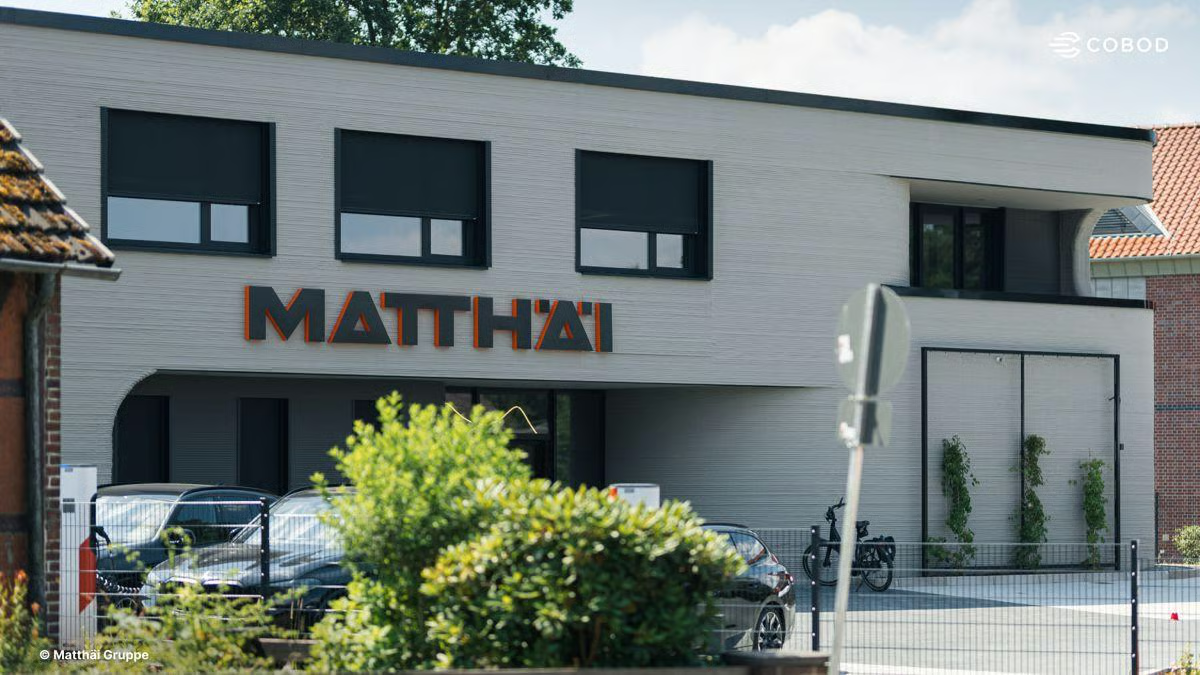
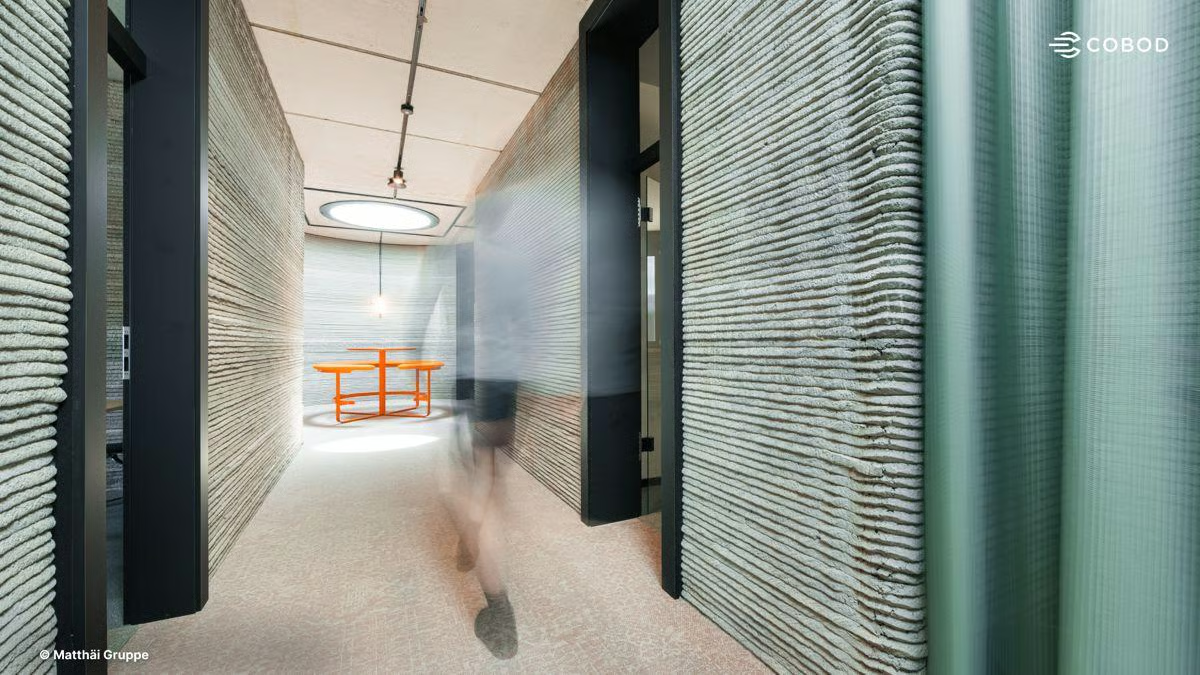
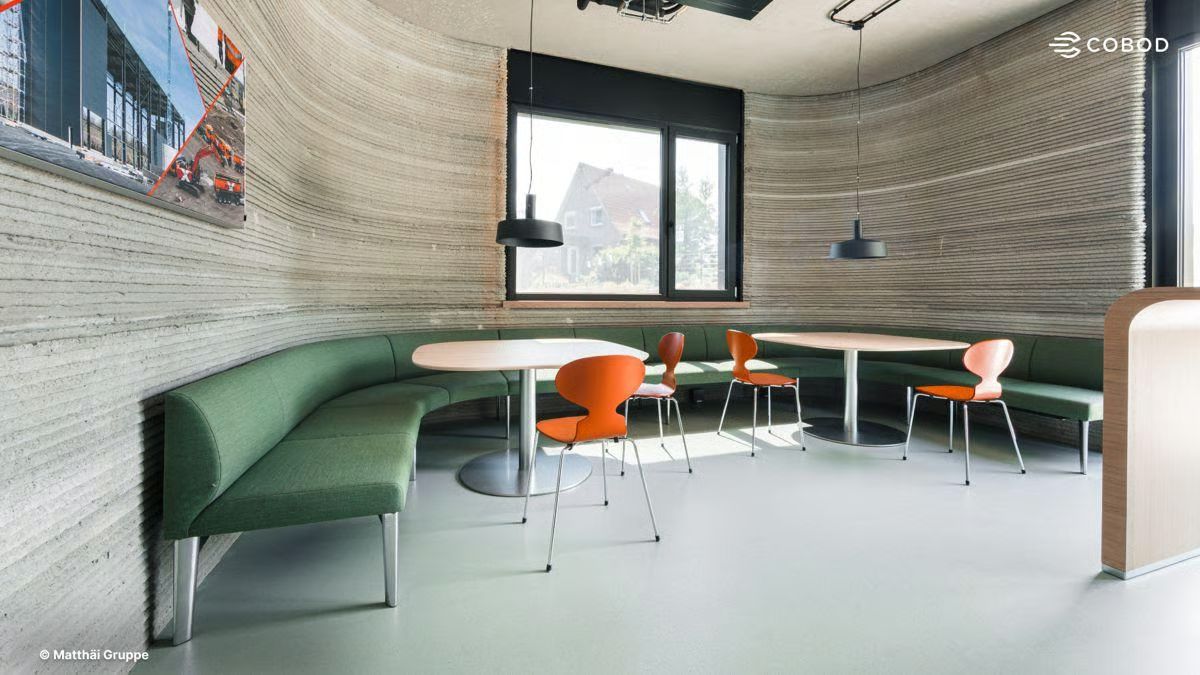 Image-Matthäi Group
À Selsingen, le véritable événement n’est pas le bâtiment imprimé en béton. L’Allemagne en construit déjà depuis plusieurs années. Le signal fort est ailleurs : après avoir imprimé son propre siège de 364 m² sur deux niveaux, Matthäi Schlüsselfertigbau a décidé de créer une division permanente dédiée à l’impression 3D de construction.
En quelques heures de production cumulées, un projet expérimental vient ainsi de se transformer en nouvelle activité commerciale.
Du prototype au métier
Les murs du bâtiment ont été imprimés en environ 105 heures avec une imprimante COBOD BOD2 et le matériau TectorPrint de Holcim. Fondation, dalles, planchers et toiture restent cependant réalisés avec des méthodes conventionnelles.
Cette approche hybride est précisément ce qui rend le projet intéressant. Il ne s’agit plus de démontrer qu’une machine peut imprimer un mur, mais de vérifier si cette technologie peut réduire les délais, limiter le recours à une main-d’œuvre rare et devenir rentable sur une série de chantiers.
Pour un groupe de plus de 3 300 collaborateurs et réalisant environ un milliard d’euros de chiffre d’affaires, le passage d’un projet unique à une capacité interne constitue un changement de statut majeur.
La pénurie de main-d’œuvre accélère la mutation
L’Allemagne manque cruellement de personnel qualifié dans la construction. Les délais moyens des projets se sont allongés, tandis que le déficit de logements continue de peser sur le marché.
Dans ce contexte, une imprimante capable de construire rapidement les murs avec une équipe réduite prend une tout autre dimension. Le béton imprimé devient moins une curiosité technologique qu’un outil industriel pour gagner en productivité.
Bureaux, bâtiments commerciaux, halls logistiques et logements standardisés sont particulièrement adaptés à cette logique : des géométries répétitives, des volumes importants et une forte pression sur les coûts de main-d’œuvre.
Un nouvel écosystème industriel
Derrière Matthäi se dessine également une transformation plus profonde du secteur. COBOD fournit la technologie, Holcim développe les matériaux imprimables et PERI 3D Construction apporte son expertise opérationnelle. Le fait que Holcim, PERI, CEMEX et General Electric figurent parmi les actionnaires de COBOD montre que l’impression 3D est désormais suivie de très près par les acteurs historiques du bâtiment.
La technologie ne repose donc plus uniquement sur des start-up ou des projets universitaires : elle commence à être intégrée par les grands industriels qui contrôlent déjà une partie essentielle de la chaîne de construction.
Le béton devient aussi une affaire de carbone
L’autre bataille se joue dans les matériaux. L’impression permet de déposer le béton avec une grande précision et de réduire l’usage de coffrages, tout en ouvrant la voie à des formulations moins carbonées.
En Allemagne comme en France, les nouveaux projets associent ainsi robotique, matériaux optimisés et liants à faible empreinte carbone. L’impression 3D devient progressivement un terrain de convergence entre productivité, automatisation et décarbonation.
Le vrai tournant
L’expérience de Selsingen raconte finalement une histoire plus importante que celle d’un bâtiment imprimé.
Quand un constructeur cesse de louer ou de tester une technologie et décide de l’intégrer à son propre carnet de commandes, celle-ci change de statut.
L’impression 3D du béton entre ainsi dans une nouvelle phase en Allemagne : moins spectaculaire, mais beaucoup plus intéressante économiquement. La question n’est plus de savoir si l’on peut imprimer un bâtiment.
La question est désormais de savoir combien de bâtiments un constructeur peut imprimer — et combien il peut gagner en le faisant.
NJC.© Info https://www.peri3dconstruction.com/en https://gebaeudedruck.korte-hoffmann.de/ https://schulenburg-architekten.de/ https://www.holcim.de/
---------------------------------------------------------------------------------------------------------------------
25/08/26-English
In Germany, 3D printing leaves the lab and enters the construction site
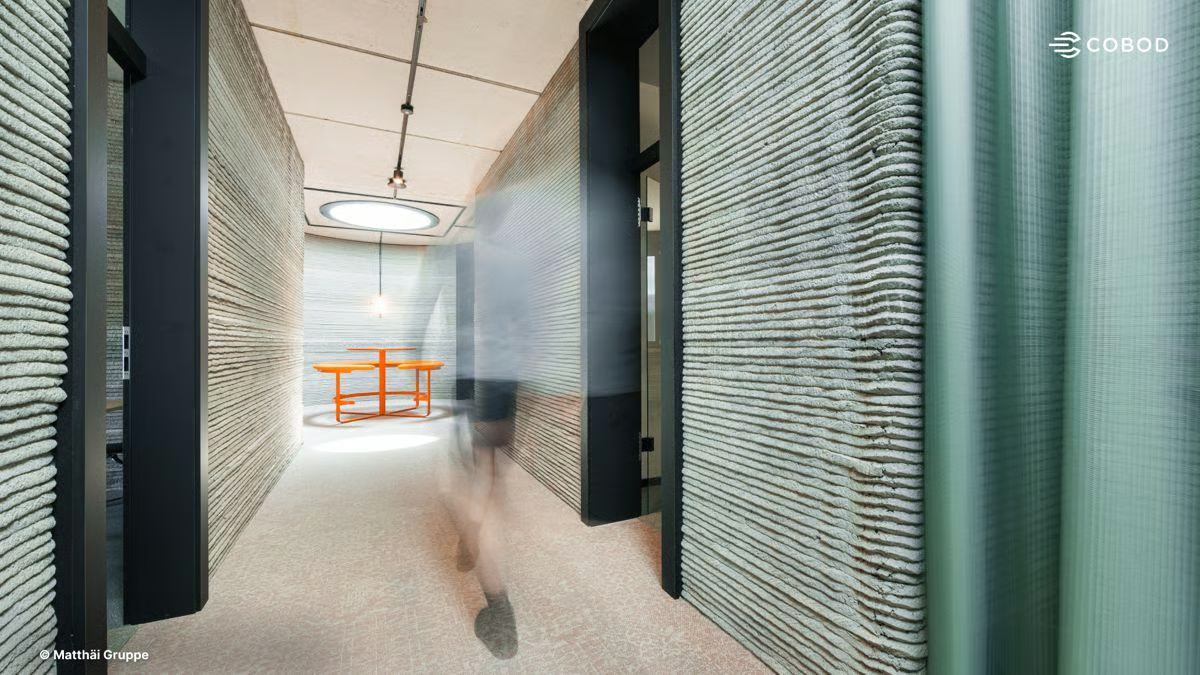 Image-Matthäi Group
In Selsingen, the real event isn't the concrete-printed building. Germany has been building them for several years now. The significant signal lies elsewhere: after printing his own 364 m² two-story headquarters, Matthäi Schlüsselfertigbau decided to create a permanent division dedicated to 3D printing for construction.
In just a few hours of cumulative production, an experimental project has thus been transformed into a new commercial activity.
From prototype to business
The building's walls were printed in approximately 105 hours using a COBOD BOD2 printer and Holcim's TectorPrint material. However, the foundation, slabs, floors, and roof were still constructed using conventional methods.
This hybrid approach is precisely what makes the project so interesting. The challenge is no longer to demonstrate that a machine can print a wall, but to verify whether this technology can reduce construction time, limit the need for scarce labor, and become profitable across a range of projects.
For a group with over 3,300 employees and approximately one billion euros in revenue, the shift from a single project to in-house capability represents a major change in status.
The labor shortage is accelerating the transformation.
Germany is facing a critical shortage of skilled construction workers. Average project timelines have lengthened, while the housing deficit continues to weigh heavily on the market.
In this context, a printer capable of rapidly constructing walls with a small team takes on a whole new dimension. Printed concrete is becoming less of a technological curiosity and more of an industrial tool for increasing productivity.
Offices, commercial buildings, logistics centers, and standardized housing are particularly well-suited to this approach: repetitive geometries, large volumes, and significant pressure on labor costs.
A New Industrial Ecosystem
Behind Matthäi, a deeper transformation of the sector is also taking shape. COBOD provides the technology, Holcim develops the printable materials, and PERI 3D Construction contributes its operational expertise. The fact that Holcim, PERI, CEMEX, and General Electric are among COBOD's shareholders demonstrates that 3D printing is now being closely monitored by established players in the construction industry.
The technology is therefore no longer solely the domain of startups or university projects: it is beginning to be integrated by major industrial players who already control a significant portion of the construction chain.
Concrete is also becoming a carbon issue
The other battle is being fought in the materials sector. Printing allows for the precise placement of concrete and reduces the need for formwork, while also paving the way for lower-carbon formulations.
In Germany as in France, new projects are combining robotics, optimized materials, and low-carbon binders. 3D printing is gradually becoming a convergence point for productivity, automation, and decarbonization.
The real turning point
The Selsingen experience ultimately tells a story that goes beyond simply printing a building.
When a builder stops leasing or testing a technology and decides to integrate it into their own order book, that technology's status changes.
3D printing of concrete is thus entering a new phase in Germany: less spectacular, but much more economically attractive. The question is no longer whether a building can be printed.
The question now is how many buildings a builder can print—and how much profit they can make by doing so.
NJC.© Info https://www.peri3dconstruction.com/en https://gebaeudedruck.korte-hoffmann.de/ https://schulenburg-architekten.de/ https://www.holcim.de/
-----------------------------------------------------------------------------------------------------------------
25/08/26-NL
In Duitsland verlaat 3D-printen het laboratorium en betreedt de bouwplaats.
Image-Matthäi Group
In Selsingen is het niet het gebouw van geprint beton dat de doorslag geeft. Duitsland bouwt ze al jaren. Het belangrijke signaal ligt elders: nadat Matthäi Schlüsselfertigbau zijn eigen twee verdiepingen tellende hoofdkantoor van 364 m² had geprint, besloot hij een permanente afdeling op te richten die zich volledig richt op 3D-printen voor de bouw.
In slechts enkele uren productietijd is een experimenteel project zo omgezet in een nieuwe commerciële activiteit.
Van prototype naar bedrijf
De muren van het gebouw werden in ongeveer 105 uur geprint met een COBOD BOD2-printer en het TectorPrint-materiaal van Holcim. De fundering, vloerplaten, vloeren en het dak werden echter nog steeds op conventionele wijze gebouwd.
Deze hybride aanpak maakt het project juist zo interessant. De uitdaging is niet langer om aan te tonen dat een machine een muur kan printen, maar om te bewijzen of deze technologie de bouwtijd kan verkorten, de behoefte aan schaarse arbeidskrachten kan beperken en winstgevend kan zijn voor een breed scala aan projecten.
Voor een groep met meer dan 3.300 medewerkers en een omzet van circa één miljard euro, betekent de overstap van een projectgerichte aanpak naar interne capaciteit een ingrijpende verandering.
Het tekort aan arbeidskrachten versnelt deze transformatie.
Duitsland kampt met een acuut tekort aan geschoolde bouwvakkers. De gemiddelde projectduur is toegenomen, terwijl het woningtekort de markt zwaar blijft belasten.
In deze context krijgt een printer die met een klein team snel muren kan bouwen een geheel nieuwe betekenis. Geprint beton wordt minder een technologische curiositeit en meer een industrieel hulpmiddel om de productiviteit te verhogen.
Kantoren, commerciële gebouwen, logistieke centra en gestandaardiseerde woningen lenen zich bijzonder goed voor deze aanpak: repetitieve geometrieën, grote volumes en een aanzienlijke druk op de arbeidskosten.
Een nieuw industrieel ecosysteem
Achter Matthäi vindt ook een diepere transformatie van de sector plaats. COBOD levert de technologie, Holcim ontwikkelt de printbare materialen en PERI 3D Construction draagt bij met zijn operationele expertise. Het feit dat Holcim, PERI, CEMEX en General Electric tot de aandeelhouders van COBOD behoren, toont aan dat 3D-printen nu nauwlettend in de gaten wordt gehouden door gevestigde spelers in de bouwsector.
De technologie is daarom niet langer alleen voorbehouden aan startups of universitaire projecten: ze wordt steeds vaker geïntegreerd door grote industriële spelers die al een aanzienlijk deel van de bouwketen beheersen.
Beton wordt ook een koolstofkwestie
De andere strijd wordt gestreden in de materiaalsector. Printen maakt het mogelijk om beton nauwkeurig te plaatsen en vermindert de behoefte aan bekisting, terwijl het ook de weg vrijmaakt voor koolstofarme samenstellingen.
In Duitsland, net als in Frankrijk, combineren nieuwe projecten robotica, geoptimaliseerde materialen en koolstofarme bindmiddelen. 3D-printen wordt geleidelijk aan een convergentiepunt voor productiviteit, automatisering en decarbonisatie.
Het echte keerpunt
De ervaring in Selsingen vertelt uiteindelijk een verhaal dat verder gaat dan alleen het printen van een gebouw.
Wanneer een bouwer stopt met het leasen of testen van een technologie en besluit deze in zijn eigen orderportefeuille op te nemen, verandert de status van die technologie.
3D-printen van beton breekt in Duitsland daarmee een nieuwe fase aan: minder spectaculair, maar veel aantrekkelijker voor de economie. De vraag is niet langer of een gebouw geprint kan worden.
De vraag is nu hoeveel gebouwen een bouwer kan printen – en hoeveel winst hij daarmee kan maken.
NJC.© Info https://www.peri3dconstruction.com/en https://gebaeudedruck.korte-hoffmann.de/ https://schulenburg-architekten.de/ https://www.holcim.de/
----------------------------------------------------------------------------------------------------------
Date de dernière mise à jour : 24/08/2026