



R.E.News future Technology-How to convert a 75m truck mount to hydrogen power
 14/10/26-FR-English-NL-footer
Siesling T 750 HF : l’hydrogène prend de la hauteur à 75 mètres
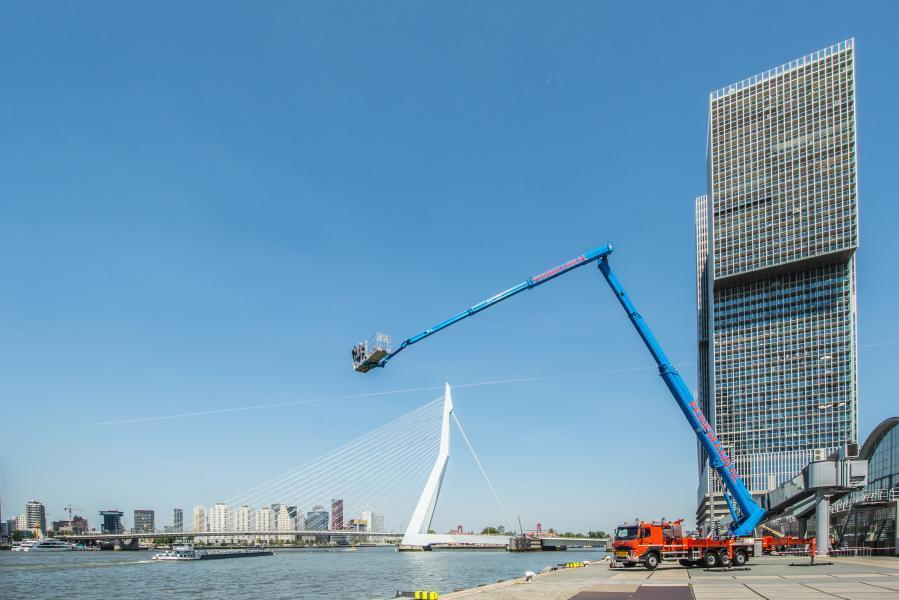 Image-The Ruthmann Steiger T 750 HF supports the company immediately with a working height of 75 m and a lateral reach of 41 m.
Et si les nacelles les plus hautes pouvaient elles aussi se passer du diesel ? Aux Pays-Bas, l’entreprise familiale Siesling relève le défi en transformant une nacelle sur camion Ruthmann T 750 HF de 75 mètres en une machine alimentée par pile à combustible à hydrogène.
Réalisée avec le spécialiste néerlandais Holthausen et avec la collaboration du constructeur allemand Ruthmann, cette transformation ouvre une nouvelle voie pour les travaux en hauteur sur les chantiers où les émissions doivent être réduites.
Neuf réservoirs embarquent au total 45 kg d’hydrogène, converti en électricité pour alimenter le camion et la plateforme. À la clé, une autonomie annoncée d’au moins 450 km et un ravitaillement d’environ 20 minutes. Un avantage opérationnel face aux longues immobilisations que peut nécessiter la recharge d’un véhicule électrique à batterie.
Mais le projet a exigé des compromis techniques. Le système hydrogène et les batteries augmentent le poids total, qui atteint environ 36,5 tonnes en charge, contre 33 tonnes pour la version diesel d’origine. Ruthmann a donc procédé à des essais, recalibré les commandes et réévalué les diagrammes de travail afin de tenir compte de la nouvelle répartition des masses.
Déjà engagée sur des chantiers à Groningue, notamment pour des travaux de rénovation, la machine a accumulé plusieurs semaines d’exploitation. Les premiers retours sont encourageants, même si des ajustements techniques ont été nécessaires.
Le défi reste toutefois économique : avec un hydrogène facturé environ 19,95 € le kilogramme et un tarif de location annoncé de 30 à 40 % supérieur à celui d’une machine diesel comparable, cette solution vise prioritairement les projets exigeant des équipements sans émissions à l’échappement.
Avec cette nacelle de 75 mètres, Siesling démontre que l’hydrogène peut atteindre les sommets du marché des travaux en hauteur. Une avancée encore coûteuse, mais porteuse de perspectives pour les chantiers où performance, autonomie et exigences environnementales doivent désormais avancer ensemble.
NJC.© Info Siesling Holthausen Ruthmann
-------------------------------------------------------------------------------------------------------------
14/10/26-English
Siesling T 750 HF: Hydrogen Reaches New Heights at 75 Meters
Image-The Ruthmann Steiger T 750 HF supports the company immediately with a working height of 75 m and a lateral reach of 41 m.
What if even the tallest aerial work platforms could do without diesel? In the Netherlands, the family-owned company Siesling is taking up the challenge by converting a 75-meter Ruthmann T 750 HF truck-mounted aerial work platform into a machine powered by a hydrogen fuel cell. Developed with the Dutch specialist Holthausen and in collaboration with the German manufacturer Ruthmann, this conversion opens a new path for working at height on construction sites where emissions must be reduced. Nine tanks hold a total of 45 kg of hydrogen, which is converted into electricity to power the truck and the platform. The result is a claimed range of at least 450 km and a refueling time of approximately 20 minutes. This is an operational advantage compared to the long downtimes that can be required to recharge a battery-powered electric vehicle.
But the project required some technical compromises. The hydrogen system and batteries increase the total weight, which reaches approximately 36.5 tons when loaded, compared to 33 tons for the original diesel version. Ruthmann therefore conducted tests, recalibrated the controls, and reassessed the work diagrams to account for the new weight distribution.
Already deployed on construction sites in Groningen, particularly for renovation work, the machine has accumulated several weeks of operation. Initial feedback is encouraging, even though some technical adjustments were necessary.
The challenge, however, remains economic: with hydrogen costing around €19.95 per kilogram and a rental price announced to be 30 to 40% higher than that of a comparable diesel machine, this solution is primarily aimed at projects requiring equipment with zero tailpipe emissions.
With this 75-meter platform, Siesling demonstrates that hydrogen can reach the top of the market for working at height. A still costly advancement, but one that holds great promise for construction sites where performance, autonomy, and environmental requirements must now go hand in hand.
NJC.© Info Siesling Holthausen Ruthmann
-----------------------------------------------------------------------------------------------------------------
14/10/26-NL
Siesling T 750 HF: Waterstof bereikt nieuwe hoogten op 75 meter
Image-The Ruthmann Steiger T 750 HF supports the company immediately with a working height of 75 m and a lateral reach of 41 m.
Wat als zelfs de hoogste hoogwerkers zonder diesel zouden kunnen werken? Het Nederlandse familiebedrijf Siesling gaat de uitdaging aan door een 75 meter hoge Ruthmann T 750 HF vrachtwagenhoogwerker om te bouwen tot een machine die wordt aangedreven door een waterstofbrandstofcel. Deze ombouw, ontwikkeld in samenwerking met de Nederlandse specialist Holthausen en de Duitse fabrikant Ruthmann, opent nieuwe mogelijkheden voor werken op hoogte op bouwplaatsen waar emissies moeten worden beperkt. Negen tanks bevatten in totaal 45 kg waterstof, dat wordt omgezet in elektriciteit om de vrachtwagen en het platform aan te drijven. Het resultaat is een actieradius van minimaal 450 km en een tanktijd van ongeveer 20 minuten. Dit is een operationeel voordeel ten opzichte van de lange stilstandtijden die nodig kunnen zijn om een elektrische hoogwerker op batterijen op te laden.
Het project vereiste echter wel enkele technische compromissen. Het waterstofsysteem en de accu's verhogen het totale gewicht, dat met lading circa 36,5 ton bedraagt, vergeleken met 33 ton voor de originele dieselversie. Ruthmann heeft daarom tests uitgevoerd, de besturing opnieuw gekalibreerd en de werkdiagrammen herzien om rekening te houden met de nieuwe gewichtsverdeling.
De machine is al enkele weken in bedrijf op bouwplaatsen in Groningen, met name voor renovatiewerkzaamheden. De eerste reacties zijn bemoedigend, hoewel er enkele technische aanpassingen nodig waren.
De uitdaging blijft echter economisch: met een waterstofprijs van circa € 19,95 per kilogram en een huurprijs die naar verluidt 30 tot 40% hoger ligt dan die van een vergelijkbare dieselmachine, is deze oplossing vooral gericht op projecten die apparatuur zonder uitstoot vereisen.
Met dit 75 meter hoge platform laat Siesling zien dat waterstof de top van de markt voor werken op hoogte kan bereiken. Een nog steeds kostbare ontwikkeling, maar wel een die veelbelovend is voor bouwplaatsen waar prestaties, autonomie en milieueisen nu hand in hand moeten gaan.
NJC.© Info Siesling Holthausen Ruthmann
------------------------------------------------------------------------------------------------------------------
Date de dernière mise à jour : 13/10/2026