
















R.E.News future Technology-Montenegro Building a Digital Backbone for Safer and Smarter Roads
 29/07/26-FR-English-NL-footer
Monténégro : 30 millions d'euros pour bâtir un réseau routier intelligent
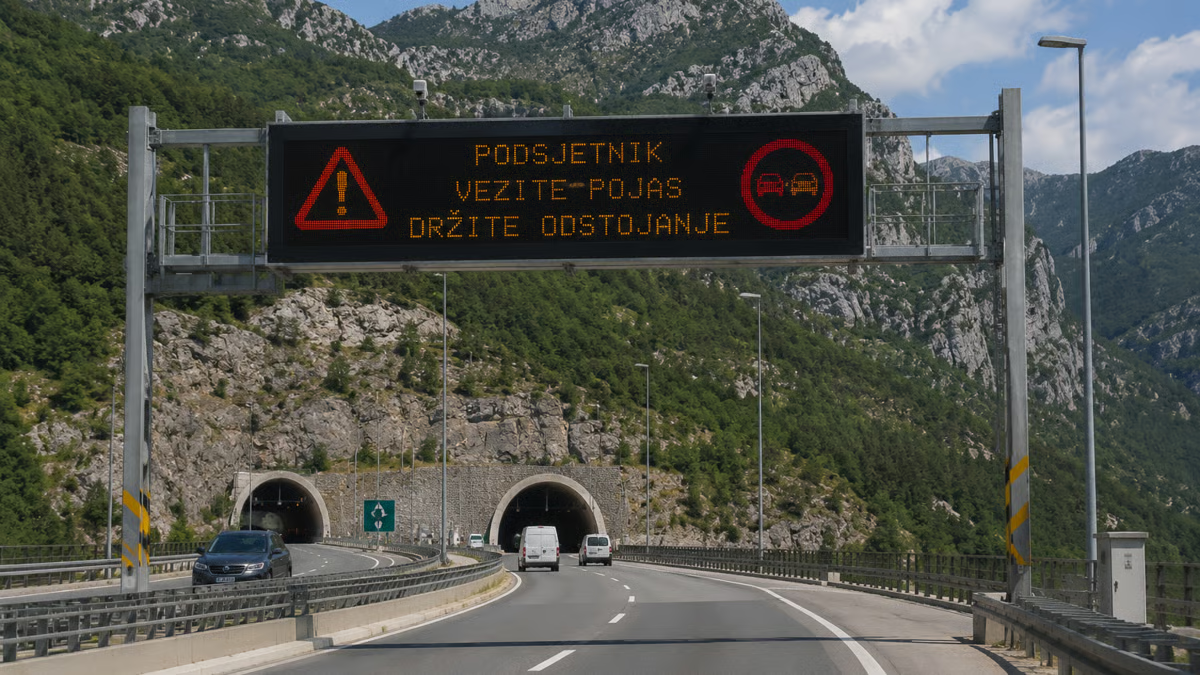 Image-R.E.News©
Le Monténégro franchit une nouvelle étape dans la modernisation de ses infrastructures en lançant un ambitieux programme de systèmes de transport intelligents (ITS), soutenu par un prêt pouvant atteindre 30 millions d'euros de la Banque européenne pour la reconstruction et le développement (BERD). Plus qu'un projet d'infrastructure, cette initiative marque la transition vers une gestion numérique et connectée de l'ensemble du réseau routier national.
Au cœur du dispositif figure la création d'un Centre national de gestion du trafic, véritable cerveau du réseau. Relié à des capteurs de circulation, stations météorologiques, systèmes de contrôle des tunnels, panneaux d'information et plateformes de gestion des incidents, il offrira une vision en temps réel des conditions de circulation afin d'améliorer la sécurité, la fluidité du trafic et la coordination des services d'urgence.
Au-delà de son impact sur la mobilité, le projet ouvre un vaste marché pour les intégrateurs de systèmes, fournisseurs d'équipements ITS, spécialistes des télécommunications, de la cybersécurité, des logiciels de supervision et de la maintenance. L'enjeu dépasse largement les infrastructures routières : il s'agit de construire une véritable colonne vertébrale numérique capable d'accompagner l'évolution du réseau pendant plusieurs décennies.
Le programme accordera une place centrale à l'interopérabilité des systèmes et à la cybersécurité, afin de garantir des infrastructures ouvertes, évolutives et conformes aux standards européens. Cette approche permettra d'intégrer progressivement de nouveaux services, depuis les véhicules connectés jusqu'à la gestion prédictive des infrastructures, tout en limitant la dépendance envers un fournisseur unique.
Dans un pays marqué par un relief montagneux, des tunnels stratégiques et des conditions météorologiques parfois extrêmes, les données recueillies en temps réel amélioreront la détection des incidents, la gestion hivernale, les interventions d'urgence et la résilience du réseau face aux événements climatiques. Elles fourniront également des informations précieuses pour orienter les futurs investissements routiers.
Avec cette transformation numérique, le Monténégro ne modernise pas seulement ses routes : il construit une infrastructure intelligente où les données deviennent un outil stratégique au service de la sécurité, de la mobilité et de la compétitivité économique. Un projet qui pourrait servir de modèle aux autres pays des Balkans dans leur transition vers les réseaux routiers de nouvelle génération.
NJC.©Info https://www.ebrd.com/#
-----------------------------------------------------------------------------------------------------------
29/07/26-English
Montenegro: €30 Million to Build a Smart Road Network
Image-R.E.News©
Montenegro is taking another step in modernizing its infrastructure by launching an ambitious Intelligent Transport Systems (ITS) program, supported by a loan of up to €30 million from the European Bank for Reconstruction and Development (EBRD). More than just an infrastructure project, this initiative marks the transition to digital and connected management of the entire national road network.
At the heart of the system is the creation of a National Traffic Management Center, the true brain of the network. Linked to traffic sensors, weather stations, tunnel control systems, information panels, and incident management platforms, it will provide a real-time view of traffic conditions to improve safety, traffic flow, and the coordination of emergency services.
Beyond its impact on mobility, the project opens up a vast market for systems integrators, ITS equipment suppliers, and specialists in telecommunications, cybersecurity, monitoring software, and maintenance. The stakes go far beyond road infrastructure: the goal is to build a true digital backbone capable of supporting the network's evolution for decades to come.
The program will prioritize system interoperability and cybersecurity to ensure open, scalable infrastructure that meets European standards. This approach will allow for the gradual integration of new services, from connected vehicles to predictive infrastructure management, while minimizing reliance on a single provider.
In a country characterized by mountainous terrain, strategic tunnels, and sometimes extreme weather conditions, real-time data will improve incident detection, winter road management, emergency response, and the network's resilience to climate events. It will also provide valuable information to guide future road investments.
With this digital transformation, Montenegro is not simply modernizing its roads; it is building a smart infrastructure where data becomes a strategic tool for safety, mobility, and economic competitiveness. A project that could serve as a model for other Balkan countries in their transition to next-generation road networks.
NJC.©Info https://www.ebrd.com/#
-----------------------------------------------------------------------------------------------------------------------
29/07/26-NL
Montenegro: € 30 miljoen voor een slim wegennet
Image-R.E.News©
Montenegro zet een volgende stap in de modernisering van zijn infrastructuur met de lancering van een ambitieus programma voor intelligente transportsystemen (ITS), ondersteund door een lening van maximaal € 30 miljoen van de Europese Bank voor Herstructurering en Ontwikkeling (EBRD). Dit initiatief is meer dan alleen een infrastructuurproject; het markeert de overgang naar digitaal en verbonden beheer van het gehele nationale wegennet.
Centraal in het systeem staat de oprichting van een Nationaal Verkeersmanagementcentrum, het brein van het netwerk. Gekoppeld aan verkeerssensoren, weerstations, tunnelbeheersystemen, informatiepanelen en incidentmanagementplatforms, zal het een realtime overzicht van de verkeerssituatie bieden om de veiligheid, de doorstroming en de coördinatie van hulpdiensten te verbeteren.
Naast de impact op de mobiliteit opent het project een enorme markt voor systeemintegratoren, leveranciers van ITS-apparatuur en specialisten op het gebied van telecommunicatie, cybersecurity, monitoringsoftware en onderhoud. De belangen reiken veel verder dan alleen de wegeninfrastructuur: het doel is om een echte digitale ruggengraat te bouwen die de evolutie van het netwerk de komende decennia kan ondersteunen.
Het programma geeft prioriteit aan systeeminteroperabiliteit en cyberbeveiliging om een open, schaalbare infrastructuur te garanderen die voldoet aan de Europese normen. Deze aanpak maakt de geleidelijke integratie van nieuwe diensten mogelijk, van connected vehicles tot voorspellend infrastructuurbeheer, terwijl de afhankelijkheid van één enkele aanbieder wordt geminimaliseerd.
In een land dat wordt gekenmerkt door bergachtig terrein, strategische tunnels en soms extreme weersomstandigheden, zullen realtime data de incidentdetectie, het winterwegbeheer, de noodhulp en de weerbaarheid van het netwerk tegen klimaatgebeurtenissen verbeteren. Het zal ook waardevolle informatie opleveren voor toekomstige investeringen in wegen.
Met deze digitale transformatie moderniseert Montenegro niet alleen zijn wegen; het bouwt een slimme infrastructuur waar data een strategisch instrument wordt voor veiligheid, mobiliteit en economische concurrentiekracht. Een project dat als model kan dienen voor andere Balkanlanden in hun transitie naar de volgende generatie wegennetwerken.
NJC.©Info https://www.ebrd.com/#
----------------------------------------------------------------------------------------------------------
Date de dernière mise à jour : 28/07/2026