















R.E.News future Technology-Port of Rotterdam Powers Ahead with Shore Energy Infrastructure
 23/04/26-FR-English-NL-footer
Rotterdam électrifie ses quais : le port devient un hub énergétique
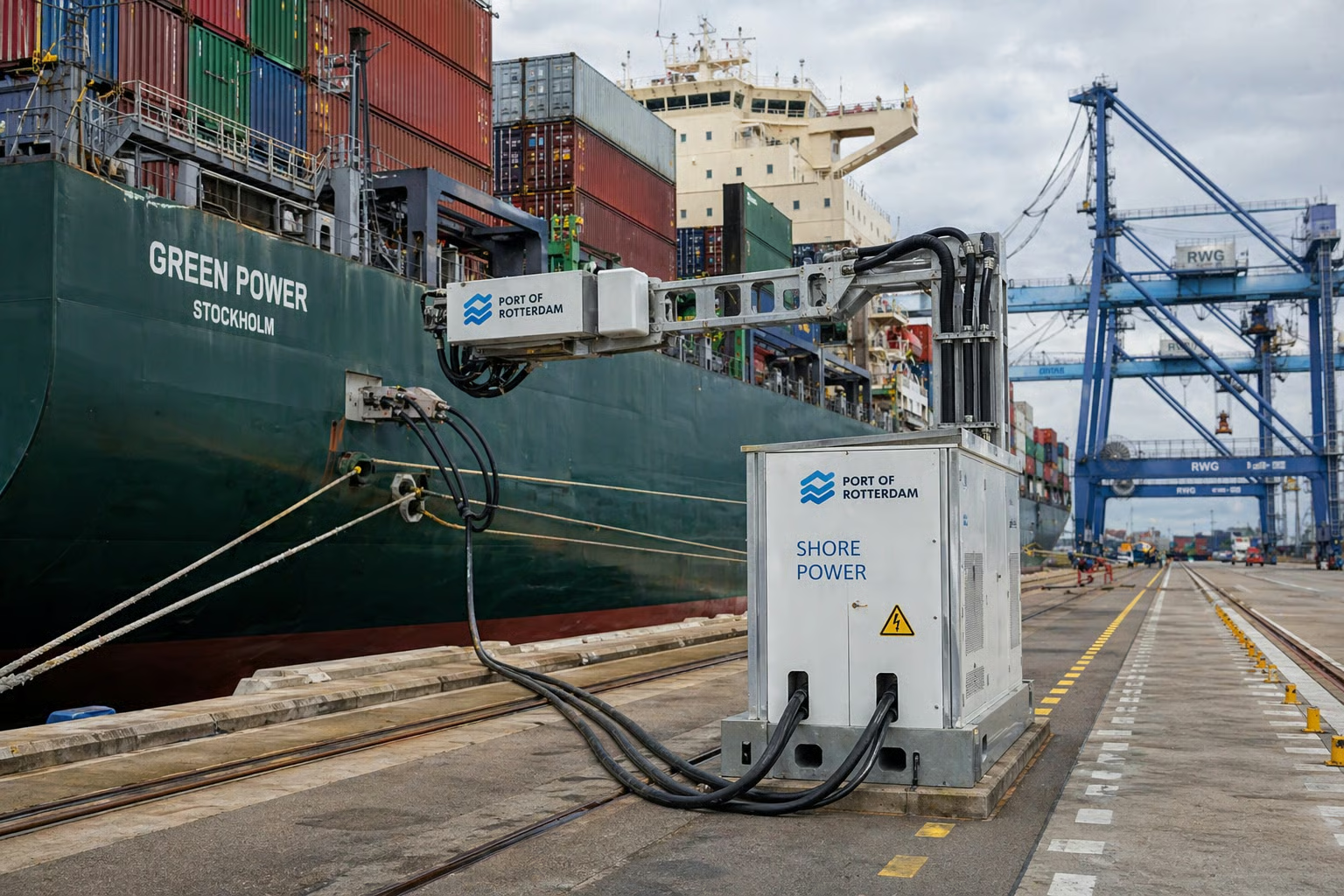 Image-R.E.News©
Le Port of Rotterdam franchit une nouvelle étape dans la transformation énergétique du transport maritime. Avec un financement de 90 millions d’euros accordé par la European Investment Bank, le premier port d’Europe engage une mutation structurelle : connecter les navires directement au réseau électrique à quai.
Du port logistique au port énergétique
Derrière le projet Rotterdam Shore Power, mené avec Eneco, se dessine une évolution majeure : le port ne se contente plus de gérer des flux de marchandises, il devient un acteur du système énergétique.
Huit kilomètres de quais seront équipés de 35 points de connexion, permettant aux porte-conteneurs d’éteindre leurs générateurs fossiles une fois amarrés. Une transformation silencieuse, mais aux effets systémiques :
réduction immédiate des émissions locales
baisse significative du bruit
intégration du port dans les réseaux électriques nationaux
Une infrastructure à l’échelle industrielle
Mettre en place l’électricité à quai à Rotterdam ne relève pas d’un simple déploiement technique. C’est un chantier d’ingénierie lourde :
câblage haute capacité
raccordement au réseau
adaptation à des navires aux besoins énergétiques variés
continuité des opérations dans un port en activité permanente
Chaque point de connexion doit pouvoir alimenter certains des plus grands navires du monde, avec des exigences de fiabilité absolue.
Un levier stratégique pour l’Europe
Au-delà de l’enjeu environnemental, le projet s’inscrit dans une logique géopolitique plus large. Soutenu également par des financements européens via le Connecting Europe Facility, il participe à un objectif clé : réduire la dépendance aux énergies fossiles importées.
Dans ce contexte, l’électrification des ports devient un outil de souveraineté autant qu’un levier climatique.
Compétitivité et décarbonation : un équilibre nécessaire
Pour les ports, la transition énergétique n’est plus une option. Elle conditionne leur attractivité dans une chaîne logistique mondiale en mutation.
En offrant des infrastructures de branchement électrique, Rotterdam répond aux nouvelles attentes :
des armateurs soumis à des objectifs de réduction d’émissions
des clients exigeant des chaînes d’approvisionnement plus propres
des régulateurs renforçant les normes environnementales
La durabilité devient ainsi un facteur de compétitivité.
Interface critique entre mer et réseau
L’un des défis majeurs réside dans la compatibilité entre navires et infrastructures terrestres. Standardisation des tensions, synchronisation des systèmes, gestion des pics de demande : l’électrification des quais impose une coordination technique fine.
Elle pose également la question de l’origine de l’électricité, ouvrant la voie à une intégration accrue des énergies renouvelables dans les opérations portuaires.
Un impact direct sur les villes portuaires
Au-delà du port lui-même, les bénéfices sont immédiats pour les zones urbaines environnantes :
amélioration de la qualité de l’air
réduction des nuisances sonores
impact positif sur la santé publique
Le port, longtemps perçu comme une source de pollution, devient progressivement un acteur de l’amélioration urbaine.
Vers une nouvelle génération de ports
Le déploiement progressif à partir de 2028 marque le début d’un changement profond. Rotterdam ne construit pas seulement une infrastructure : il établit un modèle.
Un modèle où les ports deviennent :
des hubs énergétiques
des plateformes intelligentes
des acteurs clés de la transition écologique
Une référence pour l’avenir maritime
Ce qui se joue à Rotterdam dépasse largement les Pays-Bas. C’est une démonstration à l’échelle européenne : les infrastructures lourdes peuvent évoluer sans perdre en performance.
Dans un monde où logistique et énergie deviennent indissociables, le port du futur ne sera plus seulement un point de passage — mais un nœud stratégique entre flux, données et énergie.
NJC.© Info financing agreement European Investment Bank
---------------------------------------------------------------------------------------------------------------
23/04/26-English
Rotterdam Electrifies its Docks: The Port Becomes an Energy Hub
Image-R.E.News©
The Port of Rotterdam is taking another step in the energy transformation of maritime transport. With €90 million in funding from the European Investment Bank, Europe's leading port is undertaking a structural shift: connecting ships directly to the shore power grid.
From Logistics Port to Energy Port
Behind the Rotterdam Shore Power project, carried out with Eneco, lies a major evolution: the port is no longer simply managing the flow of goods, but becoming a key player in the energy system.
Eight kilometers of docks will be equipped with 35 connection points, allowing container ships to switch off their fossil fuel generators once docked. A silent transformation, but with systemic effects:
immediate reduction of local emissions
significant noise reduction
integration of the port into the national electricity grid
An industrial-scale infrastructure
Implementing shore power in Rotterdam is not simply a technical deployment. This is a major engineering undertaking:
high-capacity cabling
grid connection
adaptation to ships with varying energy needs
continuity of operations in a constantly active port
Each connection point must be able to power some of the world's largest ships, with absolute reliability requirements.
A strategic lever for Europe
Beyond the environmental challenge, the project is part of a broader geopolitical strategy. Also supported by European funding through the Connecting Europe Facility, it contributes to a key objective: reducing dependence on imported fossil fuels.
In this context, port electrification becomes a tool for sovereignty as well as a climate lever.
Competitiveness and decarbonization: a necessary balance
For ports, the energy transition is no longer optional. It determines their attractiveness in a changing global supply chain.
By providing electrical connection infrastructure, Rotterdam is responding to new expectations:
shipowners subject to emissions reduction targets
customers demanding cleaner supply chains
regulators strengthening environmental standards
Sustainability is thus becoming a factor of competitiveness.
Critical interface between sea and grid
One of the major challenges lies in the compatibility between ships and onshore infrastructure. Voltage standardization, system synchronization, peak demand management: the electrification of the docks requires precise technical coordination.
It also raises the question of the electricity source, paving the way for greater integration of renewable energies into port operations.
A Direct Impact on Port Cities
Beyond the port itself, the benefits are immediate for the surrounding urban areas:
improved air quality
reduced noise pollution
positive impact on public health
The port, long perceived as a source of pollution, is gradually becoming a driver of urban improvement.
Towards a New Generation of Ports
The phased rollout starting in 2028 marks the beginning of a profound change. Rotterdam is not just building infrastructure: it is establishing a model.
A model where ports become:
energy hubs
smart platforms
key players in the ecological transition
A benchmark for the maritime future
What is happening in Rotterdam extends far beyond the Netherlands. It is a demonstration on a European scale: heavy infrastructure can evolve without losing performance.
In a world where logistics and energy are becoming inextricably linked, the port of the future will no longer be just a transit point—but a strategic hub for flows, data, and energy.
NJC.© Info financing agreement European Investment Bank
-------------------------------------------------------------------------------------------------------------
23/04/26-NL
Rotterdam elektrificeert zijn dokken: de haven wordt een energiehub
Image-R.E.News©
De haven van Rotterdam zet een volgende stap in de energietransformatie van het zeevervoer. Met een investering van € 90 miljoen van de Europese Investeringsbank ondergaat Europa's grootste haven een structurele verandering: schepen rechtstreeks aansluiten op het walstroomnet.
Van logistieke haven naar energiehaven
Achter het Rotterdamse walstroomproject, uitgevoerd met Eneco, schuilt een belangrijke evolutie: de haven beheert niet langer alleen de goederenstroom, maar wordt een sleutelspeler in het energiesysteem.
Acht kilometer aan dokken worden uitgerust met 35 aansluitpunten, waardoor containerschepen hun fossiele brandstofgeneratoren kunnen uitschakelen zodra ze aangemeerd zijn. Een stille transformatie, maar met systemische effecten:
directe vermindering van lokale emissies
aanzienlijke geluidsreductie
integratie van de haven in het nationale elektriciteitsnet
Een infrastructuur op industriële schaal
De implementatie van walstroom in Rotterdam is meer dan alleen een technische uitrol. Dit is een omvangrijk technisch project:
hoogwaardige bekabeling
netaansluiting
aanpassing aan schepen met uiteenlopende energiebehoeften
continuïteit van de bedrijfsvoering in een constant actieve haven
Elk aansluitpunt moet enkele van 's werelds grootste schepen van stroom kunnen voorzien, met absolute betrouwbaarheidseisen.
Een strategische hefboom voor Europa
Naast de milieu-uitdaging maakt het project deel uit van een bredere geopolitieke strategie. Mede dankzij Europese financiering via de Connecting Europe Facility draagt het bij aan een belangrijk doel: het verminderen van de afhankelijkheid van geïmporteerde fossiele brandstoffen.
In deze context wordt havenelektrificatie een instrument voor soevereiniteit én een klimaathefboom.
Concurrentievermogen en decarbonisatie: een noodzakelijk evenwicht
Voor havens is de energietransitie geen optie meer. Het bepaalt hun aantrekkelijkheid in een veranderende mondiale toeleveringsketen.
Door de aanleg van de infrastructuur voor elektrische aansluitingen speelt Rotterdam in op nieuwe verwachtingen:
scheepseigenaren die emissiereductiedoelstellingen moeten halen
klanten die schonere toeleveringsketens eisen
regelgevers die de milieunormen aanscherpen
Duurzaamheid wordt zo een concurrentiefactor.
Kritieke interface tussen zee en elektriciteitsnet
Een van de grootste uitdagingen ligt in de compatibiliteit tussen schepen en de infrastructuur aan land. Spanningsstandaardisatie, systeemsynchronisatie, piekbelastingbeheer: de elektrificatie van de haven vereist nauwkeurige technische coördinatie.
Het roept ook de vraag op naar de elektriciteitsbron, wat de weg vrijmaakt voor een grotere integratie van hernieuwbare energie in de havenactiviteiten.
Een directe impact op havensteden
Naast de haven zelf zijn de voordelen direct merkbaar voor de omliggende stedelijke gebieden:
verbeterde luchtkwaliteit
minder geluidsoverlast
positieve impact op de volksgezondheid
De haven, lange tijd gezien als een bron van vervuiling, ontwikkelt zich geleidelijk tot een motor voor stedelijke verbetering.
Op weg naar een nieuwe generatie havens
De gefaseerde uitrol vanaf 2028 markeert het begin van een ingrijpende verandering. Rotterdam bouwt niet alleen infrastructuur: het creëert een model.
Een model waarin havens:
energiehubs
slimme platforms
sleutelspelers in de ecologische transitie
een maatstaf voor de maritieme toekomst worden
Wat er in Rotterdam gebeurt, reikt veel verder dan Nederland. Het is een demonstratie op Europese schaal: zware infrastructuur kan evolueren zonder aan prestaties in te boeten.
In een wereld waarin logistiek en energie onlosmakelijk met elkaar verbonden raken, zal de haven van de toekomst niet langer slechts een doorvoerhaven zijn, maar een strategisch knooppunt voor goederenstromen, data en energie.
NJC.© Info financing agreement European Investment Bank
--------------------------------------------------------------------------------------------------------------------
Date de dernière mise à jour : 22/04/2026