















R.E.News future Technology-Smart Textiles Could Transform Health and Safety
 18/03/26-FR-English-NL-footer
Sur les chantiers du monde entier, la sécurité a longtemps eu un visage familier :
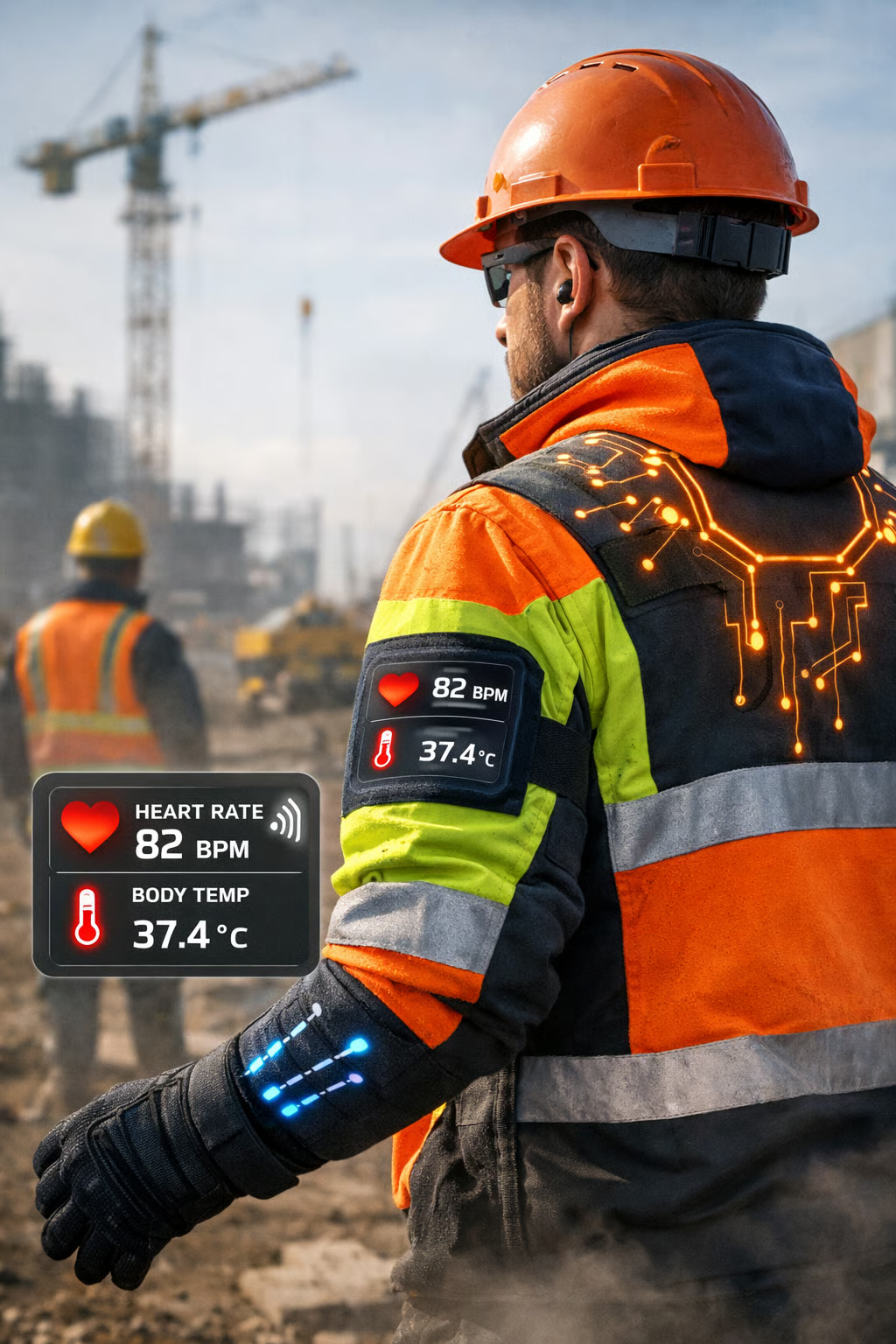 Image-R.E.News©
casque, bottes, gants, gilet fluorescent. Une armure nécessaire, mais silencieuse. Aujourd’hui, une révolution discrète s’annonce — une révolution où le vêtement lui-même devient sentinelle.
À la University of Georgia, des chercheurs explorent une nouvelle frontière : les textiles intelligents. Ces tissus, enrichis de matériaux avancés comme les MXenes, ne se contentent plus de protéger — ils ressentent, analysent et alertent. Température corporelle, fréquence cardiaque, pression sanguine… chaque signal vital peut être capté en continu, directement au cœur du textile.
Leur secret réside dans ces matériaux bidimensionnels à haute conductivité, capables de transformer une simple veste en système de surveillance intégré. Souples, légers, compatibles avec les procédés textiles, ils permettent une innovation majeure : intégrer la technologie dans le vêtement, et non plus sur le corps. Finis les dispositifs externes encombrants — la sécurité devient naturelle, presque invisible.
Sur les chantiers, où la fatigue, la chaleur ou les efforts extrêmes peuvent faire basculer une situation en quelques instants, cette avancée change tout. Imaginez : un vêtement capable de détecter un début de surchauffe, un rythme cardiaque anormal ou un mouvement de chute — et d’envoyer immédiatement une alerte. Dans un secteur où près de 20 % des accidents mortels concernent la construction, l’enjeu est immense.
Mais ces textiles vont plus loin encore. Connectés aux systèmes numériques du chantier — maquettes BIM, capteurs, plateformes de gestion — ils deviennent une source de données en temps réel. À grande échelle, ils dessinent une cartographie vivante de la fatigue, des contraintes physiques et des risques environnementaux. La sécurité ne réagit plus : elle anticipe.
Et l’innovation ne s’arrête pas là. Les MXenes offrent aussi des propriétés antimicrobiennes, limitant la prolifération bactérienne dans des environnements souvent hostiles — poussiéreux, humides, contaminés. Ils peuvent même intégrer des fonctions de production d’énergie, grâce à de fines couches solaires capables d’alimenter capteurs et उपकरणs sans batteries encombrantes. Le vêtement devient alors autonome, presque organique.
Bien sûr, des défis subsistent. La durabilité face à l’humidité, à l’oxydation, aux lavages répétés reste un enjeu clé. Les procédés de fabrication doivent encore évoluer pour devenir plus robustes et durables. Mais la trajectoire est tracée.
Car au fond, ce qui se joue ici dépasse le simple progrès technique. C’est une transformation profonde de la sécurité industrielle : le passage d’une protection passive à une intelligence embarquée, capable de prévenir plutôt que subir.
Un jour prochain, sur les chantiers, les gilets ne se contenteront plus d’être visibles. Ils veilleront.
NJC.© Info University of Georgia research project
--------------------------------------------------------------------------------------------------------------
18/03/26-English
On construction sites around the world, safety has long had a familiar face:
Image-R.E.News©
helmet, boots, gloves, high-vis vest. Necessary, but silent, armor. Today, a quiet revolution is on the horizon—a revolution where clothing itself becomes a sentinel.
At the University of Georgia, researchers are exploring a new frontier: smart textiles. These fabrics, enriched with advanced materials like MXenes, no longer simply protect—they sense, analyze, and alert. Body temperature, heart rate, blood pressure… every vital signal can be continuously captured, directly within the fabric.
Their secret lies in these two-dimensional, high-conductivity materials, capable of transforming a simple jacket into an integrated monitoring system. Flexible, lightweight, and compatible with textile processes, they enable a major innovation: integrating technology into the garment, rather than onto the body. No more bulky external devices—safety becomes natural, almost invisible.
On construction sites, where fatigue, heat, or extreme exertion can change everything in an instant, this breakthrough is a game-changer. Imagine: clothing capable of detecting the onset of overheating, an abnormal heart rate, or a fall—and immediately sending an alert. In a sector where nearly 20% of fatal accidents are construction-related, the stakes are enormous.
But these textiles go even further. Connected to the site's digital systems—BIM models, sensors, management platforms—they become a source of real-time data. On a large scale, they create a dynamic map of fatigue, physical strain, and environmental risks. Safety is no longer reactive; it's proactive.
And the innovation doesn't stop there. MXenes also offer antimicrobial properties, limiting bacterial growth in often hostile environments—dusty, humid, and contaminated. They can even integrate energy production functions, thanks to thin solar layers capable of powering sensors and devices without bulky batteries. The garment then becomes autonomous, almost organic.
Of course, challenges remain. Durability in the face of humidity, oxidation, and repeated washing remains a key issue. Manufacturing processes still need to evolve to become more robust and durable. But the path is set.
Because ultimately, what is at stake here goes beyond simple technological progress. It is a profound transformation of industrial safety: the shift from passive protection to embedded intelligence, capable of preventing rather than reacting.
One day soon, on construction sites, vests will no longer simply be visible. They will be vigilant.
NJC.© Info University of Georgia research project
------------------------------------------------------------------------------------------------------------------
18/03/26-NL
Op bouwplaatsen over de hele wereld heeft veiligheid al lange tijd een vertrouwd gezicht:
Image-R.E.News©
helm, laarzen, handschoenen, reflecterend vest. Noodzakelijke, maar stille bescherming. Vandaag de dag staat er een stille revolutie voor de deur – een revolutie waarbij kleding zelf een bewaker wordt.
Aan de Universiteit van Georgia onderzoeken onderzoekers een nieuwe grens: slim textiel. Deze stoffen, verrijkt met geavanceerde materialen zoals MXenes, beschermen niet langer alleen – ze detecteren, analyseren en waarschuwen. Lichaamstemperatuur, hartslag, bloeddruk… elk vitaal signaal kan continu worden geregistreerd, direct in de stof.
Het geheim schuilt in deze tweedimensionale, zeer geleidende materialen, die een eenvoudig jack kunnen transformeren in een geïntegreerd monitoringsysteem. Flexibel, lichtgewicht en compatibel met textielprocessen, maken ze een belangrijke innovatie mogelijk: technologie integreren in het kledingstuk in plaats van op het lichaam. Geen omvangrijke externe apparaten meer – veiligheid wordt natuurlijk, bijna onzichtbaar.
Op bouwplaatsen, waar vermoeidheid, hitte of extreme inspanning alles in een oogwenk kunnen veranderen, is deze doorbraak een gamechanger. Stel je voor: kleding die oververhitting, een abnormale hartslag of een val kan detecteren en direct een waarschuwing kan versturen. In een sector waar bijna 20% van de dodelijke ongevallen bouwgerelateerd is, staat er enorm veel op het spel.
Maar deze textielsoorten gaan nog een stap verder. Gekoppeld aan de digitale systemen van de bouwplaats – BIM-modellen, sensoren, beheerplatformen – worden ze een bron van realtime data. Op grote schaal creëren ze een dynamische kaart van vermoeidheid, fysieke belasting en omgevingsrisico's. Veiligheid is niet langer reactief, maar proactief.
En de innovatie stopt daar niet. MXenes bieden ook antimicrobiële eigenschappen, waardoor bacteriegroei in vaak vijandige omgevingen – stoffig, vochtig en vervuild – wordt beperkt. Ze kunnen zelfs energieopwekkingsfuncties integreren, dankzij dunne zonnecellen die sensoren en apparaten van stroom kunnen voorzien zonder omvangrijke batterijen. Het kledingstuk wordt dan autonoom, bijna organisch.
Natuurlijk blijven er uitdagingen. Duurzaamheid bij vochtigheid, oxidatie en herhaaldelijk wassen blijft een belangrijk aandachtspunt. Productieprocessen moeten nog verder worden ontwikkeld om robuuster en duurzamer te worden. Maar de weg is gebaand.
Want uiteindelijk gaat het hier om meer dan alleen technologische vooruitgang. Het is een ingrijpende transformatie van de industriële veiligheid: de verschuiving van passieve bescherming naar ingebouwde intelligentie, die in staat is om te voorkomen in plaats van te reageren.
Binnenkort zullen veiligheidsvesten op bouwplaatsen niet langer alleen zichtbaar zijn. Ze zullen waakzaam zijn.
NJC.© Info University of Georgia research project
------------------------------------------------------------------------------------------------------------
Date de dernière mise à jour : 17/03/2026