












R.E.News future Technology-Teaching Traffic Signals to Think with Miovision’s AI Optimisation Platform
 05/06/26-FR-English-NL-footer
Miovision mise sur l’IA pour révolutionner l’optimisation des feux de circulation
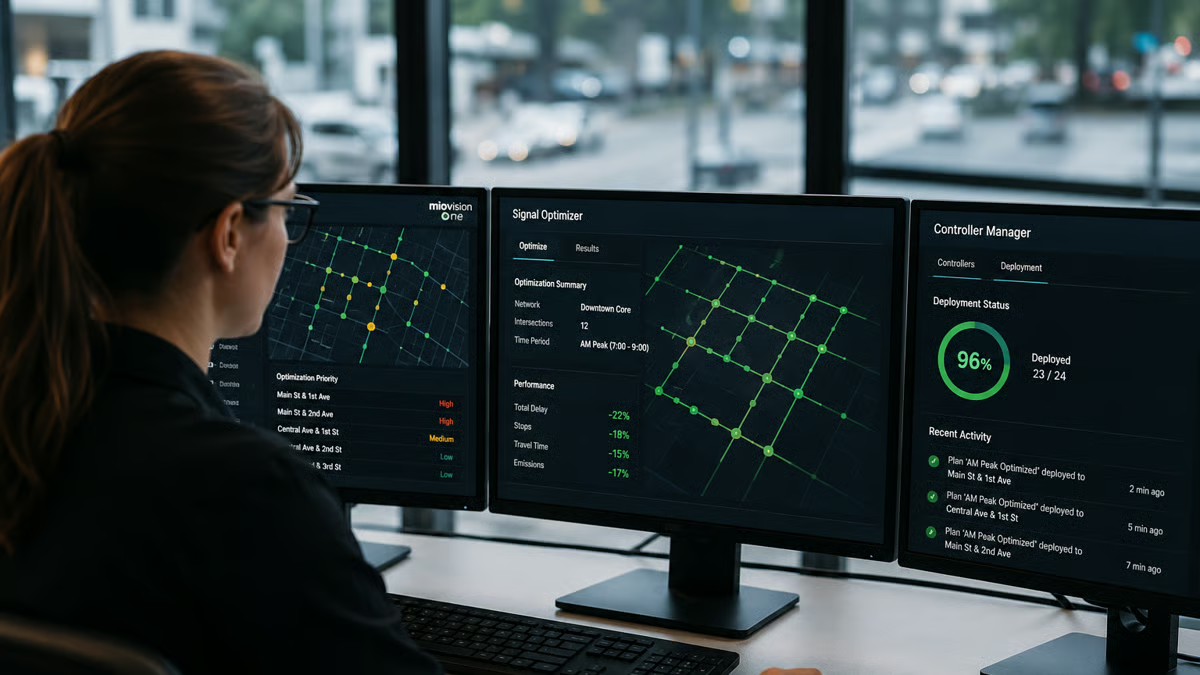 Image-R.E.News©
Face à l’évolution rapide des flux de mobilité urbaine, les collectivités cherchent de nouvelles solutions pour adapter leurs réseaux de circulation sans multiplier les investissements. C’est dans ce contexte que Miovision dévoile une plateforme intégrée d’optimisation des feux de signalisation basée sur l’intelligence artificielle, réunissant analyse, optimisation, déploiement et validation au sein d’un environnement unique.
Alors que de nombreuses villes continuent de réviser la programmation de leurs carrefours tous les trois à cinq ans seulement, souvent au prix d’études longues et coûteuses, Miovision ambitionne de transformer cette approche en un processus continu et proactif. Selon l’entreprise, les opérations de recalibrage des feux peuvent représenter entre 3 000 et 5 000 dollars par intersection, tout en mobilisant d’importantes ressources techniques.
Au cœur de cette innovation figure Mateo, un assistant d’ingénierie du trafic alimenté par l’IA générative. Capable d’analyser des données historiques et en temps réel, il identifie les intersections nécessitant des ajustements et aide les ingénieurs à prioriser leurs interventions. Les recommandations restent toutefois soumises à une validation humaine, garantissant un contrôle total des décisions opérationnelles.
La plateforme intègre également Signal Optimizer, qui s’appuie sur des algorithmes génétiques et les méthodologies du Highway Capacity Manual pour générer automatiquement des plans de signalisation optimisés. Les objectifs peuvent être adaptés aux priorités locales : réduction de la congestion, amélioration des transports publics, mobilité active ou diminution des émissions.
Enfin, grâce à Controller Manager, les équipes peuvent déployer à distance les nouveaux plans de feux, superviser les contrôleurs et suivre les performances du réseau depuis une interface unique. Cette approche vise à réduire jusqu’à 50 % les efforts nécessaires aux opérations de retiming tout en améliorant la réactivité des gestionnaires d’infrastructures.
Avec cette solution, Miovision s’inscrit dans une tendance de fond qui voit les réseaux de transport évoluer vers une gestion prédictive et connectée. Dans un contexte où les villes doivent concilier fluidité du trafic, sécurité, réduction des émissions et développement des mobilités durables, l’intelligence artificielle apparaît désormais comme un levier stratégique pour bâtir des infrastructures urbaines plus intelligentes et plus réactives.
NJC.© Info https://miovision.com/ https://www.ite.org/ https://www.nationalacademies.org/units/TRB-Transporta-23-P-586
-----------------------------------------------------------------------------------------------------------
05/06/26-English
Miovision Leverages AI to Revolutionize Traffic Light Optimization
Image-R.E.News©
Faced with the rapid evolution of urban mobility flows, local authorities are seeking new solutions to adapt their traffic networks without increasing investment. It is in this context that Miovision unveils an integrated traffic light optimization platform based on artificial intelligence, combining analysis, optimization, deployment, and validation within a single environment.
While many cities continue to revise their intersection programming only every three to five years, often at the cost of lengthy and expensive studies, Miovision aims to transform this approach into a continuous and proactive process. According to the company, traffic light recalibration operations can cost between $3,000 and $5,000 per intersection, while also requiring significant technical resources.
At the heart of this innovation is Mateo, a traffic engineering assistant powered by generative AI. Capable of analyzing historical and real-time data, it identifies intersections requiring adjustments and helps engineers prioritize their interventions. Recommendations, however, remain subject to human validation, ensuring complete control over operational decisions.
The platform also integrates Signal Optimizer, which leverages genetic algorithms and Highway Capacity Manual methodologies to automatically generate optimized signaling plans. Objectives can be tailored to local priorities: congestion reduction, improved public transportation, active mobility, or emissions reduction.
Finally, thanks to Controller Manager, teams can remotely deploy new signal plans, supervise controllers, and monitor network performance from a single interface. This approach aims to reduce the effort required for retiming operations by up to 50% while improving the responsiveness of infrastructure managers.
With this solution, Miovision aligns with a fundamental trend of transportation networks evolving toward predictive and connected management. In a context where cities must reconcile traffic flow, safety, emissions reduction, and the development of sustainable mobility, artificial intelligence is emerging as a strategic lever for building smarter and more responsive urban infrastructure.
NJC.© Info https://miovision.com/ https://www.ite.org/ https://www.nationalacademies.org/units/TRB-Transporta-23-P-586
------------------------------------------------------------------------------------------------------------------
05/06/26-NL
Miovision zet AI in voor een revolutie in verkeerslichtoptimalisatie
Image-R.E.News©
Geconfronteerd met de snelle evolutie van stedelijke mobiliteit, zoeken lokale overheden naar nieuwe oplossingen om hun verkeersnetwerken aan te passen zonder de investeringen te verhogen. In deze context introduceert Miovision een geïntegreerd platform voor verkeerslichtoptimalisatie op basis van kunstmatige intelligentie (AI), dat analyse, optimalisatie, implementatie en validatie combineert in één omgeving.
Terwijl veel steden hun kruispuntprogrammering slechts eens in de drie tot vijf jaar herzien, vaak ten koste van langdurige en kostbare studies, wil Miovision deze aanpak transformeren naar een continu en proactief proces. Volgens het bedrijf kunnen herkalibraties van verkeerslichten tussen de $ 3.000 en $ 5.000 per kruispunt kosten, en vereisen ze bovendien aanzienlijke technische middelen.
Centraal in deze innovatie staat Mateo, een verkeersingenieursassistent die gebruikmaakt van generatieve AI. Mateo kan historische en realtime data analyseren, kruispunten identificeren die aanpassingen vereisen en ingenieurs helpen bij het prioriteren van hun interventies. Aanbevelingen worden echter nog steeds door mensen gevalideerd, waardoor volledige controle over operationele beslissingen wordt gewaarborgd.
Het platform integreert ook Signal Optimizer, dat gebruikmaakt van genetische algoritmen en methodologieën uit het Highway Capacity Manual om automatisch geoptimaliseerde signaleringsplannen te genereren. Doelstellingen kunnen worden afgestemd op lokale prioriteiten: congestievermindering, verbetering van het openbaar vervoer, actieve mobiliteit of emissiereductie.
Dankzij Controller Manager kunnen teams bovendien op afstand nieuwe signaleringsplannen implementeren, controllers aansturen en de netwerkprestaties monitoren vanuit één interface. Deze aanpak is erop gericht de benodigde inspanning voor het aanpassen van de timing met wel 50% te verminderen en tegelijkertijd de responsiviteit van infrastructuurbeheerders te verbeteren.
Met deze oplossing sluit Miovision aan bij een fundamentele trend in de ontwikkeling van transportnetwerken naar voorspellend en verbonden beheer. In een context waarin steden een balans moeten vinden tussen verkeersdoorstroming, veiligheid, emissiereductie en de ontwikkeling van duurzame mobiliteit, ontpopt kunstmatige intelligentie zich als een strategisch instrument voor het bouwen van slimmere en responsievere stedelijke infrastructuur.
NJC.© Info https://miovision.com/ https://www.ite.org/ https://www.nationalacademies.org/units/TRB-Transporta-23-P-586
---------------------------------------------------------------------------------------------------------------
Date de dernière mise à jour : 04/06/2026