



R.E.News future Technology-The Oil Price Shock Must Accelerate AI Adoption in Construction
 13/05/26-FR-English-NL-footer
La flambée du pétrole accélère l’adoption de l’IA dans la construction
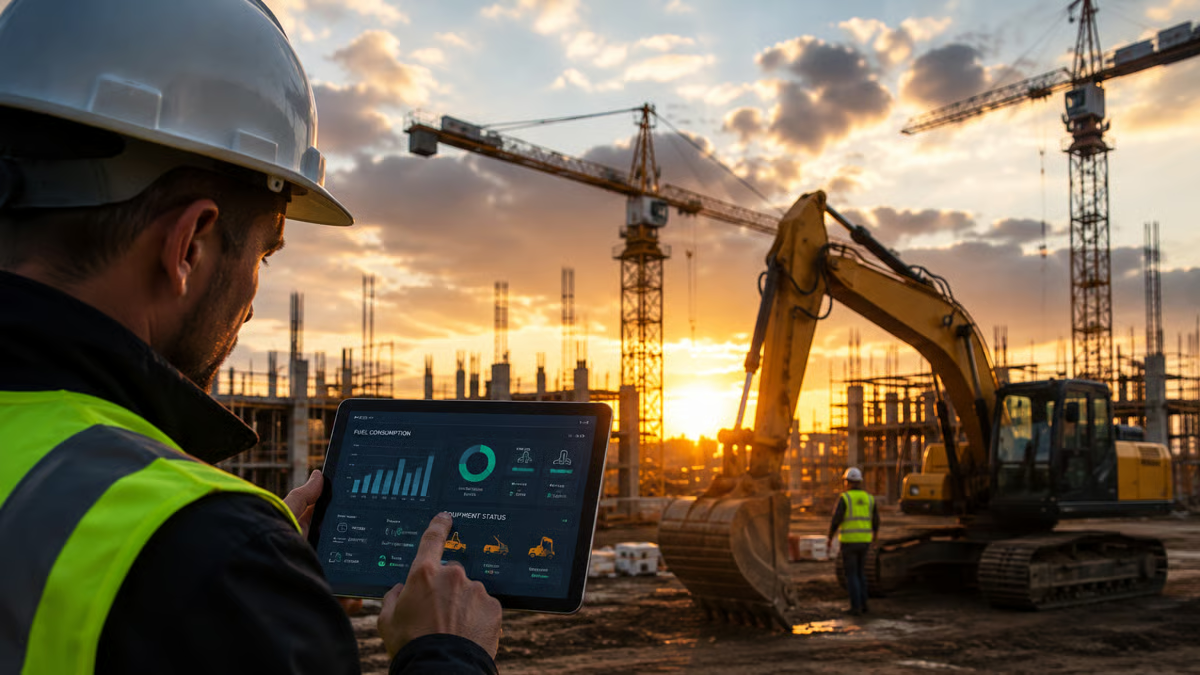 Image-R.E.News©
La récente hausse des prix du pétrole, alimentée par les tensions géopolitiques mondiales, bouleverse l’industrie de la construction et pourrait bien devenir un catalyseur majeur pour l’adoption de l’intelligence artificielle sur les chantiers.
Depuis la fin du mois de février, le prix du baril de Brent a fortement progressé, mettant sous pression les entreprises de construction, pour lesquelles le carburant représente un coût d’exploitation essentiel. Dans un secteur où les marges sont déjà fragiles, cette volatilité transforme la gestion du carburant en véritable enjeu stratégique.
Face à cette situation, de nombreux acteurs se tournent vers l’IA afin d’améliorer la visibilité et le contrôle des opérations. Sur les chantiers, les équipements génèrent déjà une grande quantité de données grâce à la télématique et aux machines connectées. L’intelligence artificielle permet désormais de transformer ces informations en décisions concrètes et immédiates.
L’un des principaux défis reste le temps de ralenti des machines. Certains équipements peuvent passer jusqu’à 40 % de leur temps moteur allumé sans produire de travail effectif, consommant inutilement du carburant. Grâce à l’IA, les gestionnaires peuvent identifier ces pertes en temps réel, analyser leurs causes — mauvaise planification, coordination inefficace ou sous-utilisation des équipements — puis ajuster rapidement les opérations.
Les premiers résultats observés dans le secteur sont significatifs. Certaines entreprises utilisant des outils d’analyse pilotés par l’IA enregistrent jusqu’à 20 % de réduction de consommation liée au ralenti, tout en améliorant l’utilisation de leurs flottes.
Au-delà des économies de carburant, cette transformation marque une évolution plus profonde de la gestion des chantiers. L’IA offre une vision globale des opérations, aide à optimiser les ressources et permet des prises de décision plus rapides et plus précises. L’objectif n’est pas de remplacer l’expertise humaine, mais de renforcer les capacités des équipes grâce à une analyse continue des données.
Dans un contexte économique instable, l’efficacité opérationnelle devient désormais un avantage concurrentiel. Les entreprises capables de réduire le gaspillage, d’optimiser leurs équipements et d’anticiper les problèmes seront mieux préparées aux futures crises énergétiques et financières.
Pour l’industrie de la construction, la flambée des prix du pétrole agit donc comme un révélateur : l’intelligence artificielle n’est plus une technologie d’avenir, mais un outil devenu indispensable pour construire des opérations plus résilientes, plus rentables et plus durables.
NJC.© Info https://trackunit.com/ Soeren Brogaard, CEO,
--------------------------------------------------------------------------------------------------------------------
13/05/26-English
Soaring Oil Prices Accelerate AI Adoption in Construction
Image-R.E.News©
The recent surge in oil prices, fueled by global geopolitical tensions, is disrupting the construction industry and could well become a major catalyst for the adoption of artificial intelligence on construction sites.
Since the end of February, the price of a barrel of Brent crude has risen sharply, putting pressure on construction companies, for whom fuel represents a critical operating cost. In a sector where margins are already fragile, this volatility is transforming fuel management into a truly strategic issue.
Faced with this situation, many players are turning to AI to improve the visibility and control of operations. On construction sites, equipment already generates a large amount of data thanks to telematics and connected machines. Artificial intelligence now makes it possible to transform this information into concrete and immediate decisions.
One of the main challenges remains machine idle time. Some equipment can spend up to 40% of its engine running time without producing any actual work, unnecessarily consuming fuel. Thanks to AI, managers can identify these losses in real time, analyze their causes—poor planning, inefficient coordination, or underutilization of equipment—and then quickly adjust operations.
The initial results observed in the sector are significant. Some companies using AI-powered analytics tools are recording up to a 20% reduction in fuel consumption related to idling, while also improving the utilization of their fleets.
Beyond fuel savings, this transformation marks a deeper evolution in construction site management. AI provides a comprehensive view of operations, helps optimize resources, and enables faster and more accurate decision-making. The goal is not to replace human expertise, but to enhance team capabilities through continuous data analysis.
In an unstable economic environment, operational efficiency is now becoming a competitive advantage. Companies that can reduce waste, optimize their equipment, and anticipate problems will be better prepared for future energy and financial crises.
For the construction industry, soaring oil prices are therefore acting as a wake-up call: artificial intelligence is no longer a technology of the future, but an essential tool for building more resilient, profitable, and sustainable operations.
NJC.© Info https://trackunit.com/ Soeren Brogaard, CEO,
------------------------------------------------------------------------------------------------------------------
13/05/26-NL
Stijgende olieprijzen versnellen de adoptie van AI in de bouw
Image-R.E.News©
De recente stijging van de olieprijzen, aangewakkerd door wereldwijde geopolitieke spanningen, ontwricht de bouwsector en zou wel eens een belangrijke katalysator kunnen worden voor de adoptie van kunstmatige intelligentie op bouwplaatsen.
Sinds eind februari is de prijs van een vat Brent-olie sterk gestegen, wat de druk op bouwbedrijven vergroot, aangezien brandstof een cruciale operationele kostenpost is. In een sector waar de marges toch al fragiel zijn, maakt deze volatiliteit brandstofbeheer tot een echt strategische kwestie.
Geconfronteerd met deze situatie wenden veel bedrijven zich tot AI om de zichtbaarheid en controle van de werkzaamheden te verbeteren. Op bouwplaatsen genereert materieel al een grote hoeveelheid data dankzij telematica en verbonden machines. Kunstmatige intelligentie maakt het nu mogelijk om deze informatie om te zetten in concrete en directe beslissingen.
Een van de grootste uitdagingen blijft de stilstandtijd van machines. Sommige machines kunnen tot wel 40% van hun motortijd draaien zonder daadwerkelijk werk te verrichten, waardoor onnodig brandstof wordt verbruikt. Dankzij AI kunnen managers deze verliezen in realtime identificeren, de oorzaken ervan analyseren – slechte planning, inefficiënte coördinatie of onderbenutting van materieel – en vervolgens snel de bedrijfsvoering aanpassen.
De eerste resultaten in de sector zijn veelbelovend. Sommige bedrijven die AI-gestuurde analysetools gebruiken, realiseren een brandstofbesparing tot wel 20% door stationair draaien, terwijl ze tegelijkertijd de benutting van hun wagenpark verbeteren.
Naast brandstofbesparing markeert deze transformatie een diepere evolutie in het beheer van bouwplaatsen. AI biedt een compleet overzicht van de bedrijfsvoering, helpt bij het optimaliseren van resources en maakt snellere en nauwkeurigere besluitvorming mogelijk. Het doel is niet om menselijke expertise te vervangen, maar om de capaciteiten van teams te versterken door middel van continue data-analyse.
In een instabiele economische omgeving wordt operationele efficiëntie nu een concurrentievoordeel. Bedrijven die verspilling kunnen verminderen, hun materieel kunnen optimaliseren en problemen kunnen anticiperen, zullen beter voorbereid zijn op toekomstige energie- en financiële crises.
Voor de bouwsector fungeren de stijgende olieprijzen dan ook als een wake-up call: kunstmatige intelligentie is niet langer een technologie van de toekomst, maar een essentieel instrument voor het bouwen van veerkrachtigere, winstgevendere en duurzamere bedrijfsvoering.
NJC.© Info https://trackunit.com/ Soeren Brogaard, CEO,
------------------------------------------------------------------------------------------------------------------
Date de dernière mise à jour : 13/05/2026