



R.E.News future Technology-The Rise Of Physical AI To Drive 145 Million Autonomous Machines By 2035
 04/05/26-FR-English-NL-footer
Physical AI
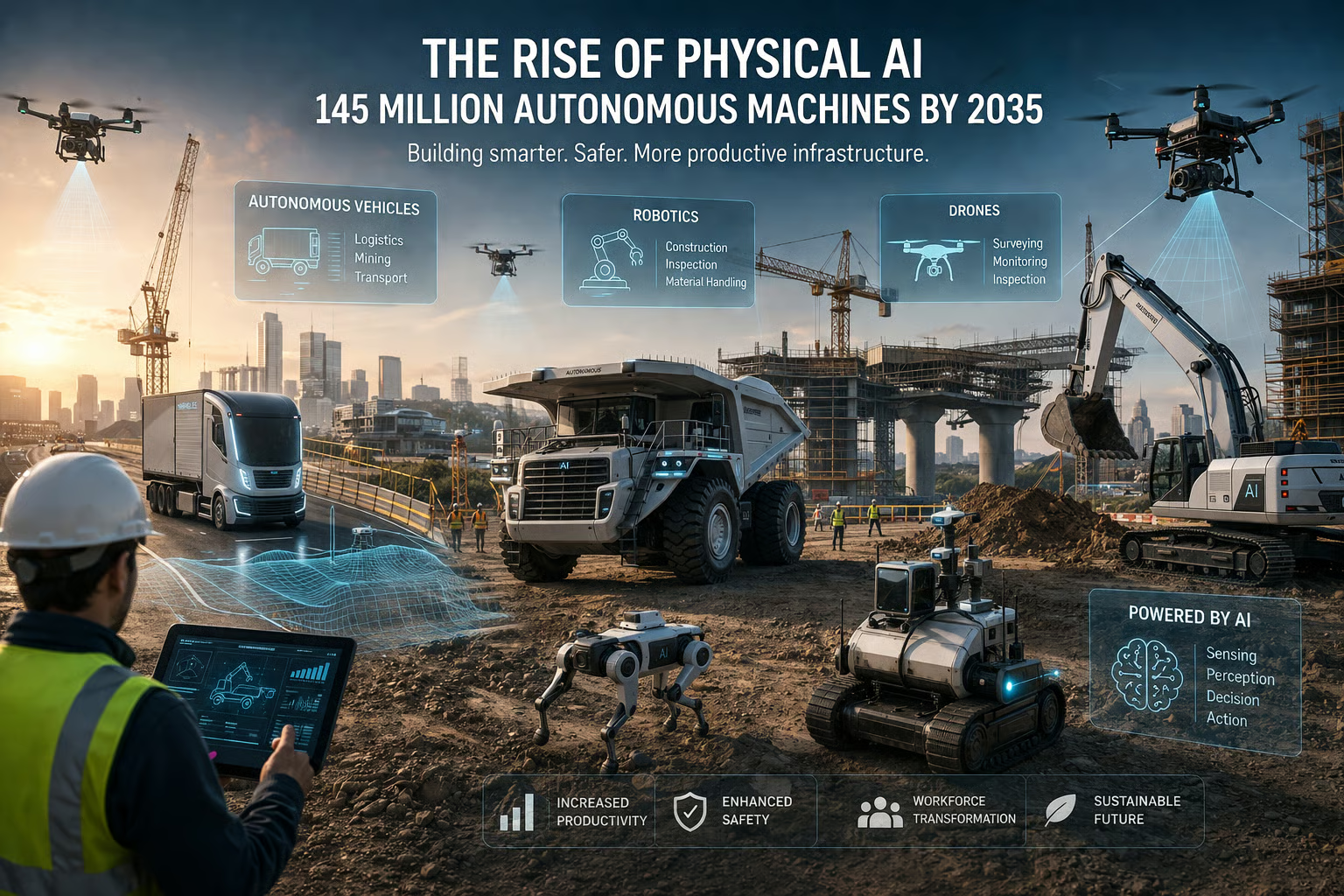 Image-R.E.News©
Quand les machines prennent le contrôle du réel
145 millions de machines autonomes d’ici 2035.
Le chiffre n’est pas une projection futuriste — c’est une trajectoire industrielle déjà engagée.
Selon Counterpoint Research, le monde entre dans une nouvelle phase : celle où l’intelligence artificielle quitte les écrans pour s’incarner dans la matière. Une bascule majeure. Silencieuse, mais irréversible.
De l’intelligence numérique… à l’intelligence physique
Pendant des années, l’IA a analysé, recommandé, optimisé.
Désormais, elle agit.
Le concept de Physical AI repose sur une convergence :
capteurs avancés
calcul embarqué (edge computing)
modèles d’intelligence artificielle
Résultat : des machines capables de percevoir, décider et exécuter dans des environnements complexes — chantiers, mines, réseaux logistiques.
Ce n’est plus de l’automatisation.
C’est une autonomie opérationnelle.
Les véhicules autonomes, colonne vertébrale du marché
Au cœur de cette révolution : les véhicules autonomes.
Niveaux 4 et plus, capables d’opérer sans intervention humaine dans des environnements définis, ils redessinent déjà :
la logistique
le transport urbain
les opérations minières
Leur poids économique dépasse celui de tous les autres segments.
Pourquoi ? Parce qu’ils combinent tout :
IA, connectivité, puissance de calcul, infrastructure.
La robotique sort de l’usine
Longtemps confinés aux lignes de production, les robots changent de terrain.
Aujourd’hui, ils investissent :
les chantiers
les entrepôts
les infrastructures
l’agriculture
Les robots de service dominent en volume.
Les robots industriels évoluent en intelligence.
Et la frontière entre machine spécialisée et système polyvalent commence à disparaître.
Humanoïdes : encore un fantasme… plus pour longtemps
Ils fascinent, mais restent en phase d’émergence.
Des acteurs comme Tesla, UBTECH Robotics ou Unitree Robotics accélèrent pourtant le mouvement.
Objectif : créer des robots capables d’évoluer dans des environnements conçus pour l’homme.
Le défi n’est plus le corps.
C’est l’esprit.
Passer de l’intelligence machine spécialisée à une forme d’intelligence générale incarnée.
Les drones, premiers gagnants
Moins spectaculaires, mais déjà indispensables.
Les drones sont aujourd’hui les systèmes Physical AI les plus déployés :
inspection
topographie
suivi de chantier
maintenance d’infrastructures
Leur force : rapidité, coût faible, efficacité immédiate.
Ils sont le premier aperçu concret d’un monde où les machines travaillent seules… mais intelligemment.
La guerre invisible : la puissance de calcul
Derrière chaque machine autonome se cache une bataille stratégique :
celle du compute.
Des acteurs comme NVIDIA ou Qualcomm façonnent les “cerveaux” de ces systèmes :
puces IA
edge computing
simulation et apprentissage
À mesure que la mécanique devient standardisée, la valeur migre vers le logiciel et la puissance de traitement.
Une révolution collaborative
Aucun acteur ne peut dominer seul cet écosystème.
Constructeurs, développeurs, opérateurs télécoms, plateformes logicielles…
Tous doivent s’interconnecter.
La Physical AI n’est pas une technologie.
C’est un système industriel global.
Une nouvelle couche industrielle
Le monde entre dans une nouvelle ère :
une couche intermédiaire entre le digital et le physique
des machines autonomes intégrées aux infrastructures
une productivité redéfinie
D’ici 2035, avec 145 millions de systèmes déployés, une chose deviendra évidente :
les infrastructures ne seront plus seulement construites par l’homme —
mais co-pilotées par des intelligences physiques.
NJC.© Info Counterpoint Research
----------------------------------------------------------------------------------------------------------------
04/05/26-English
Physical AI
Image-R.E.News©
When Machines Take Control of Reality
145 million autonomous machines by 2035.
This figure isn't a futuristic projection—it's an industrial trajectory already underway.
According to Counterpoint Research, the world is entering a new phase: one where artificial intelligence leaves screens to become embodied in matter. A major shift. Silent, but irreversible.
From Digital Intelligence… to Physical Intelligence
For years, AI has analyzed, recommended, and optimized.
Now, it acts.
The concept of Physical AI is based on a convergence of:
advanced sensors
edge computing
artificial intelligence models
The result: machines capable of perceiving, deciding, and executing in complex environments—construction sites, mines, logistics networks.
This is no longer automation.
This is operational autonomy.
Autonomous Vehicles: The Backbone of the Market
At the heart of this revolution: autonomous vehicles.
Level 4 and above, capable of operating without human intervention in defined environments, they are already reshaping:
logistics
urban transportation
mining operations
Their economic weight surpasses that of all other segments.
Why? Because they combine everything:
AI, connectivity, computing power, infrastructure.
Robotics Leaves the Factory
Long confined to production lines, robots are changing their domain.
Today, they are investing in:
construction sites
warehouses
infrastructure
agriculture
Service robots dominate in terms of volume.
Industrial robots are evolving in intelligence.
And the line between specialized machine and multipurpose system is beginning to disappear.
Humanoids: Still a fantasy… not for much longer
They fascinate, but remain in the emerging phase.
Nevertheless, players like Tesla, UBTECH Robotics, and Unitree Robotics are accelerating the movement.
Objective: to create robots capable of operating in environments designed for humans.
The challenge is no longer the body.
It's the mind.
Moving from specialized machine intelligence to a form of embodied general intelligence.
Drones, the first winners
Less spectacular, but already indispensable.
Drones are now the most widely deployed Physical AI systems:
inspection
surveying
construction site monitoring
infrastructure maintenance
Their strength: speed, low cost, immediate effectiveness.
They are the first concrete glimpse of a world where machines work alone… but intelligently.
The invisible war: computing power
Behind every autonomous machine lies a strategic battle:
the battle for computing power.
Players like NVIDIA and Qualcomm are shaping the “brains” of these systems:
AI chips
edge computing
simulation and machine learning
As the mechanics become standardized, value shifts to software and processing power.
A collaborative revolution
No single player can dominate this ecosystem alone.
Manufacturers, developers, telecom operators, software platforms…
They all need to interconnect.
Physical AI is not a technology.
It’s a comprehensive industrial system.
A new industrial layer
The world is entering a new era:
an intermediate layer between the digital and physical
autonomous machines integrated into infrastructure
redefined productivity
By 2035, with 145 million systems deployed, one thing will become clear:
infrastructure will no longer be built solely by humans—
but co-piloted by physical intelligence.
NJC.© Info Counterpoint Research
---------------------------------------------------------------------------------------------------------------------
04/05/26-NL
Fysieke AI
Image-R.E.News©
Wanneer machines de realiteit overnemen
145 miljoen autonome machines in 2035.
Dit cijfer is geen futuristische projectie, maar een industriële ontwikkeling die al gaande is.
Volgens Counterpoint Research betreedt de wereld een nieuwe fase: een waarin kunstmatige intelligentie de schermen verlaat en in de materie wordt belichaamd. Een grote verschuiving. Stil, maar onomkeerbaar.
Van digitale intelligentie… naar fysieke intelligentie
Jarenlang heeft AI geanalyseerd, aanbevolen en geoptimaliseerd.
Nu handelt het.
Het concept van fysieke AI is gebaseerd op een convergentie van:
geavanceerde sensoren
edge computing
modellen voor kunstmatige intelligentie
Het resultaat: machines die in staat zijn om waar te nemen, te beslissen en uit te voeren in complexe omgevingen – bouwplaatsen, mijnen, logistieke netwerken.
Dit is geen automatisering meer.
Dit is operationele autonomie.
Autonome voertuigen: de ruggengraat van de markt
In het hart van deze revolutie: autonome voertuigen.
Robots van niveau 4 en hoger, die zonder menselijke tussenkomst in gedefinieerde omgevingen kunnen opereren, hervormen nu al:
logistiek
stedelijk vervoer
mijnbouw
Hun economische gewicht overtreft dat van alle andere segmenten.
Waarom? Omdat ze alles combineren:
AI, connectiviteit, rekenkracht en infrastructuur.
Robotica verlaat de fabriek
Robots, die lange tijd beperkt waren tot productielijnen, veranderen van domein.
Tegenwoordig worden ze ingezet in:
bouwplaatsen
magazijnen
infrastructuur
landbouw
Servicerobots domineren qua volume.
Industriële robots ontwikkelen zich in intelligentie.
En de grens tussen gespecialiseerde machine en multifunctioneel systeem begint te vervagen.
Humanoiden: Nog steeds een fantasie… maar niet voor lang meer
Ze fascineren, maar bevinden zich nog in de beginfase.
Desalniettemin versnellen spelers als Tesla, UBTECH Robotics en Unitree Robotics de ontwikkeling.
Doel: robots creëren die kunnen opereren in omgevingen die ontworpen zijn voor mensen.
De uitdaging ligt niet langer in het lichaam.
Het gaat om de geest.
Van gespecialiseerde machine-intelligentie naar een vorm van belichaamde algemene intelligentie.
Drones, de eerste winnaars
Minder spectaculair, maar nu al onmisbaar.
Drones zijn nu de meest gebruikte fysieke AI-systemen:
inspectie
landmeting
bewaking van bouwplaatsen
onderhoud van infrastructuur
Hun sterke punten: snelheid, lage kosten, directe effectiviteit.
Ze geven een eerste concrete glimp van een wereld waarin machines zelfstandig werken... maar wel intelligent.
De onzichtbare oorlog: rekenkracht
Achter elke autonome machine schuilt een strategische strijd:
de strijd om rekenkracht.
Spelers zoals NVIDIA en Qualcomm ontwikkelen de "hersenen" van deze systemen:
AI-chips
edge computing
simulatie en machine learning
Naarmate de mechanica gestandaardiseerd wordt, verschuift de waarde naar software en rekenkracht.
Een collaboratieve revolutie
Geen enkele speler kan dit ecosysteem in zijn eentje domineren.
Fabrikanten, ontwikkelaars, telecomoperators, softwareplatforms…
Ze moeten allemaal met elkaar verbonden zijn.
Fysieke AI is geen technologie.
Het is een allesomvattend industrieel systeem.
Een nieuwe industriële laag
De wereld betreedt een nieuw tijdperk:
een tussenlaag tussen het digitale en het fysieke
autonome machines geïntegreerd in de infrastructuur
herdefinieerde productiviteit
Tegen 2035, met 145 miljoen systemen in gebruik, zal één ding duidelijk zijn:
infrastructuur zal niet langer uitsluitend door mensen worden gebouwd –
maar mede aangestuurd door fysieke intelligentie.
NJC.© Info Counterpoint Research
-----------------------------------------------------------------------------------------------------------------
Date de dernière mise à jour : 30/04/2026