



R.E.News International-Bridging Riyadh – Three WOLFF cranes build two cable-stayed bridges in Saudi Arabia's capital
 04/08/26-FR-English-NL-footer
Au cœur du désert saoudien, WOLFFKRAN érige les nouveaux géants de Riyad
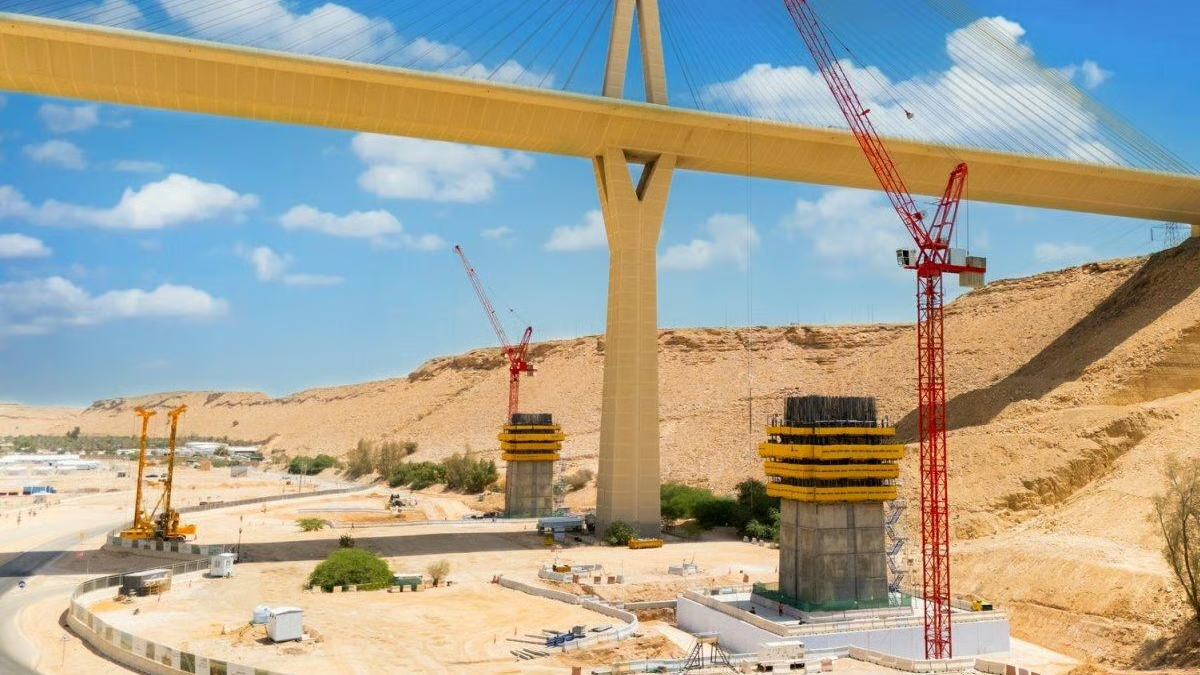
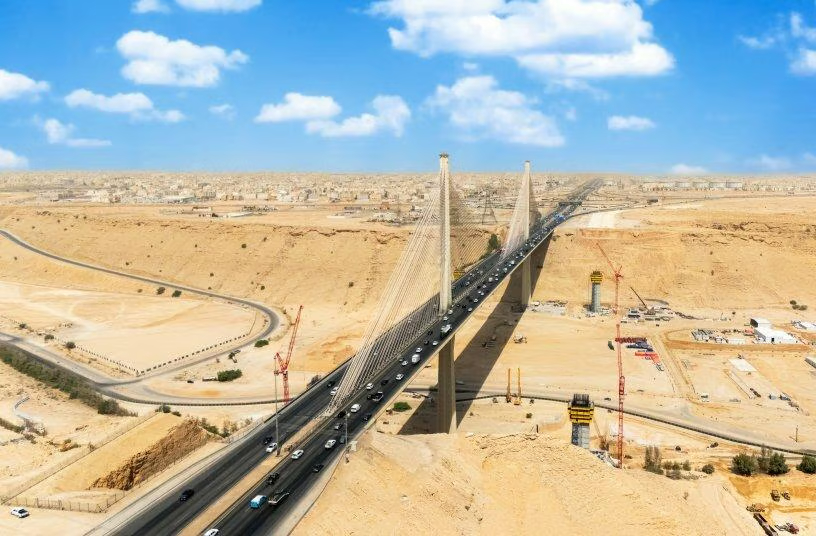 Three WOLFF 180 B luffing jib cranes handle all lifting operations during the construction of the bridge pylons, which reach heights of up to around 170 meters. The crane operations must be closely coordinated with the climbing sequence of the formwork and working platforms.- In the midst of the desert landscape southwest of Riyadh, threeWOLFF 180 B luffing jib cranes are supporting the construction ofthe new cable-stayed bridges over the Wadi Laban Valley. Theconstruction project is part of a large-scale infrastructure initiativein Riyadh that, according to official statements, is expected toincrease the capacity of the road network by up to 85 percent inthe long term.
IMAGE SOURCE: WOLFFKRAN International AG
Pendant plus de trente ans, un seul ouvrage dominait le spectaculaire Wadi Laban, dans le sud-ouest de Riyad. Véritable artère stratégique de la capitale saoudienne, ce pont emblématique suffisait autrefois à relier les deux rives de la vallée. Mais l'essor fulgurant de la métropole impose aujourd'hui une vision d'une toute autre ampleur. Deux nouveaux ponts à haubans monumentaux sont en train de s'élever de part et d'autre de l'ouvrage historique, annonçant une nouvelle ère pour les infrastructures du Royaume.
Au cœur de cet impressionnant chantier piloté par la Royal Commission for Riyadh City, trois grues à flèche relevable WOLFF 180 B orchestrent une véritable chorégraphie aérienne. Dressées à 157 mètres de hauteur sous crochet, équipées de flèches de 40 mètres et capables de lever jusqu'à 18 tonnes, elles assurent chaque étape de la construction avec une précision millimétrée.
Leur mission dépasse largement le simple levage. Coffrages géants, armatures d'acier, bétonnage des pylônes, plateformes de travail, équipements topographiques ou encore poutres de soutien de 12 tonnes : chaque opération contribue à donner naissance aux quatre pylônes culminant à près de 170 mètres, véritables signatures architecturales de ces futurs ouvrages.
L'un des défis les plus spectaculaires réside dans le repositionnement simultané de plusieurs plateformes de travail lors du changement des coffrages entre les différentes sections des pylônes. Une manœuvre complexe exploitant pleinement la capacité maximale des grues et illustrant le niveau d'ingénierie requis pour un projet de cette envergure.
Lorsque les travaux s'achèveront en 2027, chacun des deux ponts affichera des dimensions impressionnantes : 763 mètres de longueur, une travée principale de 405 mètres et une largeur d'environ 35 mètres, permettant d'accueillir huit voies de circulation. Bien plus que deux nouveaux franchissements, ces ouvrages deviendront l'un des piliers du vaste programme Main and Ring Road Axes Development Program, destiné à transformer durablement la mobilité dans la capitale saoudienne.
Selon les objectifs des autorités, ce programme d'infrastructures devrait accroître à long terme jusqu'à 85 % la capacité du réseau routier de Riyad, accompagnant ainsi le développement spectaculaire d'une ville qui ambitionne de devenir l'une des plus modernes du monde.
Dans cet environnement désertique où les températures extrêmes mettent hommes et machines à rude épreuve, les grues WOLFFKRAN démontrent une nouvelle fois que les plus grandes réalisations ne reposent pas uniquement sur le béton et l'acier. Elles naissent aussi de technologies capables d'allier puissance, précision et fiabilité, même dans les conditions les plus exigeantes.
À Riyad, ces trois silhouettes rouges ne construisent pas seulement deux ponts. Elles participent à façonner le visage d'une capitale en pleine mutation, où l'ingénierie devient le trait d'union entre les ambitions d'aujourd'hui et la mobilité de demain.
NJC.© Info WOLFFKRAN International AG
-----------------------------------------------------------------------------------------------------------------
04/08/26-English
In the heart of the Saudi desert, WOLFFKRAN erects Riyadh's new giants
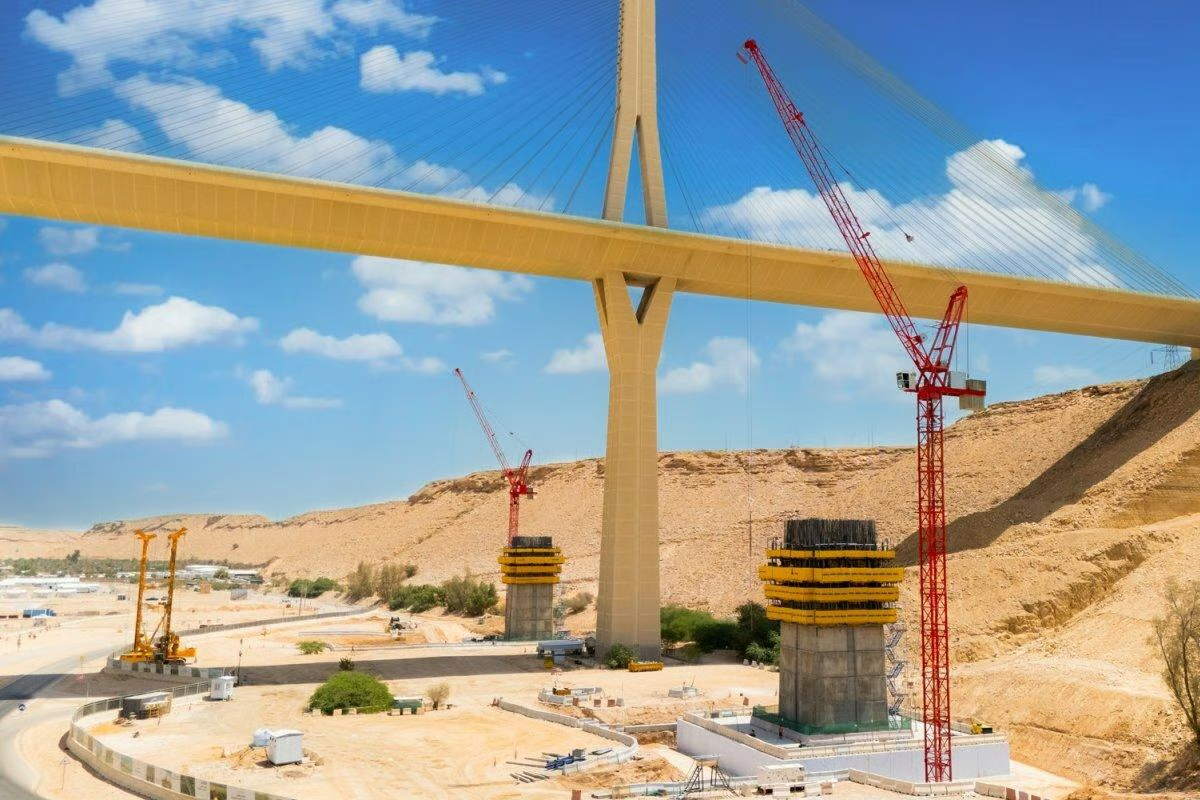 Three WOLFF 180 B luffing jib cranes handle all lifting operations during the construction of the bridge pylons, which reach heights of up to around 170 meters. The crane operations must be closely coordinated with the climbing sequence of the formwork and working platforms.- In the midst of the desert landscape southwest of Riyadh, threeWOLFF 180 B luffing jib cranes are supporting the construction ofthe new cable-stayed bridges over the Wadi Laban Valley. Theconstruction project is part of a large-scale infrastructure initiativein Riyadh that, according to official statements, is expected toincrease the capacity of the road network by up to 85 percent inthe long term.
IMAGE SOURCE: WOLFFKRAN International AG
For over thirty years, a single structure dominated the spectacular Wadi Laban, in southwest Riyadh. A true strategic artery of the Saudi capital, this iconic bridge was once sufficient to connect the two banks of the valley. But the metropolis's rapid growth now demands a vision of a completely different scale. Two new monumental cable-stayed bridges are rising on either side of the historic structure, heralding a new era for the Kingdom's infrastructure.
At the heart of this impressive construction site, managed by the Royal Commission for Riyadh City, three WOLFF 180 B luffing jib cranes orchestrate a veritable aerial choreography. Rising to a height of 157 meters under the hook, equipped with 40-meter booms and capable of lifting up to 18 tons, they ensure every stage of construction with millimeter precision.
Their mission goes far beyond simple lifting. Giant formwork, steel reinforcement, pylon concreting, work platforms, surveying equipment, and even 12-ton support beams: each operation contributes to the creation of the four pylons reaching nearly 170 meters, the true architectural signatures of these future structures.
One of the most spectacular challenges lies in the simultaneous repositioning of several work platforms when changing the formwork between the different sections of the pylon. This complex maneuver fully exploits the maximum capacity of the cranes and illustrates the level of engineering required for a project of this scale.
When construction is completed in 2027, each of the two bridges will boast impressive dimensions: 763 meters long, with a main span of 405 meters and a width of approximately 35 meters, accommodating eight lanes of traffic. More than just two new crossings, these structures will become a cornerstone of the vast Main and Ring Road Axes Development Program, designed to permanently transform mobility in the Saudi capital.
According to the authorities' objectives, this infrastructure program is expected to increase the capacity of Riyadh's road network by up to 85% in the long term, thus supporting the spectacular development of a city that aspires to become one of the most modern in the world.
In this desert environment, where extreme temperatures put both people and machines to the test, WOLFFKRAN cranes demonstrate once again that the greatest achievements are not solely based on concrete and steel. They also stem from technologies capable of combining power, precision, and reliability, even in the most demanding conditions.
In Riyadh, these three red silhouettes are not just building two bridges. They are helping to shape the face of a rapidly changing capital, where engineering is becoming the link between today's ambitions and tomorrow's mobility.
NJC.© Info WOLFFKRAN International AG
-----------------------------------------------------------------------------------------------------------------------
04/08/26-NL
In het hart van de Saoedische woestijn bouwt WOLFFKRAN de nieuwe reuzen van Riyad
Three WOLFF 180 B luffing jib cranes handle all lifting operations during the construction of the bridge pylons, which reach heights of up to around 170 meters. The crane operations must be closely coordinated with the climbing sequence of the formwork and working platforms.- In the midst of the desert landscape southwest of Riyadh, threeWOLFF 180 B luffing jib cranes are supporting the construction ofthe new cable-stayed bridges over the Wadi Laban Valley. Theconstruction project is part of a large-scale infrastructure initiativein Riyadh that, according to official statements, is expected toincrease the capacity of the road network by up to 85 percent inthe long term.
IMAGE SOURCE: WOLFFKRAN International AG
IMAGE SOURCE: WOLFFKRAN International AG
Meer dan dertig jaar lang domineerde één enkele constructie de spectaculaire Wadi Laban in het zuidwesten van Riyad. Deze iconische brug, een ware strategische ader van de Saoedische hoofdstad, was ooit voldoende om de twee oevers van de vallei met elkaar te verbinden. Maar de snelle groei van de metropool vraagt nu om een visie van een compleet andere schaal. Twee nieuwe monumentale kabelbruggen verrijzen aan weerszijden van de historische constructie en luiden een nieuw tijdperk in voor de infrastructuur van het Koninkrijk.
In het hart van deze indrukwekkende bouwplaats, beheerd door de Koninklijke Commissie voor de Stad Riyad, orkestreren drie WOLFF 180 B luffing jibkranen een ware choreografie in de lucht. Met een hoogte van 157 meter onder de haak, uitgerust met gieken van 40 meter en een hefvermogen tot 18 ton, zorgen ze ervoor dat elke bouwfase met millimeterprecisie wordt uitgevoerd.
Hun missie gaat veel verder dan alleen het hijsen. Gigantische bekisting, wapeningsstaal, betonstorten voor de pylonen, werkplatforms, meetapparatuur en zelfs steunbalken van 12 ton: elke stap draagt bij aan de realisatie van de vier pylonen, die samen bijna 170 meter hoog worden en de architectonische blikvangers van deze toekomstige constructies vormen.
Een van de meest spectaculaire uitdagingen is het gelijktijdig verplaatsen van meerdere werkplatforms bij het wisselen van de bekisting tussen de verschillende delen van de pylon. Deze complexe manoeuvre benut de maximale capaciteit van de kranen ten volle en illustreert het niveau van technische expertise dat nodig is voor een project van deze omvang.
Wanneer de bouw in 2027 voltooid is, zullen beide bruggen indrukwekkende afmetingen hebben: 763 meter lang, met een hoofdoverspanning van 405 meter en een breedte van circa 35 meter, met acht rijstroken. Deze constructies, die meer zijn dan alleen twee nieuwe verbindingen, zullen een hoeksteen vormen van het omvangrijke ontwikkelingsprogramma voor de hoofd- en ringwegen, dat is ontworpen om de mobiliteit in de Saoedische hoofdstad permanent te transformeren.
Volgens de doelstellingen van de autoriteiten zal dit infrastructuurprogramma de capaciteit van het wegennet van Riyad op de lange termijn met maar liefst 85% verhogen, waarmee de spectaculaire ontwikkeling van een stad die ernaar streeft een van de modernste ter wereld te worden, wordt ondersteund.
In deze woestijnomgeving, waar extreme temperaturen zowel mens als machine op de proef stellen, bewijzen de kranen van WOLFFKRAN eens te meer dat de grootste prestaties niet alleen gebaseerd zijn op beton en staal. Ze komen ook voort uit technologieën die kracht, precisie en betrouwbaarheid combineren, zelfs onder de meest veeleisende omstandigheden.
In Riyad bouwen deze drie rode silhouetten niet zomaar twee bruggen. Ze helpen het gezicht vorm te geven van een snel veranderende hoofdstad, waar techniek de schakel vormt tussen de ambities van vandaag en de mobiliteit van morgen.
NJC.© Info WOLFFKRAN International AG
----------------------------------------------------------------------------------------------------------------
Date de dernière mise à jour : 03/08/2026