



R.E.News International-Building Resilient Roads for a Changing Climate
 02/12/25-FR-English-NL-footer
Construire des Routes Résilientes dans un Climat en Mutation
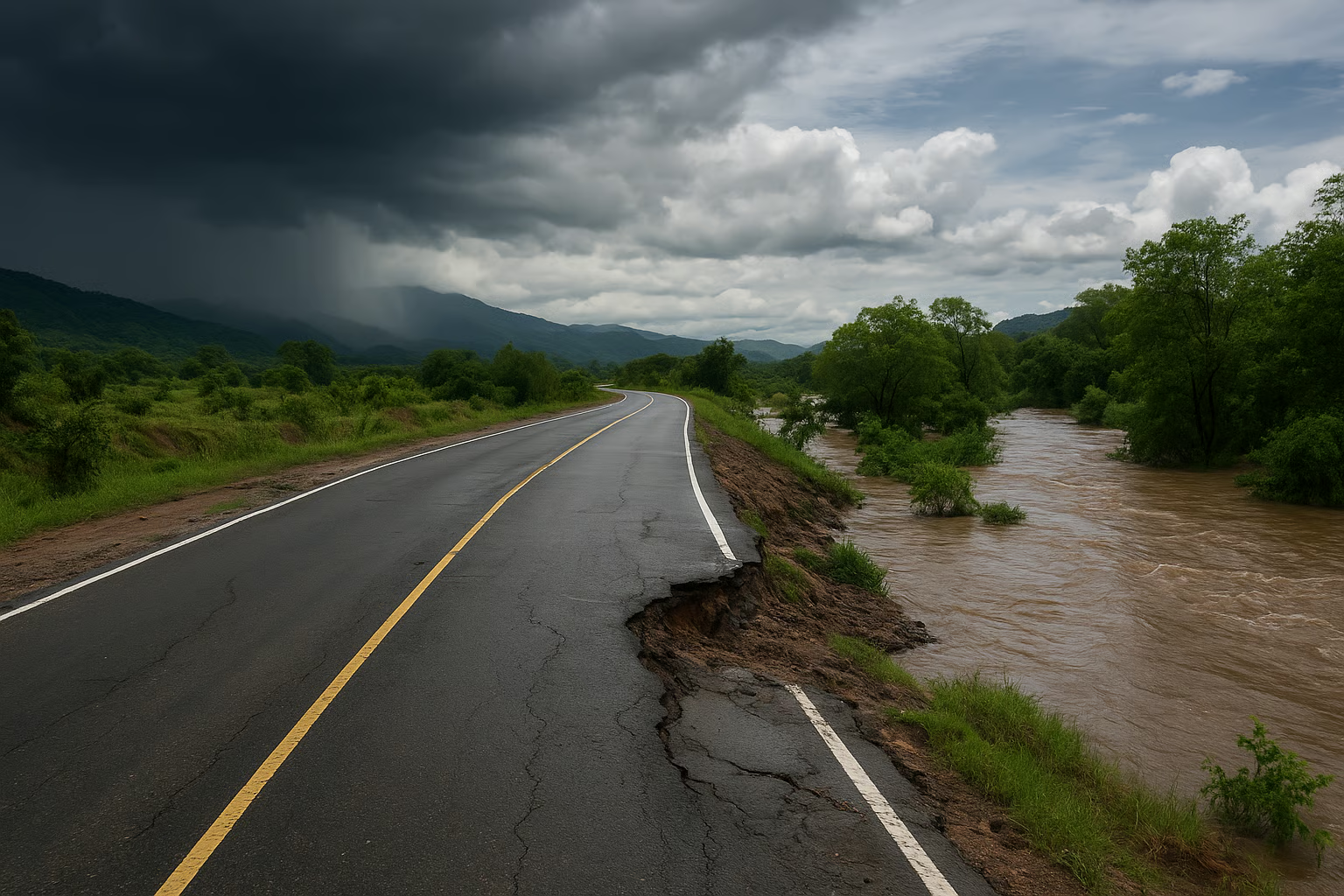 Image-R.E.News©
L’Asie et le Pacifique font face à un défi urgent : des routes conçues pour un climat passé sont aujourd’hui mises à rude épreuve. Tempêtes plus violentes, pluies irrégulières, vagues de chaleur et montée des eaux fragilisent des infrastructures vitales. Lorsque ces routes cèdent, ce sont des communautés entières qui se retrouvent isolées, privées d’accès aux soins, à l’éducation et aux opportunités économiques.
Le cas de Timor-Leste illustre parfaitement cette vulnérabilité. Ses routes de montagne, comme la C13, se détériorent rapidement sous l’effet des pluies intenses et des glissements de terrain. Le cyclone Seroja en 2021 a révélé l’ampleur des dégâts possibles : routes emportées, villages coupés du monde, coûts de réparation élevés. Et les projections climatiques annoncent des pluies plus fréquentes et plus fortes dans les décennies à venir.
Face à ces risques croissants, la résilience doit devenir une priorité. Elle repose sur quatre actions clés : identifier les tronçons les plus exposés, les renforcer par des solutions techniques et naturelles, renforcer les capacités des institutions et des communautés, et intégrer l’adaptation climatique dans toutes les phases de planification et de maintenance.
Ces approches, déjà mises en œuvre dans des pays vulnérables comme Timor-Leste, offrent une voie à suivre pour toute la région. Rendre les routes résilientes ne protège pas seulement les infrastructures : cela sécurise les chaînes d’approvisionnement, préserve les services essentiels et soutient un développement durable.
Dans un climat qui change plus vite que jamais, investir dans des routes capables de résister aux chocs à venir est une condition indispensable pour protéger les générations futures.
NJC.© Info blog published by the Asian Development Bank
-------------------------------------------------------------------------------------------------------------------
02/12/25-English
Building Resilient Roads in a Changing Climate
Image-R.E.News©
Asia and the Pacific face an urgent challenge: roads designed for a past climate are now being pushed to their limits. More intense storms, erratic rainfall, heat waves, and rising sea levels are weakening vital infrastructure. When these roads collapse, entire communities are left isolated, deprived of access to healthcare, education, and economic opportunities.
The case of Timor-Leste perfectly illustrates this vulnerability. Its mountain roads, such as the C13, deteriorate rapidly under the effects of heavy rainfall and landslides. Cyclone Seroja in 2021 revealed the extent of the potential damage: roads washed away, villages cut off from the world, and high repair costs. And climate projections predict more frequent and heavier rainfall in the coming decades.
Faced with these growing risks, resilience must become a priority. It is based on four key actions: identifying the most vulnerable road sections, reinforcing them with technical and natural solutions, strengthening the capacities of institutions and communities, and integrating climate adaptation into all phases of planning and maintenance.
These approaches, already implemented in vulnerable countries like Timor-Leste, offer a path forward for the entire region. Making roads resilient not only protects infrastructure but also secures supply chains, preserves essential services, and supports sustainable development.
In a climate that is changing faster than ever, investing in roads capable of withstanding future shocks is essential to protecting future generations.
NJC.© Info blog published by the Asian Development Bank
--------------------------------------------------------------------------------------------------------------------
02/12/25-NL
Het bouwen van veerkrachtige wegen in een veranderend klimaat
Image-R.E.News©
Azië en de Stille Oceaan staan voor een urgente uitdaging: wegen die ontworpen zijn voor een klimaat uit het verleden, worden nu tot het uiterste op de proef gesteld. Intensievere stormen, onregelmatige regenval, hittegolven en een stijgende zeespiegel verzwakken vitale infrastructuur. Wanneer deze wegen instorten, raken hele gemeenschappen geïsoleerd en verstoken van toegang tot gezondheidszorg, onderwijs en economische kansen.
Het geval van Oost-Timor illustreert deze kwetsbaarheid perfect. De bergwegen, zoals de C13, raken snel beschadigd door hevige regenval en aardverschuivingen. Cycloon Seroja in 2021 onthulde de omvang van de potentiële schade: wegen weggespoeld, dorpen afgesloten van de wereld en hoge reparatiekosten. En klimaatprognoses voorspellen frequentere en hevigere regenval in de komende decennia.
Geconfronteerd met deze groeiende risico's moet veerkracht een prioriteit worden. Deze is gebaseerd op vier belangrijke acties: het identificeren van de meest kwetsbare weggedeelten, het versterken ervan met technische en natuurlijke oplossingen, het versterken van de capaciteiten van instellingen en gemeenschappen, en het integreren van klimaatadaptatie in alle fasen van planning en onderhoud.
Deze benaderingen, die al zijn geïmplementeerd in kwetsbare landen zoals Oost-Timor, bieden een pad voorwaarts voor de hele regio. Het veerkrachtig maken van wegen beschermt niet alleen de infrastructuur, maar beveiligt ook toeleveringsketens, behoudt essentiële diensten en ondersteunt duurzame ontwikkeling.
In een klimaat dat sneller verandert dan ooit, is investeren in wegen die bestand zijn tegen toekomstige schokken essentieel om toekomstige generaties te beschermen.
NJC.© Info blog published by the Asian Development Bank
--------------------------------------------------------------------------------------------------------------------
Date de dernière mise à jour : 01/12/2025