



R.E.News International-Danjiang Bridge Opens New Gateway to Northern Taiwan
 18/05/26-FR-English-NL-footer
Le pont Danjiang ouvre une nouvelle porte stratégique au nord de Taïwan
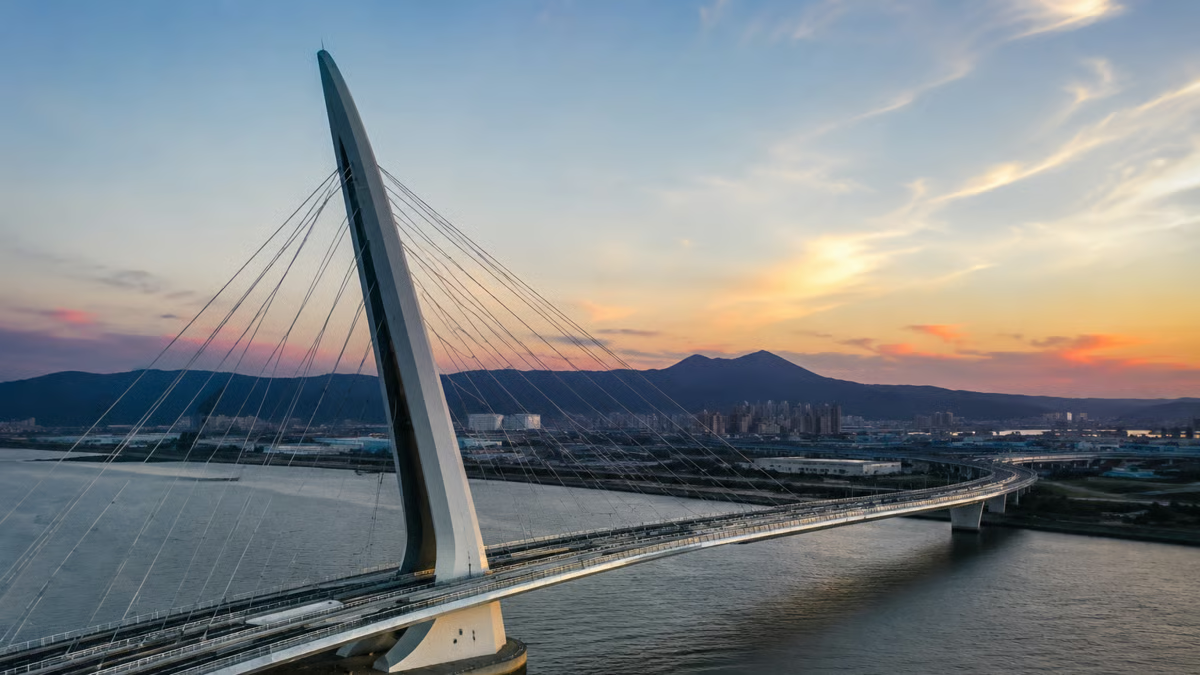 Image-R.E.News©
Après près de trente années d’études, de retards et de défis techniques, le pont Danjiang entre officiellement en service au nord de Taïwan, marquant l’aboutissement de l’un des projets d’infrastructure les plus ambitieux d’Asie. Véritable prouesse architecturale et technologique, l’ouvrage franchit l’estuaire du fleuve Tamsui et redessine désormais le paysage de la région de Taipei.
Bien plus qu’un simple pont spectaculaire, le Danjiang Bridge répond à un enjeu majeur de mobilité. Conçu pour fluidifier les échanges entre New Taipei City, le port de Taipei et l’aéroport international de Taoyuan, il doit réduire fortement la congestion chronique qui saturait jusqu’ici le corridor du pont Guandu, axe vital du nord taïwanais.
Long d’environ un kilomètre, le nouvel ouvrage permettra de raccourcir les trajets entre les districts de Tamsui et Bali d’environ 15 kilomètres, avec un gain estimé à 25 minutes par déplacement. Les autorités prévoient également une baisse de près de 30 % du trafic sur les infrastructures existantes.
Le pont attire déjà l’attention internationale grâce à son design spectaculaire signé par la regrettée architecte anglo-irakienne Zaha Hadid. Sa silhouette asymétrique, soutenue par un unique mât courbé, fait aujourd’hui du Danjiang Bridge le plus long pont haubané asymétrique à pylône unique au monde — une référence mondiale en matière d’ingénierie avancée.
Construire dans l’estuaire du Tamsui représentait un défi considérable : vents puissants, conditions maritimes instables, risques de corrosion et contraintes environnementales ont complexifié le chantier pendant des années. Les ingénieurs ont dû repousser les limites des technologies de modélisation structurelle afin d’assurer stabilité aérodynamique et répartition optimale des charges.
Au-delà de sa dimension technique, le pont symbolise également l’ambition stratégique de Taïwan en matière d’infrastructures modernes. Dans toute l’Asie, les gouvernements investissent massivement dans des projets capables de soutenir croissance économique, mobilité régionale et résilience urbaine. Le Danjiang Bridge illustre parfaitement cette nouvelle génération d’infrastructures : à la fois outil logistique, vitrine technologique et symbole national.
Classé parmi les projets architecturaux majeurs de 2025 par plusieurs observateurs internationaux, le pont Danjiang ne se contente pas de relier deux rives. Il affirme la capacité de Taïwan à conjuguer innovation, ingénierie de pointe et vision à long terme dans un contexte mondial où les infrastructures deviennent de véritables marqueurs de puissance économique et technologique.
NJC.© Info https://www.thb.gov.tw/en/Default.aspx
-----------------------------------------------------------------------------------------------------------------
18/05/26-English
The Danjiang Bridge Opens a New Strategic Gateway to Northern Taiwan
Image-R.E.News©
After nearly thirty years of studies, delays, and technical challenges, the Danjiang Bridge has officially opened in northern Taiwan, marking the culmination of one of Asia’s most ambitious infrastructure projects. A true architectural and technological feat, the structure spans the Tamsui River estuary and is now reshaping the landscape of the Taipei region.
More than just a spectacular bridge, the Danjiang Bridge addresses a major mobility challenge. Designed to facilitate trade between New Taipei City, the Port of Taipei, and Taoyuan International Airport, it is expected to significantly reduce the chronic congestion that has plagued the Guandu Bridge corridor, a vital artery in northern Taiwan.
Approximately one kilometer long, the new bridge will shorten travel times between the Tamsui and Bali districts by about 15 kilometers, with an estimated time saving of 25 minutes per trip. Authorities also anticipate a nearly 30% decrease in traffic on existing infrastructure.
The bridge is already attracting international attention thanks to its spectacular design by the late Anglo-Iraqi architect Zaha Hadid. Its asymmetrical silhouette, supported by a single curved mast, makes the Danjiang Bridge the longest asymmetric cable-stayed bridge with a single pylon in the world—a global benchmark in advanced engineering.
Building in the Tamsui estuary presented a considerable challenge: strong winds, unstable sea conditions, corrosion risks, and environmental constraints complicated the construction for years. Engineers had to push the boundaries of structural modeling technologies to ensure aerodynamic stability and optimal load distribution.
Beyond its technical aspects, the bridge also symbolizes Taiwan’s strategic ambition for modern infrastructure. Across Asia, governments are investing heavily in projects that can support economic growth, regional mobility, and urban resilience. The Danjiang Bridge perfectly illustrates this new generation of infrastructure: a logistical tool, a technological showcase, and a national symbol all in one.
Ranked among the major architectural projects of 2025 by several international observers, the Danjiang Bridge does more than simply connect two riverbanks. It affirms Taiwan's ability to combine innovation, cutting-edge engineering, and a long-term vision in a global context where infrastructure is becoming a true marker of economic and technological power.
NJC.© Info https://www.thb.gov.tw/en/Default.aspx
----------------------------------------------------------------------------------------------------------------
18/05/26-NL
De Danjiang-brug opent een nieuwe strategische toegangspoort tot Noord-Taiwan
Image-R.E.News©
Na bijna dertig jaar van studies, vertragingen en technische uitdagingen is de Danjiang-brug in Noord-Taiwan officieel geopend. Hiermee is een van de meest ambitieuze infrastructuurprojecten van Azië voltooid. De brug, een waar architectonisch en technologisch hoogstandje, overspant de monding van de Tamsui-rivier en geeft de regio Taipei een nieuwe invulling.
De Danjiang-brug is meer dan alleen een spectaculaire brug; hij pakt een belangrijk mobiliteitsprobleem aan. De brug is ontworpen om de handel tussen New Taipei City, de haven van Taipei en de internationale luchthaven Taoyuan te vergemakkelijken en zal naar verwachting de chronische files op de Guandu-brug, een belangrijke verkeersader in Noord-Taiwan, aanzienlijk verminderen.
De nieuwe brug, met een lengte van ongeveer een kilometer, verkort de reistijd tussen de districten Tamsui en Bali met circa 15 kilometer, wat neerkomt op een geschatte tijdsbesparing van 25 minuten per rit. De autoriteiten verwachten bovendien een afname van bijna 30% van het verkeer op de bestaande infrastructuur.
De brug trekt nu al internationale aandacht dankzij het spectaculaire ontwerp van de inmiddels overleden Brits-Iraakse architect Zaha Hadid. Het asymmetrische silhouet, ondersteund door een enkele gebogen mast, maakt de Danjiang-brug de langste asymmetrische kabelbrug met één enkele pyloon ter wereld – een wereldwijde maatstaf voor geavanceerde engineering.
De bouw in de Tamsui-monding was een aanzienlijke uitdaging: sterke wind, onstabiele zeeomstandigheden, corrosierisico's en milieubeperkingen bemoeilijkten de constructie jarenlang. Ingenieurs moesten de grenzen van structurele modelleertechnologieën verleggen om aerodynamische stabiliteit en een optimale lastverdeling te garanderen.
Naast de technische aspecten symboliseert de brug ook de strategische ambitie van Taiwan voor moderne infrastructuur. Overal in Azië investeren overheden fors in projecten die economische groei, regionale mobiliteit en stedelijke veerkracht kunnen ondersteunen. De Danjiang-brug is een perfect voorbeeld van deze nieuwe generatie infrastructuur: een logistiek instrument, een technologisch hoogstandje en een nationaal symbool in één.
De Danjiang-brug, door diverse internationale waarnemers gerekend tot de belangrijkste architectuurprojecten van 2025, doet meer dan alleen twee rivieroevers met elkaar verbinden. Het project bevestigt Taiwans vermogen om innovatie, geavanceerde techniek en een langetermijnvisie te combineren in een mondiale context waar infrastructuur een ware indicator van economische en technologische macht wordt.
NJC.© Info https://www.thb.gov.tw/en/Default.aspx
---------------------------------------------------------------------------------------------------------------
Date de dernière mise à jour : 13/05/2026