



R.E.News International-Machinery Expert Group (MEG): Key outcomes from the April 2026 meeting
 11/04/26-FR-English-NL-footer
Machinery Expert Group 2026 Bruxelles Redessine les Frontières de la Sécurité des Machines
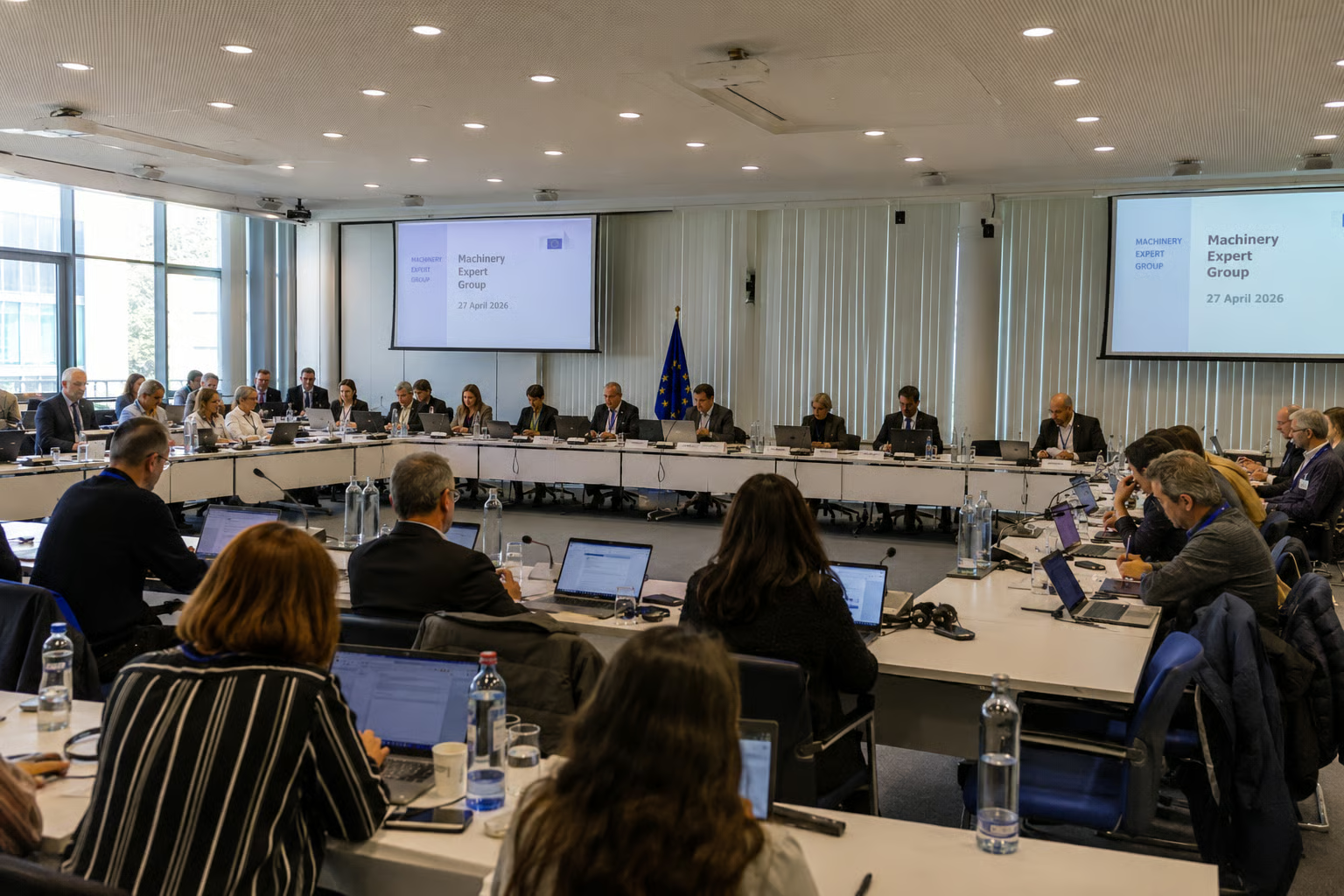 Image-R.E.News©
Dans les couloirs feutrés de la European Commission, loin du bruit des chantiers et des lignes d’assemblage, se joue pourtant une partie essentielle de l’avenir industriel européen.
Le 27 avril 2026, le Machinery Expert Group (MEG) s’est réuni pour une session stratégique consacrée à la mise en œuvre du nouveau Machinery Regulation (MR), aux normes harmonisées et aux futures évolutions réglementaires qui façonneront les équipements industriels de demain.
Derrière les termes techniques et les textes réglementaires, une réalité s’impose : l’industrie des machines entre dans une nouvelle ère, où intelligence artificielle, cybersécurité et autonomie mécanique redéfinissent les notions mêmes de risque et de conformité.
Quand les Accidents Deviennent des Données Stratégiques
L’un des sujets les plus sensibles abordés lors de cette réunion concerne l’étude mandatée par la Commission européenne sur les accidents liés aux machines.
L’objectif est ambitieux : analyser les données d’accidentologie à l’échelle européenne afin de réévaluer, à terme, la liste des machines considérées comme « à haut risque ».
Mais derrière les statistiques se cache une question cruciale : qu’est-ce qui provoque réellement un accident ?
Les échanges ont rapidement mis en lumière une problématique fondamentale pour les industriels comme pour les autorités : il devient indispensable de distinguer les accidents causés par des défauts de conception ou des insuffisances de conformité, de ceux résultant d’une mauvaise utilisation ou de comportements imprévisibles des opérateurs.
Une nuance essentielle.
Car dans un environnement industriel où les machines deviennent toujours plus intelligentes et autonomes, attribuer correctement la responsabilité technique d’un incident devient un enjeu réglementaire majeur.
Or aujourd’hui, les bases de données européennes présentent encore des limites importantes pour établir ces distinctions avec précision.
Le MEG travaille donc à transformer des critères juridiques abstraits en indicateurs mesurables et exploitables — une étape décisive pour l’évolution future du cadre réglementaire européen.
Le Machinery Regulation Entre dans sa Phase de Maturité
Autre chantier stratégique : la rédaction du Guide d’Application du Machinery Regulation.
Coordonné par un groupe éditorial dédié et cinq sous-groupes techniques, ce document deviendra la référence opérationnelle permettant aux fabricants, organismes notifiés et autorités de surveillance d’interpréter concrètement les nouvelles exigences réglementaires.
Parmi les sujets actuellement traités :
les modifications substantielles des machines ;
les fonctions de sécurité ;
les composants de sécurité ;
les systèmes de sièges et de retenue ;
les vibrations ;
la documentation numérique.
Des thèmes qui illustrent parfaitement l’évolution du secteur : la machine moderne n’est plus uniquement mécanique. Elle devient logicielle, connectée et évolutive.
Intelligence Artificielle, Cybersécurité : les Nouveaux Risques Industriels
L’un des points les plus observés de cette réunion concernait le transfert des normes harmonisées entre l’ancienne Machinery Directive (MD) et le nouveau Machinery Regulation (MR).
La Commission européenne a confirmé sa volonté d’assurer une continuité juridique maximale en transférant la grande majorité des normes existantes vers le nouveau règlement.
Mais cette transition n’est pas un simple copier-coller réglementaire.
Une vaste analyse des écarts (gap analysis) est actuellement menée afin d’identifier les nouvelles exigences de sécurité introduites par les mutations technologiques récentes.
Les sujets prioritaires sont révélateurs :
fonctions de sécurité basées sur l’intelligence artificielle ;
cybersécurité des machines ;
comportements autonomes ;
risques de retournement.
Autrement dit, l’Europe prépare désormais ses réglementations à des machines capables de prendre des décisions, de communiquer et d’interagir de manière autonome avec leur environnement.
Lorsqu’une norme existante ne couvre pas totalement ces nouveaux risques, elle pourra continuer d’être utilisée, mais avec certaines restrictions spécifiques plutôt qu’un rejet complet.
La première vague officielle de citations de normes harmonisées sous le MR est attendue au troisième trimestre 2026.
Une Révolution Silencieuse du Cadre Industriel Européen
Au-delà des machines elles-mêmes, le MEG a également abordé plusieurs réformes transversales qui redessinent progressivement l’architecture réglementaire européenne.
Parmi elles :
la révision du règlement sur la normalisation ;
l’évolution du règlement sur la surveillance du marché ;
la révision du New Legislative Framework ;
le développement du futur Digital Product Passport.
Ce dernier pourrait devenir l’un des outils les plus transformateurs de l’industrie européenne : une identité numérique complète permettant de suivre la conformité, les caractéristiques techniques et le cycle de vie des équipements industriels.
Même les obligations administratives évoluent.
Concernant la directive Outdoor Noise, la Commission a confirmé qu’il n’était désormais plus nécessaire de fournir une copie physique de la déclaration de conformité accompagnant les valeurs sonores.
Un détail en apparence mineur, mais symptomatique d’une transition réglementaire vers une gestion entièrement numérique des produits industriels.
L’Europe Prépare la Machine de Demain
Ce qui ressort de cette réunion du MEG, c’est une certitude : l’Europe ne prépare plus simplement des règles pour les machines actuelles.
Elle construit le cadre juridique des machines du futur.
Des machines :
autonomes ;
connectées ;
intelligentes ;
capables d’apprentissage ;
exposées aux cybermenaces ;
intégrées dans des écosystèmes numériques complexes.
Le chantier réglementaire devient alors aussi stratégique que l’innovation technologique elle-même.
Car dans l’industrie moderne, la conformité n’est plus une formalité administrative.
Elle devient un élément central de la compétitivité, de la sécurité et de la souveraineté industrielle européenne.
Le prochain rendez-vous du Machinery Expert Group est prévu en ligne le 22 octobre 2026.
Et d’ici là, une question continuera d’animer Bruxelles comme les fabricants : comment encadrer des machines qui évoluent désormais presque aussi vite que les technologies qui les alimentent ?
NJC.© Info CECE
--------------------------------------------------------------------------------------------------------------
11/04/26-English
Machinery Expert Group 2026 Brussels Redraws the Boundaries of Machine Safety
Image-R.E.News©
In the hushed corridors of the European Commission, far from the noise of construction sites and assembly lines, a crucial part of the future of European industry is being decided.
On April 27, 2026, the Machinery Expert Group (MEG) met for a strategic session dedicated to the implementation of the new Machinery Regulation (MR), harmonized standards, and future regulatory developments that will shape the industrial equipment of tomorrow.
Behind the technical terms and regulatory texts, a clear reality emerges: the machine industry is entering a new era, where artificial intelligence, cybersecurity, and mechanical autonomy are redefining the very notions of risk and compliance.
When Accidents Become Strategic Data
One of the most sensitive topics addressed during this meeting concerned the study commissioned by the European Commission on machine-related accidents.
The objective is ambitious: to analyze accident data across Europe in order to eventually reassess the list of machines considered "high risk."
But behind the statistics lies a crucial question: what actually causes an accident?
The discussions quickly highlighted a fundamental issue for both industry and regulatory authorities: it is becoming essential to distinguish between accidents caused by design flaws or non-compliance, and those resulting from misuse or unpredictable operator behavior.
A crucial distinction.
Because in an industrial environment where machines are becoming increasingly intelligent and autonomous, correctly assigning technical responsibility for an incident is becoming a major regulatory challenge.
However, current European databases still have significant limitations in establishing these distinctions accurately.
The MEG is therefore working to transform abstract legal criteria into measurable and actionable indicators—a decisive step for the future development of the European regulatory framework.
The Machinery Regulation Enters its Maturity Phase
Another strategic project: drafting the Machinery Regulation Application Guide.
Coordinated by a dedicated editorial group and five technical subgroups, this document will become the operational reference enabling manufacturers, notified bodies, and supervisory authorities to interpret the new regulatory requirements in practical terms.
Among the topics currently being addressed are:
substantial modifications to machinery;
safety functions;
safety components;
seating and restraint systems;
vibrations;
digital documentation.
These themes perfectly illustrate the evolution of the sector: the modern machine is no longer solely mechanical. It is becoming software-based, connected, and scalable.
Artificial Intelligence, Cybersecurity: New Industrial Risks
One of the most closely watched points of this meeting concerned the transfer of harmonized standards between the old Machinery Directive (MD) and the new Machinery Regulation (MR).
The European Commission has confirmed its commitment to ensuring maximum legal continuity by transferring the vast majority of existing standards to the new regulation.
But this transition is not simply a regulatory copy-and-paste.
A comprehensive gap analysis is currently underway to identify the new security requirements introduced by recent technological changes.
The priority areas are revealing:
security functions based on artificial intelligence;
machine cybersecurity;
autonomous behavior;
rollover risks.
In other words, Europe is now preparing its regulations for machines capable of making decisions, communicating, and interacting autonomously with their environment.
When an existing standard does not fully cover these new risks, it can continue to be used, but with specific restrictions rather than being rejected outright.
The first official wave of citations of harmonized standards under the MR is expected in the third quarter of 2026.
A Silent Revolution in the European Industrial Framework
Beyond the machines themselves, the MEG also addressed several cross-cutting reforms that are gradually reshaping the European regulatory architecture.
These include:
the revision of the Standardization Regulation;
the evolution of the Market Surveillance Regulation;
the revision of the New Legislative Framework; and
the development of the future Digital Product Passport.
This could become one of the most transformative tools for European industry: a comprehensive digital identity enabling the tracking of compliance, technical specifications, and the lifecycle of industrial equipment.
Even administrative requirements are evolving.
Regarding the Outdoor Noise Directive, the Commission confirmed that it is no longer necessary to provide a physical copy of the declaration of conformity accompanying the noise levels.
A seemingly minor detail, but symptomatic of a regulatory shift towards fully digital management of industrial products.
Europe Is Preparing the Machine of Tomorrow
One thing is certain from this MEG meeting: Europe is no longer simply preparing rules for current machines.
It is building the legal framework for the machines of the future.
Machines that are:
autonomous;
connected;
intelligent;
capable of learning;
exposed to cyber threats;
integrated into complex digital ecosystems.
The regulatory process is thus becoming as strategic as technological innovation itself.
Because in modern industry, compliance is no longer a mere administrative formality.
It is becoming a central element of European competitiveness, security, and industrial sovereignty.
The next Machinery Expert Group meeting is scheduled to take place online on October 22, 2026.
And until then, one question will continue to preoccupy both Brussels and manufacturers: how to regulate machines that are now evolving almost as fast as the technologies that power them?
NJC.© Info CECE
----------------------------------------------------------------------------------------------------------------
11/04/26-NL
Expertgroep Machines 2026 Brussel herdefinieert machineveiligheid
Image-R.E.News©
In de stille gangen van de Europese Commissie, ver weg van het lawaai van bouwplaatsen en assemblagelijnen, wordt een cruciaal onderdeel van de toekomst van de Europese industrie bepaald.
Op 27 april 2026 kwam de Expertgroep Machines (MEG) bijeen voor een strategische sessie gewijd aan de implementatie van de nieuwe Machineverordening (MR), geharmoniseerde normen en toekomstige regelgevingsontwikkelingen die de industriële apparatuur van morgen zullen vormgeven.
Achter de technische termen en wetteksten komt een duidelijke realiteit naar voren: de machine-industrie betreedt een nieuw tijdperk, waarin kunstmatige intelligentie, cyberbeveiliging en mechanische autonomie de begrippen risico en compliance herdefiniëren.
Wanneer ongevallen strategische data worden
Een van de meest gevoelige onderwerpen die tijdens deze bijeenkomst aan bod kwamen, betrof het onderzoek in opdracht van de Europese Commissie naar machineongevallen.
Het doel is ambitieus: het analyseren van ongevalsgegevens in heel Europa om uiteindelijk de lijst met machines die als "hoog risico" worden beschouwd, te herzien.
Maar achter de statistieken schuilt een cruciale vraag: wat veroorzaakt een ongeval nu eigenlijk?
De discussies brachten al snel een fundamenteel probleem aan het licht voor zowel de industrie als de regelgevende instanties: het wordt steeds belangrijker om onderscheid te maken tussen ongevallen die worden veroorzaakt door ontwerpfouten of het niet naleven van voorschriften, en ongevallen die het gevolg zijn van verkeerd gebruik of onvoorspelbaar gedrag van de operator.
Een cruciaal onderscheid.
Want in een industriële omgeving waar machines steeds intelligenter en autonomer worden, wordt het correct toewijzen van technische verantwoordelijkheid voor een incident een grote uitdaging voor de regelgeving.
De huidige Europese databases hebben echter nog steeds aanzienlijke beperkingen bij het nauwkeurig vaststellen van deze onderscheidingen.
De MEG werkt daarom aan de omzetting van abstracte juridische criteria in meetbare en bruikbare indicatoren – een cruciale stap voor de toekomstige ontwikkeling van het Europese regelgevingskader.
De Machineverordening bereikt de volwassenheidsfase
Nog een strategisch project: het opstellen van de Toepassingshandleiding voor de Machineverordening.
Dit document, gecoördineerd door een speciale redactiegroep en vijf technische subgroepen, zal de operationele referentie worden waarmee fabrikanten, aangemelde instanties en toezichthoudende autoriteiten de nieuwe regelgeving in de praktijk kunnen interpreteren.
Onder de onderwerpen die momenteel aan bod komen, bevinden zich:
ingrijpende aanpassingen aan machines;
veiligheidsfuncties;
veiligheidscomponenten;
zit- en gordelsystemen;
trillingen;
digitale documentatie.
Deze thema's illustreren perfect de evolutie van de sector: de moderne machine is niet langer uitsluitend mechanisch. Ze wordt softwaregebaseerd, verbonden en schaalbaar.
Kunstmatige intelligentie, cyberbeveiliging: nieuwe industriële risico's
Een van de meest besproken punten van deze bijeenkomst betrof de overdracht van geharmoniseerde normen tussen de oude Machinerichtlijn (MD) en de nieuwe Machineverordening (MR).
De Europese Commissie heeft haar streven naar maximale juridische continuïteit bevestigd door de overgrote meerderheid van de bestaande normen over te dragen naar de nieuwe verordening.
Maar deze overgang is niet zomaar een kwestie van kopiëren en plakken.
Er wordt momenteel een uitgebreide analyse uitgevoerd om de nieuwe veiligheidseisen te identificeren die voortvloeien uit recente technologische veranderingen.
De prioriteitsgebieden zijn veelzeggend:
veiligheidsfuncties gebaseerd op kunstmatige intelligentie;
cyberbeveiliging van machines;
autonoom gedrag;
kantelrisico's.
Met andere woorden, Europa bereidt nu regelgeving voor machines voor die in staat zijn om zelfstandig beslissingen te nemen, te communiceren en te interageren met hun omgeving.
Wanneer een bestaande norm deze nieuwe risico's niet volledig dekt, kan deze blijven worden gebruikt, maar met specifieke beperkingen in plaats van volledig te worden verworpen.
De eerste officiële golf van verwijzingen naar geharmoniseerde normen onder de MR wordt verwacht in het derde kwartaal van 2026.
Een stille revolutie in het Europees industrieel kader
Naast de machines zelf, heeft de MEG ook verschillende overkoepelende hervormingen aangepakt die de Europese regelgevingsstructuur geleidelijk aan hervormen.
Deze omvatten:
de herziening van de Standaardiseringsverordening;
de evolutie van de Markttoezichtverordening;
de herziening van het nieuwe wetgevingskader; en
de ontwikkeling van het toekomstige digitale productpaspoort.
Dit zou wel eens een van de meest transformerende instrumenten voor de Europese industrie kunnen worden: een alomvattende digitale identiteit die het mogelijk maakt om de naleving van regelgeving, technische specificaties en de levenscyclus van industriële apparatuur te volgen.
Zelfs de administratieve eisen veranderen.
Wat betreft de Richtlijn inzake buitengeluid heeft de Commissie bevestigd dat het niet langer nodig is om een fysiek exemplaar van de conformiteitsverklaring met de geluidsniveaus te overleggen.
Een ogenschijnlijk klein detail, maar symptomatisch voor een verschuiving in de regelgeving naar volledig digitaal beheer van industriële producten.
Europa bereidt de machine van morgen voor
Eén ding is zeker na deze MEG-bijeenkomst: Europa stelt niet langer alleen regels op voor de huidige machines.
Het bouwt aan het juridische kader voor de machines van de toekomst.
Machines die:
autonoom zijn;
verbonden zijn;
intelligent zijn;
kunnen leren;
blootgesteld zijn aan cyberdreigingen;
geïntegreerd zijn in complexe digitale ecosystemen.
Het regelgevingsproces wordt daarmee net zo strategisch als technologische innovatie zelf.
Want in de moderne industrie is compliance niet langer slechts een administratieve formaliteit.
Het wordt een centraal element van het Europese concurrentievermogen, de veiligheid en de industriële soevereiniteit.
De volgende bijeenkomst van de Expertgroep Machines zal naar verwachting online plaatsvinden op 22 oktober 2026.
En tot die tijd zal één vraag Brussel en fabrikanten blijven bezighouden: hoe moeten machines die zich nu bijna net zo snel ontwikkelen als de technologieën die ze aandrijven, worden gereguleerd?
NJC.© Info CECE
-------------------------------------------------------------------------------------------------------------------
Date de dernière mise à jour : 08/05/2026