



R.E.News International-Making Hand Protection Work for Road Crews
 13/10/26-FR-English-NL-footer
Chantiers routiers : protéger les mains, préserver la performance
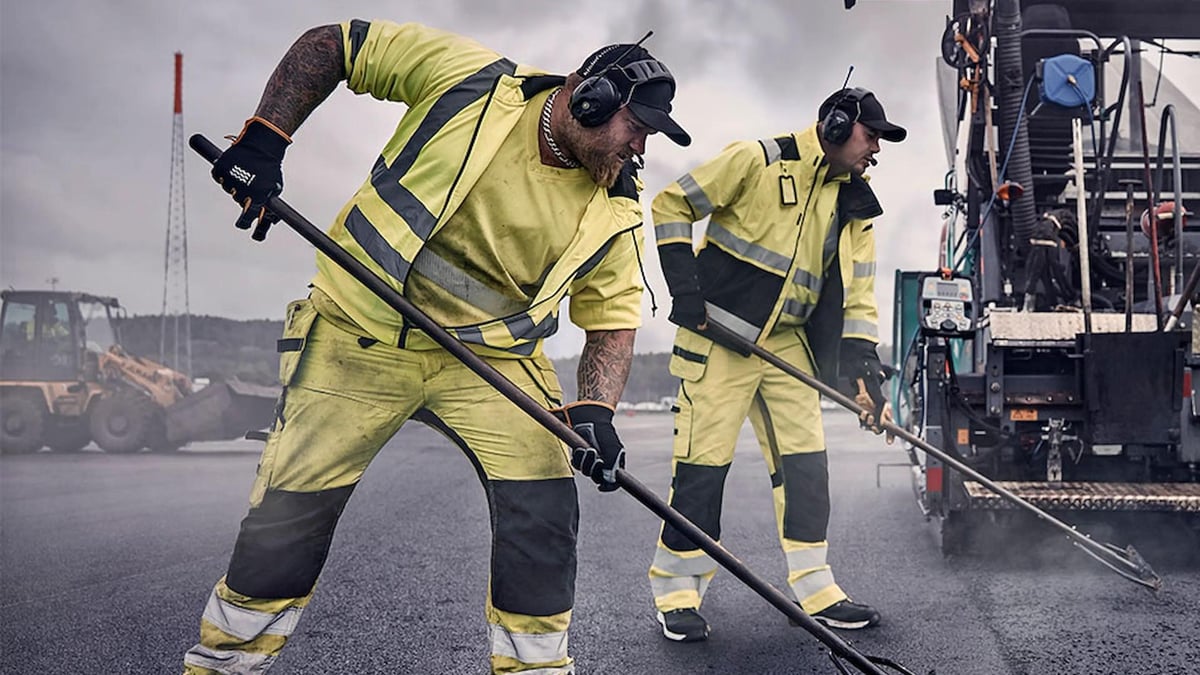 Image-creation R.E.News© via IA chat GPT
Sur un chantier routier, les mains sont en première ligne. Acier aux arêtes tranchantes, béton humide, outils abrasifs, enrobés brûlants : derrière chaque intervention se cachent des risques différents, qui exigent une protection adaptée sans sacrifier la précision du geste.
Le défi des entreprises de travaux publics consiste à trouver le juste équilibre entre sécurité, confort et dextérité. Une paire de gants efficace pour manipuler des éléments métalliques ne sera pas nécessairement adaptée au ciment humide ou aux températures élevées de l’asphalte. Coupe, abrasion, produits chimiques et chaleur imposent des exigences distinctes, auxquelles s’ajoutent la qualité de la prise en main, l’ajustement et la résistance à l’usure.
Les normes EN 388, EN ISO 374 et EN 407 apportent des repères essentiels pour évaluer respectivement les risques mécaniques, chimiques et thermiques. Mais la certification ne suffit pas : chaque équipement doit correspondre aux conditions réelles d’utilisation. Le ciment humide, notamment, peut provoquer de graves brûlures chimiques, tandis que les travaux à chaud nécessitent une protection spécifiquement adaptée aux températures et aux risques de contact.
La vigilance s’impose également face aux vibrations des brise-roches et autres outils puissants. Les gants dits antivibrations ne constituent pas une garantie contre le syndrome des vibrations main-bras : la priorité reste la réduction de l’exposition grâce au choix des équipements, à leur entretien et à l’organisation du travail.
Des fabricants comme SHOWA développent des solutions répondant à différents besoins, de la manipulation légère aux environnements humides et aux risques de coupure. Les essais directement sur chantier permettent ensuite de vérifier leur efficacité, leur confort et leur durée de vie.
Pour les professionnels de la route, le bon gant n’est pas simplement celui qui protège le mieux sur le papier : c’est celui qui apporte la protection appropriée à chaque tâche, sans compromettre la maîtrise du travail.
NJC.© Info https://www.bsigroup.com/en-GB/
--------------------------------------------------------------------------------------------------------------
13/10/26-English
Roadworks: Protecting Hands, Maintaining Performance
Image-creation R.E.News© via IA chat GPT
On a roadworks site, hands are on the front line. Sharp steel edges, wet concrete, abrasive tools, hot asphalt: behind every task lie different risks, requiring appropriate protection without sacrificing precision.
The challenge for public works companies is to find the right balance between safety, comfort, and dexterity. A pair of gloves effective for handling metal components will not necessarily be suitable for wet cement or the high temperatures of asphalt. Cutting, abrasion, chemicals, and heat impose distinct requirements, in addition to the quality of the grip, fit, and wear resistance. The EN 388, EN ISO 374, and EN 407 standards provide essential benchmarks for assessing mechanical, chemical, and thermal risks, respectively. But certification is not enough: each piece of equipment must correspond to the actual conditions of use. Wet cement, in particular, can cause severe chemical burns, while hot work requires protection specifically adapted to the temperatures and risks of contact. Vigilance is also essential when dealing with vibrations from rock breakers and other powerful tools. So-called anti-vibration gloves do not guarantee protection against hand-arm vibration syndrome: the priority remains reducing exposure through the choice of equipment, its maintenance, and work organization. Manufacturers like SHOWA develop solutions that meet various needs, from light handling to wet environments and cut hazards. On-site testing then verifies their effectiveness, comfort, and lifespan.
For road professionals, the right glove is not simply the one that offers the best protection on paper: it is the one that provides the appropriate protection for each task without compromising control.
NJC.© Info https://www.bsigroup.com/en-GB/
----------------------------------------------------------------------------------------------------------------
13/10/26-NL
Wegwerkzaamheden: Handbescherming, behoud van prestaties
Image-creation R.E.News© via IA chat GPT
Op een wegwerkterrein staan handen in de frontlinie. Scherpe stalen randen, nat beton, schurende gereedschappen, heet asfalt: achter elke taak schuilen verschillende risico's die passende bescherming vereisen zonder in te boeten aan precisie.
De uitdaging voor openbare werkenbedrijven is het vinden van de juiste balans tussen veiligheid, comfort en beweeglijkheid. Een paar handschoenen die geschikt zijn voor het hanteren van metalen onderdelen, zijn niet per se geschikt voor nat cement of de hoge temperaturen van asfalt. Snijden, schuren, chemicaliën en hitte stellen specifieke eisen, naast de kwaliteit van de grip, pasvorm en slijtvastheid. De normen EN 388, EN ISO 374 en EN 407 bieden essentiële referentiepunten voor het beoordelen van respectievelijk mechanische, chemische en thermische risico's. Maar certificering is niet voldoende: elk stuk uitrusting moet aansluiten op de daadwerkelijke gebruiksomstandigheden. Nat cement kan met name ernstige chemische brandwonden veroorzaken, terwijl heet werk bescherming vereist die specifiek is aangepast aan de temperaturen en contactrisico's. Ook bij trillingen van steenbrekers en andere krachtige gereedschappen is alertheid geboden. Zogenaamde antivibratiehandschoenen bieden geen garantie tegen het hand-armvibratiesyndroom: de prioriteit blijft het verminderen van de blootstelling door de juiste uitrusting, het onderhoud ervan en de werkorganisatie. Fabrikanten zoals SHOWA ontwikkelen oplossingen die aan diverse behoeften voldoen, van lichte werkzaamheden tot natte omgevingen en snijgevaar. Tests op locatie bevestigen vervolgens de effectiviteit, het comfort en de levensduur.
Voor professionals in de wegbranche is de juiste handschoen niet simpelweg de handschoen die op papier de beste bescherming biedt: het is de handschoen die de juiste bescherming biedt voor elke taak, zonder de controle te verliezen.
NJC.© Info https://www.bsigroup.com/en-GB/
-----------------------------------------------------------------------------------------------------------------
Date de dernière mise à jour : 12/10/2026