










R.E.News International-Why has China seen strong 2025 demand for BEV HDTs?
 14/04/26-FR-English-NL-footer
La ruée électrique chinoise : quand le poids lourd bascule dans une nouvelle ère
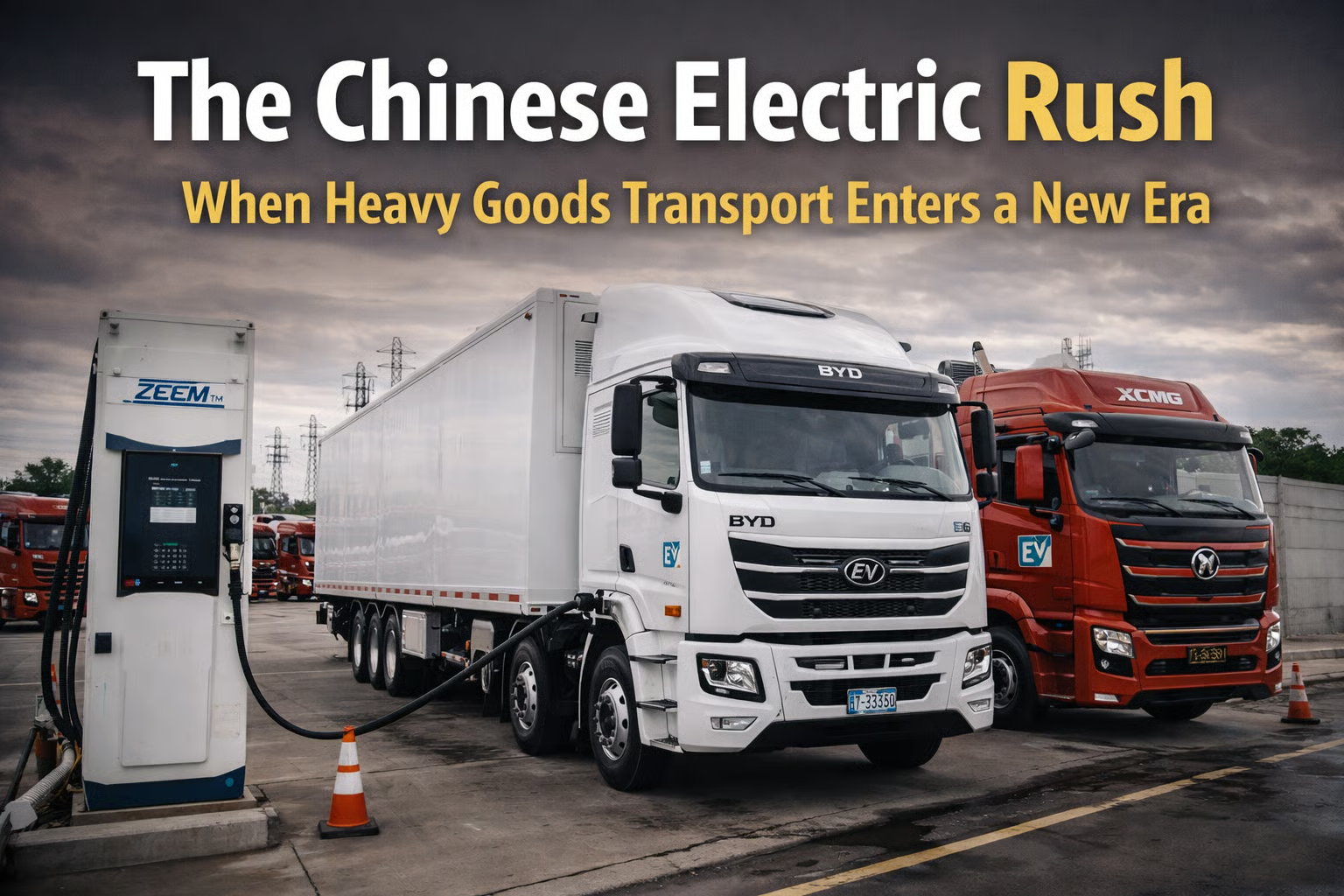
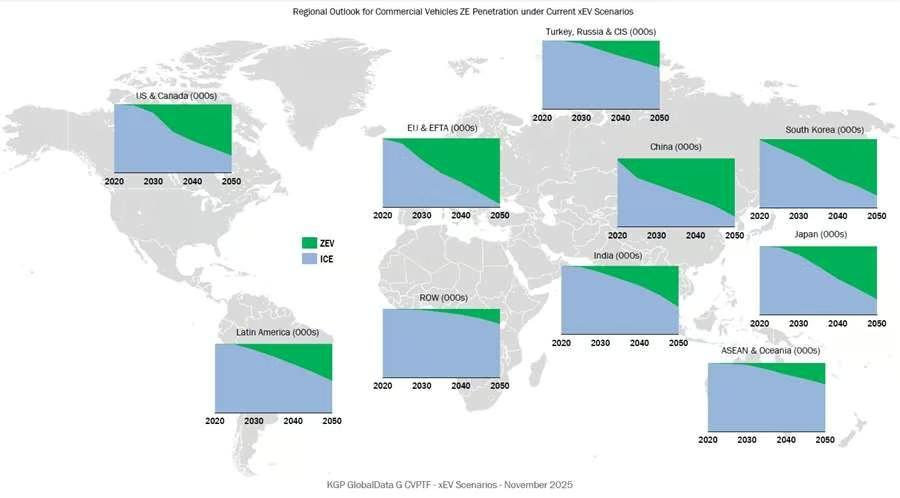
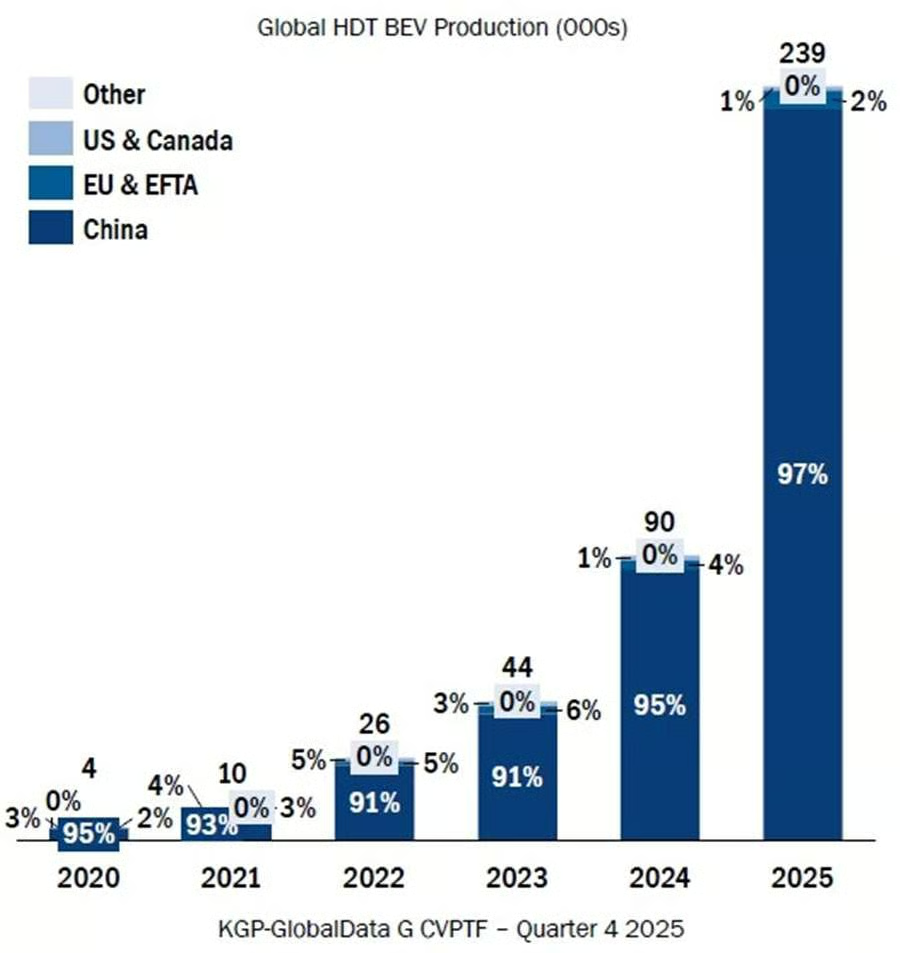 Image- R.E.News© & Luca De Nunzio is a data analyst for KGP Powertrain Intelligence
En 2025, la Chine n’a pas simplement accéléré l’électrification du transport lourd — elle en a redéfini les règles. Dans un marché mondial des poids lourds électriques à batterie (BEV HDT) en plein essor, le pays a capté plus de 95 % des volumes, transformant une transition annoncée en basculement industriel massif.
Derrière cette domination, une réalité plus pragmatique que politique : l’électrique n’est plus une contrainte réglementaire, mais un choix économique rationnel.
L’économie avant tout : le vrai moteur du décollage
Contrairement à l’Europe, où la décarbonation est largement dictée par les normes CO₂, la dynamique chinoise repose d’abord sur le coût total de possession. En 2025, la chute continue des prix des batteries — portée notamment par CATL — combinée à des gains en densité énergétique, a permis d’améliorer l’autonomie sans alourdir les véhicules.
Résultat : dans de nombreux cas d’usage, exploiter un camion électrique coûte désormais 20 à 30 % moins cher qu’un équivalent diesel.
À cela s’ajoutent des leviers puissants :
Subventions à la casse atteignant ¥140 000 par véhicule
Exemptions ou réductions de péages
Électricité plus stable que le diesel face aux marchés mondiaux
L’équation est simple : moins de volatilité, plus de prévisibilité — un argument décisif pour les flottes.
Un écosystème taillé pour l’électrique
Si l’économie a déclenché l’adoption, c’est bien l’écosystème industriel chinois qui l’a rendue possible. De la production de batteries à l’infrastructure énergétique, la chaîne de valeur est largement intégrée.
Portée par la stratégie nationale de neutralité carbone à horizon 2060, la transition s’appuie sur :
Des zones logistiques et portuaires électrifiées
Des villes comme Beijing, où les zones zéro émission se multiplient
Une production renouvelable en forte croissance, renforçant la disponibilité électrique
Dans ce contexte, électrifier le transport lourd devient autant un choix énergétique qu’un levier de souveraineté industrielle.
Une révolution… mais ciblée
Cette croissance fulgurante repose toutefois sur une caractéristique clé du marché chinois : la prédominance des trajets courts. Plus de la moitié des usages concernent des distances inférieures à 200 km — un terrain idéal pour les camions électriques.
À l’inverse, les longues distances restent un défi :
Batteries volumineuses et coûteuses
Impact sur la charge utile
Infrastructure de recharge encore limitée pour le long-haul
Ainsi, si les centres urbains et les flux logistiques courts sont déjà largement électrifiés, la progression devrait ralentir à mesure que ces segments arrivent à maturité.
Vers un futur multi-énergies
L’avenir du transport lourd chinois ne sera pas monolithique. Si l’électrique domine aujourd’hui, d’autres solutions émergent pour compléter le tableau :
Hydrogène, pour les longues distances à forte intensité énergétique
Gaz naturel, soutenu par des coûts domestiques compétitifs
Méthanol, produit localement à grande échelle
Hybrides, comme solution de transition
Cette diversification reflète une approche pragmatique : adapter la technologie à l’usage, plutôt que l’inverse.
Une mutation structurelle
La performance chinoise en 2025 dépasse le simple effet de politique publique. Elle illustre une convergence rare entre économie, industrie et stratégie énergétique.
L’électrification des poids lourds y devient un modèle d’industrialisation accélérée — reproductible, mais difficilement transposable tel quel ailleurs. Car derrière les chiffres spectaculaires se cache un facteur clé : un écosystème entièrement aligné.
Dans cette course mondiale à la décarbonation du transport, la Chine ne suit plus le mouvement. Elle en fixe désormais le tempo.
NJC.© Info BEV HDT Luca De Nunzio is a data analyst for KGP Powertrain Intelligence
----------------------------------------------------------------------------------------------------------------
14/04/26-English
The Chinese Electric Rush: When Heavy Goods Transport Enters a New Era
Image- R.E.News© & Luca De Nunzio is a data analyst for KGP Powertrain Intelligence
By 2025, China hadn't simply accelerated the electrification of heavy goods transport—it had redefined the rules. In a booming global market for battery electric heavy goods vehicles (BEVs), the country had captured more than 95% of the market share, transforming a predicted transition into a massive industrial shift.
Behind this dominance lies a reality that is more pragmatic than political: electrification is no longer a regulatory constraint, but a rational economic choice.
Economy First: The True Engine of Takeoff
Unlike Europe, where decarbonization is largely dictated by CO₂ standards, the Chinese dynamic is primarily based on the total cost of ownership. By 2025, the continued fall in battery prices—driven in particular by CATL—combined with gains in energy density, made it possible to improve range without increasing vehicle weight.
The result: in many use cases, operating an electric truck now costs 20 to 30% less than a diesel equivalent.
Added to this are powerful incentives:
Scrapping subsidies of up to ¥140,000 per vehicle
Toll exemptions or reductions
Electricity is more stable than diesel in global markets
The equation is simple: less volatility, more predictability—a decisive argument for fleets.
An ecosystem perfectly suited for electric vehicles
While the economy triggered adoption, it is the Chinese industrial ecosystem that made it possible. From battery production to energy infrastructure, the value chain is largely integrated.
Driven by the national strategy for carbon neutrality by 2060, the transition relies on:
Electrified logistics and port areas
Cities like Beijing, where zero-emission zones are proliferating
Rapidly growing renewable energy production, increasing electricity availability
In this context, electrifying heavy transport becomes both an energy choice and a lever for industrial sovereignty.
A revolution… but a targeted one
This rapid growth, however, rests on a key characteristic of the Chinese market: the predominance of short journeys. More than half of all uses involve distances of less than 200 km—ideal terrain for electric trucks.
Conversely, long distances remain a challenge:
Large and expensive batteries
Impact on payload
Still limited charging infrastructure for long-haul
Thus, while urban centers and short-haul logistics routes are already largely electrified, progress is expected to slow as these segments mature.
Towards a multi-energy future
The future of Chinese heavy transport will not be monolithic. While electric vehicles currently dominate, other solutions are emerging to complete the picture:
Hydrogen, for long-distance, energy-intensive transport
Natural gas, supported by competitive domestic costs
Methanol, produced locally on a large scale
Hybrids, as a transitional solution
This diversification reflects a pragmatic approach: adapting technology to usage, rather than the other way around.
A structural transformation
China's performance in 2025 goes beyond the simple effect of public policy. It illustrates a rare convergence between the economy, industry, and energy strategy.
The electrification of heavy goods vehicles is becoming a model of accelerated industrialization there—reproducible, but difficult to transpose as is elsewhere. For behind the spectacular figures lies a key factor: a fully aligned ecosystem.
In this global race to decarbonize transport, China is no longer following the trend. It is now setting the pace.
NJC.© Info BEV HDT Luca De Nunzio is a data analyst for KGP Powertrain Intelligence
-----------------------------------------------------------------------------------------------------------------
14/04/26-NL
De Chinese elektrische revolutie: een nieuw tijdperk voor zwaar goederenvervoer
Image- R.E.News© & Luca De Nunzio is a data analyst for KGP Powertrain Intelligence
Tegen 2025 had China de elektrificatie van zwaar goederenvervoer niet alleen versneld, maar ook de regels herschreven. In een bloeiende wereldmarkt voor elektrische vrachtwagens (BEV's) had het land meer dan 95% van het marktaandeel veroverd, waardoor een voorspelde transitie veranderde in een enorme industriële verschuiving.
Achter deze dominantie schuilt een realiteit die meer pragmatisch dan politiek is: elektrificatie is niet langer een wettelijke beperking, maar een rationele economische keuze.
Economie voorop: de ware motor van de doorbraak
In tegenstelling tot Europa, waar decarbonisatie grotendeels wordt bepaald door CO₂-normen, is de Chinese dynamiek primair gebaseerd op de totale eigendomskosten. Tegen 2025 maakte de aanhoudende daling van de batterijprijzen – met name gedreven door CATL – in combinatie met de toename van de energiedichtheid het mogelijk om de actieradius te vergroten zonder het voertuiggewicht te verhogen.
Het resultaat: in veel gevallen kost het gebruik van een elektrische vrachtwagen nu 20 tot 30% minder dan een vergelijkbare dieselvrachtwagen.
Daarnaast zijn er krachtige stimulansen:
Afschaffing van subsidies tot ¥140.000 per voertuig
Vrijstellingen of kortingen op tolheffingen
Elektriciteit is stabieler dan diesel op de wereldmarkt
De formule is simpel: minder volatiliteit, meer voorspelbaarheid – een doorslaggevend argument voor wagenparken.
Een ecosysteem dat perfect geschikt is voor elektrische voertuigen
Hoewel de economie de adoptie heeft aangejaagd, is het het Chinese industriële ecosysteem dat dit mogelijk heeft gemaakt. Van batterijproductie tot energie-infrastructuur is de waardeketen grotendeels geïntegreerd.
Gedreven door de nationale strategie voor CO2-neutraliteit in 2060, steunt de transitie op:
Geëlektrificeerde logistiek en havengebieden
Steden zoals Peking, waar emissievrije zones zich snel verspreiden
Snelgroeiende productie van hernieuwbare energie, waardoor de beschikbaarheid van elektriciteit toeneemt
In deze context wordt de elektrificatie van zwaar transport zowel een energiekeuze als een middel voor industriële soevereiniteit.
Een revolutie… maar wel een gerichte
Deze snelle groei berust echter op een belangrijk kenmerk van de Chinese markt: de dominantie van korte ritten. Meer dan de helft van alle ritten betreft afstanden van minder dan 200 km – ideaal terrein voor elektrische vrachtwagens.
Lange afstanden blijven daarentegen een uitdaging:
Grote en dure accu's
Impact op het laadvermogen
Nog steeds beperkte laadinfrastructuur voor langeafstandstransport
Hoewel stedelijke centra en logistieke routes voor korte afstanden al grotendeels geëlektrificeerd zijn, zal de vooruitgang naar verwachting vertragen naarmate deze segmenten volwassen worden.
Op weg naar een toekomst met meerdere energiebronnen
De toekomst van het Chinese zware transport zal niet monolithisch zijn. Hoewel elektrische voertuigen momenteel de boventoon voeren, komen er andere oplossingen op om het plaatje compleet te maken:
Waterstof, voor energie-intensief transport over lange afstanden
Aardgas, ondersteund door concurrerende binnenlandse kosten
Methanol, lokaal op grote schaal geproduceerd
Hybride voertuigen, als overgangsoplossing
Deze diversificatie weerspiegelt een pragmatische aanpak: technologie aanpassen aan het gebruik, in plaats van andersom.
Een structurele transformatie
De prestaties van China in 2025 gaan verder dan het simpele effect van overheidsbeleid. Ze illustreren een zeldzame convergentie tussen de economie, de industrie en de energiestrategie.
De elektrificatie van zware vrachtwagens wordt daar een model voor versnelde industrialisatie – reproduceerbaar, maar moeilijk over te nemen zoals elders. Want achter de spectaculaire cijfers schuilt een cruciale factor: een volledig afgestemd ecosysteem.
In deze wereldwijde race om het transport koolstofvrij te maken, volgt China niet langer de trend. Het bepaalt nu het tempo.
NJC.© Info BEV HDT Luca De Nunzio is a data analyst for KGP Powertrain Intelligence
----------------------------------------------------------------------------------------------------------------
Date de dernière mise à jour : 13/04/2026