



Teesside University Champions Ultra Low Carbon Cementitious Materials
 15/01/26-FR-English-NL-footer
Quand les déchets deviennent fondations : Teesside University à l’avant-garde du ciment bas carbone
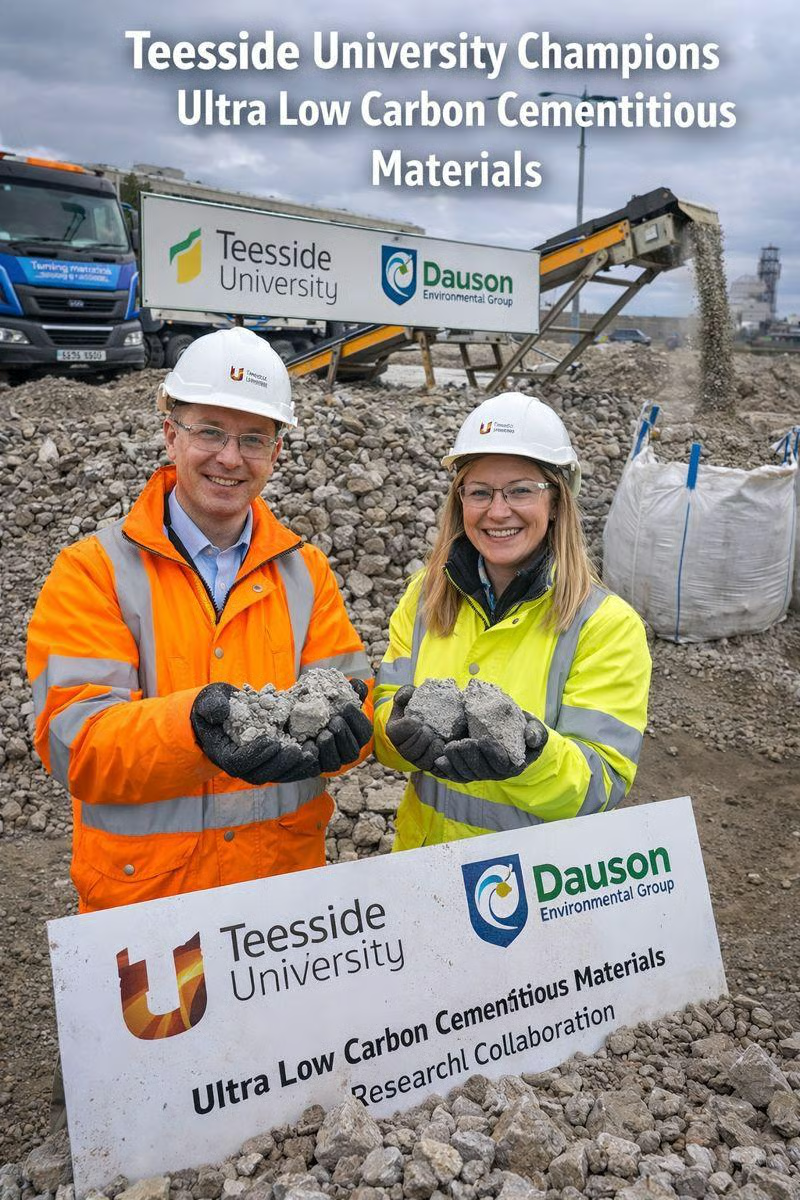 Image-R.E.News©
Le béton façonne nos villes, mais son empreinte pèse lourd sur la planète. Chaque année, des milliards de tonnes de ciment sont produites dans le monde, au prix de milliards de tonnes de CO₂. Face à cette équation devenue intenable, une alliance prend forme au nord-est de l’Angleterre, avec une ambition claire : transformer le problème en ressource.
Teesside University s’est associée au spécialiste gallois de la gestion des ressources, Dauson Environmental Group, pour repousser les limites de la construction bas carbone. Leur partenariat de transfert de connaissances explore une idée simple et radicale à la fois : convertir les déchets de construction en matériaux cimentaires de haute performance, capables de rivaliser avec le ciment traditionnel tout en réduisant drastiquement les émissions.
L’enjeu est colossal. Dans des régions comme le Pays de Galles et le sud-ouest de l’Angleterre, remplacer seulement 30 % du ciment utilisé créerait une demande annuelle de près de 300 000 tonnes de matériaux alternatifs. Plutôt que d’extraire toujours plus de ressources vierges, le projet mise sur ce qui est déjà là : les flux de déchets, trop souvent relégués à l’enfouissement.
Sous la direction scientifique de Teesside University, ces déchets sont appelés à devenir des ajouts cimentaires conformes aux normes européennes, prêts à s’intégrer dans les pratiques existantes sans compromis sur la qualité. Pour Dauson Environmental Group, pionnier de l’économie circulaire, c’est l’extension naturelle d’un modèle visant le recyclage total des matériaux entrants et la création de valeur à partir de ce qui était autrefois considéré comme un fardeau.
« Nous ne faisons pas que réduire l’impact environnemental, nous redéfinissons la valeur du déchet », résume le Dr Sina Rezaei Gomari, responsable du projet. En combinant recherche avancée, procédés sobres en énergie et vision industrielle, l’équipe pose les bases de solutions reproductibles bien au-delà du cadre régional.
Les bénéfices dépassent le seul bilan carbone. Des matériaux produits localement renforcent la résilience des chaînes d’approvisionnement, réduisent la dépendance aux marchés mondiaux du ciment et offrent aux industriels un avantage stratégique dans un contexte de réglementations climatiques de plus en plus strictes. Pour Dauson, ces innovations ouvrent aussi la porte à de nouveaux modèles économiques, notamment via les marchés du carbone.
Au cœur de cette démarche se trouve une vision circulaire de la construction : prolonger la vie des matériaux, limiter l’extraction, et bâtir des infrastructures plus durables dès leur conception. Les recherches menées s’inscrivent dans un mouvement mondial qui voit le béton de demain non plus comme un simple matériau, mais comme un levier essentiel de la transition écologique.
En unissant expertise académique et savoir-faire industriel, Teesside University et Dauson Environmental Group esquissent un futur où les routes, les ponts et les bâtiments reposent sur des fondations plus légères pour le climat. Un futur où les déchets d’hier deviennent les piliers d’un environnement bâti plus propre, plus résilient et résolument tourné vers demain.
NJC.© Info Teesside University Dauson Environmental Group
------------------------------------------------------------------------------------------------------------
15/01/26-English
When Waste Becomes Foundations: Teesside University at the Forefront of Low-Carbon Cement
Image-R.E.News©
Concrete shapes our cities, but its footprint weighs heavily on the planet. Every year, billions of tons of cement are produced worldwide, at the cost of billions of tons of CO₂. Faced with this unsustainable equation, an alliance is taking shape in northeast England, with a clear ambition: to transform the problem into a resource.
Teesside University has partnered with the Welsh resource management specialist, Dauson Environmental Group, to push the boundaries of low-carbon construction. Their knowledge transfer partnership explores a simple yet radical idea: converting construction waste into high-performance cementitious materials capable of competing with traditional cement while drastically reducing emissions.
The stakes are enormous. In regions like Wales and southwest England, replacing just 30% of the cement used would create an annual demand of nearly 300,000 tons of alternative materials. Rather than extracting ever more virgin resources, the project focuses on what is already available: waste streams, too often relegated to landfill.
Under the scientific guidance of Teesside University, this waste is destined to become cementitious additives that comply with European standards, ready to be integrated into existing practices without compromising quality. For Dauson Environmental Group, a pioneer in the circular economy, this is the natural extension of a model aimed at the total recycling of incoming materials and the creation of value from what was once considered a burden.
“We are not just reducing environmental impact, we are redefining the value of waste,” summarizes Dr. Sina Rezaei Gomari, the project manager. By combining advanced research, energy-efficient processes, and an industrial vision, the team is laying the groundwork for solutions that can be replicated far beyond the regional level.
The benefits extend beyond just carbon footprint reduction. Locally produced materials strengthen the resilience of supply chains, reduce dependence on global cement markets, and offer manufacturers a strategic advantage in the face of increasingly stringent climate regulations. For Dauson, these innovations also open the door to new economic models, particularly through carbon markets.
At the heart of this approach lies a circular vision of construction: extending the lifespan of materials, limiting extraction, and building more sustainable infrastructure from the design stage. The research conducted is part of a global movement that views the concrete of tomorrow not as a mere material, but as a key driver of the ecological transition.
By uniting academic expertise and industrial know-how, Teesside University and Dauson Environmental Group are shaping a future where roads, bridges, and buildings rest on lighter, more climate-friendly foundations. A future where yesterday's waste becomes the foundation of a cleaner, more resilient built environment, resolutely focused on tomorrow.
NJC.© Info Teesside University Dauson Environmental Group
----------------------------------------------------------------------------------------------------------------------
15/01/26-NL
Wanneer afval funderingen wordt: Teesside University loopt voorop in koolstofarm cement
Image-R.E.News©
Beton geeft vorm aan onze steden, maar de ecologische voetafdruk ervan is enorm. Wereldwijd worden er jaarlijks miljarden tonnen cement geproduceerd, met als gevolg miljarden tonnen CO₂-uitstoot. Geconfronteerd met deze onhoudbare situatie, ontstaat er in Noordoost-Engeland een samenwerkingsverband met een duidelijke ambitie: het probleem omzetten in een waardevolle grondstof.
Teesside University werkt samen met de Welshe specialist in grondstoffenbeheer, Dauson Environmental Group, om de grenzen van koolstofarm bouwen te verleggen. Hun kennisoverdrachtspartnerschap onderzoekt een eenvoudig maar radicaal idee: bouwafval omzetten in hoogwaardige cementachtige materialen die kunnen concurreren met traditioneel cement, terwijl de uitstoot drastisch wordt verminderd.
De belangen zijn enorm. In regio's zoals Wales en Zuidwest-Engeland zou de vervanging van slechts 30% van het gebruikte cement een jaarlijkse vraag creëren van bijna 300.000 ton alternatieve materialen. In plaats van steeds meer nieuwe grondstoffen te winnen, richt het project zich op wat al beschikbaar is: afvalstromen die maar al te vaak op de stortplaats belanden.
Onder wetenschappelijke begeleiding van Teesside University wordt dit afval verwerkt tot cementgebonden additieven die voldoen aan de Europese normen en die zonder kwaliteitsverlies in bestaande processen kunnen worden geïntegreerd. Voor Dauson Environmental Group, een pionier in de circulaire economie, is dit een logisch vervolg op een model dat gericht is op de volledige recycling van binnenkomende materialen en het creëren van waarde uit wat ooit als een last werd beschouwd.
"We verminderen niet alleen de milieubelasting, we herdefiniëren de waarde van afval", vat Dr. Sina Rezaei Gomari, projectmanager, samen. Door geavanceerd onderzoek, energiezuinige processen en een industriële visie te combineren, legt het team de basis voor oplossingen die ver buiten regionaal niveau kunnen worden toegepast.
De voordelen gaan verder dan alleen de vermindering van de CO2-uitstoot. Lokaal geproduceerde materialen versterken de veerkracht van toeleveringsketens, verminderen de afhankelijkheid van de wereldwijde cementmarkt en bieden fabrikanten een strategisch voordeel in het licht van steeds strengere klimaatregelgeving. Voor Dauson openen deze innovaties ook de deur naar nieuwe economische modellen, met name via koolstofmarkten.
De kern van deze aanpak is een circulaire visie op bouwen: de levensduur van materialen verlengen, de winning van grondstoffen beperken en vanaf de ontwerpfase duurzamere infrastructuur bouwen. Het uitgevoerde onderzoek maakt deel uit van een wereldwijde beweging die het beton van de toekomst niet ziet als louter een materiaal, maar als een belangrijke motor van de ecologische transitie.
Door academische expertise en industriële knowhow te combineren, geven Teesside University en Dauson Environmental Group vorm aan een toekomst waarin wegen, bruggen en gebouwen rusten op lichtere, klimaatvriendelijkere funderingen. Een toekomst waarin het afval van gisteren de basis vormt voor een schonere, veerkrachtigere gebouwde omgeving, resoluut gericht op de toekomst.
NJC.© Info Teesside University Dauson Environmental Group
-----------------------------------------------------------------------------------------------------------------
Date de dernière mise à jour : 14/01/2026