



VINCI Expands Canadian Infrastructure Footprint with Strategic Acquisition
 26/05/26-FR-English-NL-footer
VINCI renforce son emprise sur le marché canadien des infrastructures
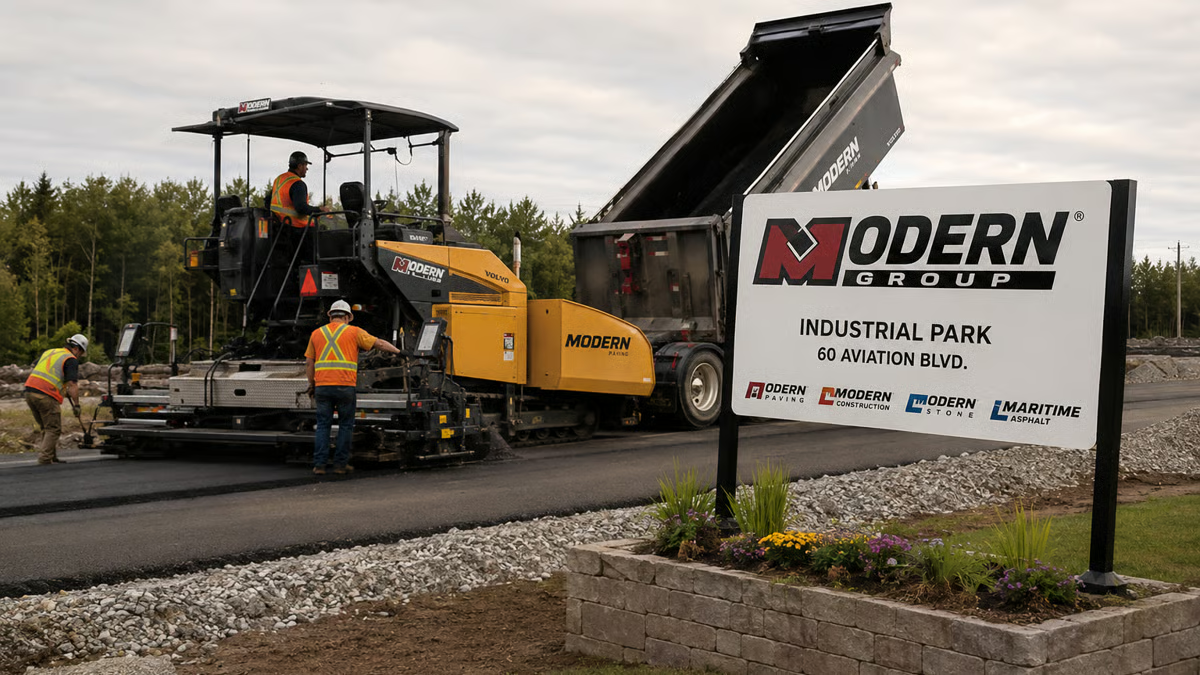 Image-R.E.News©
Dans un contexte où les infrastructures canadiennes attirent de plus en plus les géants internationaux du BTP, le groupe français VINCI poursuit méthodiquement son expansion en Amérique du Nord. Sa dernière opération stratégique : l’acquisition de Modern Group of Companies, acteur historique du génie civil et de la construction routière au Nouveau-Brunswick.
Fondée en 1945, l’entreprise canadienne s’est imposée au fil des décennies comme une référence dans la région du Grand Moncton, l’un des pôles urbains les plus dynamiques du Canada atlantique. Routes, ouvrages civils, production d’asphalte et exploitation de carrières : Modern Group maîtrise toute la chaîne de valeur de l’infrastructure routière. Une verticalisation devenue essentielle dans un secteur confronté à la volatilité des matériaux, aux tensions logistiques et à l’explosion des besoins de modernisation.
Avec un chiffre d’affaires estimé à près de 50 millions d’euros en 2025 et environ 160 employés, l’entreprise représente bien plus qu’une simple acquisition régionale. Pour VINCI Construction, il s’agit d’un levier stratégique destiné à consolider sa présence dans l’Est canadien, après le rachat de Northern Construction en 2022. Ensemble, ces implantations dessinent désormais un réseau solide couvrant le Nouveau-Brunswick et la Nouvelle-Écosse.
Le Canada atlantique, nouvelle frontière des infrastructures
Longtemps éclipsé par les grands marchés de l’Ontario ou du Québec, le Canada atlantique connaît aujourd’hui une profonde mutation économique. Croissance démographique, développement logistique, expansion portuaire et pression urbaine alimentent une demande soutenue en infrastructures publiques et en réseaux routiers. Moncton, notamment, s’impose progressivement comme un carrefour stratégique entre les provinces maritimes et le reste du pays.
Dans cette région où les distances sont vastes et les conditions climatiques particulièrement exigeantes, posséder ses propres carrières et centrales d’enrobés constitue un avantage décisif. Les groupes capables de contrôler leur approvisionnement en granulats et en asphalte gagnent en résilience opérationnelle, tout en sécurisant leurs coûts et leurs délais d’exécution.
Une stratégie mondiale de consolidation
L’opération illustre également une tendance de fond qui transforme actuellement l’industrie mondiale de la construction : les grands groupes internationaux ne cherchent plus seulement des mégaprojets emblématiques, mais des entreprises régionales solidement enracinées, capables d’assurer des revenus récurrents et une expertise locale difficile à reproduire.
Dans le secteur routier, cette proximité territoriale reste un atout majeur. Conditions climatiques, réglementation, caractéristiques des matériaux ou relations institutionnelles varient fortement d’une province à l’autre. Les entreprises historiques disposent ainsi d’un capital relationnel et technique particulièrement précieux.
La décennie de transition des infrastructures
Au-delà de la croissance, l’industrie entre désormais dans une phase de transformation technologique et environnementale. Asphaltes bas carbone, outils numériques de gestion de chantier, recyclage des matériaux et optimisation énergétique deviennent progressivement les nouveaux standards du secteur.
Pour des groupes internationaux comme VINCI, ces acquisitions offrent aussi l’opportunité de diffuser plus rapidement leurs innovations au sein des marchés régionaux. Car l’enjeu dépasse désormais la simple construction : il s’agit de bâtir des infrastructures plus durables, plus résilientes et adaptées aux défis climatiques à venir.
Dans cette nouvelle géographie mondiale du BTP, le Canada atlantique apparaît ainsi comme un territoire à fort potentiel. Et à travers l’intégration de Modern Group, VINCI confirme une ambition claire : s’imposer durablement comme l’un des acteurs majeurs des infrastructures nord-américaines.
NJC.© Info VINCI Group
-----------------------------------------------------------------------------------------------------------------
26/05/26-English
VINCI Strengthens its Grip on the Canadian Infrastructure Market
Image-R.E.News©
In a context where Canadian infrastructure is increasingly attracting international construction giants, the French group VINCI is methodically pursuing its expansion in North America. Its latest strategic move: the acquisition of Modern Group of Companies, a long-established player in civil engineering and road construction in New Brunswick.
Founded in 1945, the Canadian company has established itself over the decades as a leader in the Greater Moncton region, one of the most dynamic urban centers in Atlantic Canada. Roads, civil engineering works, asphalt production, and quarrying: Modern Group controls the entire road infrastructure value chain. This vertical integration has become essential in a sector facing volatile material prices, logistical challenges, and a surge in modernization needs.
With estimated revenues of nearly €50 million in 2025 and approximately 160 employees, the company represents much more than a simple regional acquisition. For VINCI Construction, this is a strategic lever designed to consolidate its presence in Eastern Canada, following the acquisition of Northern Construction in 2022. Together, these facilities now form a robust network covering New Brunswick and Nova Scotia.
Atlantic Canada: The New Infrastructure Frontier
Long overshadowed by the major markets of Ontario and Quebec, Atlantic Canada is now undergoing a profound economic transformation. Population growth, logistics development, port expansion, and urban pressure are fueling sustained demand for public infrastructure and road networks. Moncton, in particular, is gradually establishing itself as a strategic hub between the Maritime provinces and the rest of the country.
In this region, where distances are vast and climatic conditions particularly demanding, owning one's own quarries and asphalt plants is a decisive advantage. Groups able to control their supply of aggregates and asphalt gain operational resilience, while securing their costs and project timelines.
A Global Consolidation Strategy
This transaction also illustrates a fundamental trend currently transforming the global construction industry: major international groups are no longer just seeking iconic megaprojects, but rather firmly established regional companies capable of generating recurring revenue and providing local expertise that is difficult to replicate.
In the road sector, this territorial proximity remains a major asset. Climatic conditions, regulations, material characteristics, and institutional relationships vary considerably from one province to another. Established companies thus possess particularly valuable relational and technical capital.
The Decade of Infrastructure Transition
Beyond growth, the industry is now entering a phase of technological and environmental transformation. Low-carbon asphalt, digital site management tools, material recycling, and energy optimization are gradually becoming the new industry standards.
For international groups like VINCI, these acquisitions also offer the opportunity to more rapidly disseminate their innovations within regional markets. Because the challenge now goes beyond simple construction: it's about building more sustainable, more resilient infrastructure adapted to the climate challenges of the future.
In this new global landscape of the construction industry, Atlantic Canada is emerging as a territory with strong potential. And through the integration of Modern Group, VINCI confirms a clear ambition: to establish itself as a major player in North American infrastructure.
NJC.© Info VINCI Group
------------------------------------------------------------------------------------------------------------------
26/05/26-NL
VINCI versterkt zijn greep op de Canadese infrastructuurmarkt
Image-R.E.News©
In een context waarin de Canadese infrastructuur steeds meer internationale bouwreuzen aantrekt, zet de Franse groep VINCI methodisch haar expansie in Noord-Amerika voort. De nieuwste strategische stap: de overname van Modern Group of Companies, een gevestigde speler in de civiele techniek en wegenbouw in New Brunswick.
Het Canadese bedrijf, opgericht in 1945, heeft zich in de loop der decennia gevestigd als leider in de regio Groot-Moncton, een van de meest dynamische stedelijke centra in Atlantisch Canada. Wegen, civiele techniek, asfaltproductie en steengroeven: Modern Group beheerst de gehele waardeketen van de wegeninfrastructuur. Deze verticale integratie is essentieel geworden in een sector die te maken heeft met volatiele materiaalprijzen, logistieke uitdagingen en een toenemende behoefte aan modernisering.
Met een verwachte omzet van bijna € 50 miljoen in 2025 en circa 160 werknemers, vertegenwoordigt het bedrijf veel meer dan een simpele regionale overname. Voor VINCI Construction is dit een strategische zet om haar aanwezigheid in Oost-Canada te consolideren, na de overname van Northern Construction in 2022. Samen vormen deze faciliteiten nu een robuust netwerk dat New Brunswick en Nova Scotia bestrijkt.
Atlantisch Canada: De nieuwe infrastructuurgrens
Atlantisch Canada, lange tijd overschaduwd door de grote markten van Ontario en Quebec, ondergaat momenteel een ingrijpende economische transformatie. Bevolkingsgroei, logistieke ontwikkeling, havenuitbreiding en verstedelijking zorgen voor een aanhoudende vraag naar openbare infrastructuur en wegennetwerken. Moncton, in het bijzonder, ontwikkelt zich geleidelijk tot een strategisch knooppunt tussen de Maritieme provincies en de rest van het land.
In deze regio, waar de afstanden enorm zijn en de klimatologische omstandigheden bijzonder veeleisend, is het bezit van eigen steengroeven en asfaltcentrales een doorslaggevend voordeel. Groepen die hun eigen aanvoer van aggregaten en asfalt kunnen beheersen, verkrijgen operationele flexibiliteit en kunnen tegelijkertijd hun kosten en projectplanning waarborgen.
Een wereldwijde consolidatiestrategie
Deze transactie illustreert ook een fundamentele trend die de wereldwijde bouwsector momenteel transformeert: grote internationale concerns zijn niet langer alleen op zoek naar iconische megaprojecten, maar naar gevestigde regionale bedrijven die in staat zijn om terugkerende inkomsten te genereren en lokale expertise te bieden die moeilijk te repliceren is.
In de wegenbouwsector blijft deze territoriale nabijheid een belangrijke troef. Klimatologische omstandigheden, regelgeving, materiaaleigenschappen en institutionele relaties variëren aanzienlijk van provincie tot provincie. Gevestigde bedrijven beschikken daardoor over bijzonder waardevol relationeel en technisch kapitaal.
Het decennium van de infrastructuurtransitie
Naast groei betreedt de sector nu een fase van technologische en ecologische transformatie. Koolstofarm asfalt, digitale tools voor projectmanagement, materiaalrecycling en energieoptimalisatie worden geleidelijk aan de nieuwe industriestandaarden.
Voor internationale concerns zoals VINCI bieden deze overnames ook de mogelijkheid om hun innovaties sneller te verspreiden binnen regionale markten. Want de uitdaging gaat nu verder dan alleen bouwen: het gaat om het bouwen van duurzamere, veerkrachtigere infrastructuur die is aangepast aan de klimaatuitdagingen van de toekomst.
In dit nieuwe mondiale bouwlandschap ontpopt Atlantisch Canada zich als een regio met een groot potentieel. En door de integratie van Modern Group bevestigt VINCI een duidelijke ambitie: zich vestigen als een belangrijke speler in de Noord-Amerikaanse infrastructuur.
NJC.© Info VINCI Group
-----------------------------------------------------------------------------------------------------------------
Date de dernière mise à jour : 26/05/2026