



Volvo Construction Equipment and Hitachi Energy announce collaboration to accelerate zero-emission construction sites
 28/05/26-FR-Engish-NL-footer
Volvo Construction Equipment et Hitachi Energy unissent leurs forces pour accélérer les chantiers zéro émission
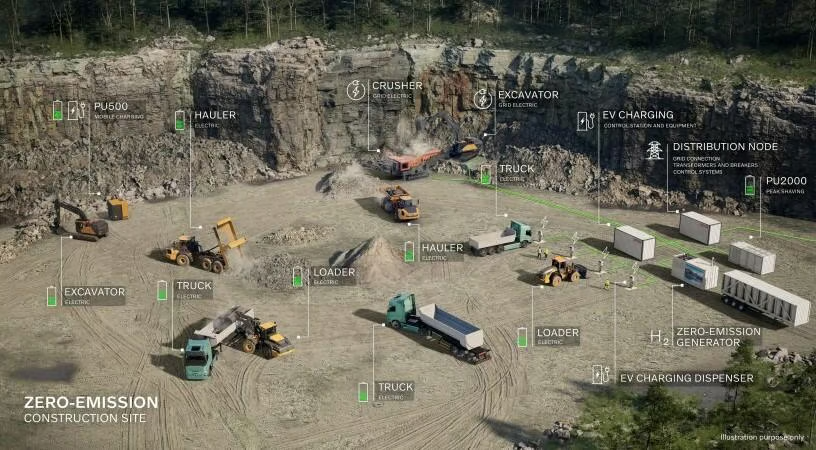 Zero-emission construction requires a coordinated ecosystem of solutions and seamless integration between machines, electrical infrastructure and energy management systems.
IMAGE SOURCE: Volvo CE/Hitachi Energy
Dans une annonce stratégique majeure pour l’industrie du BTP, Volvo Construction Equipment (Volvo CE) et Hitachi Energy ont signé un protocole d’accord (MoU) visant à développer des solutions intégrées capables d’accélérer le déploiement des chantiers zéro émission.
Cette collaboration associe l’expertise de Volvo CE dans les équipements de construction électrifiés à la maîtrise des systèmes énergétiques et de la gestion de puissance de Hitachi Energy. L’objectif : transformer l’électrification des chantiers en une solution concrète, opérationnelle et immédiatement déployable.
Une approche globale du chantier électrique
Au-delà de la simple fourniture de machines électriques, le partenariat adopte une vision systémique du chantier décarboné. Les deux groupes travailleront conjointement sur l’intégration complète des infrastructures nécessaires au fonctionnement des équipements électriques sur site :
alimentation énergétique propre ;
solutions de recharge ;
gestion intelligente de l’énergie ;
intégration opérationnelle des équipements ;
optimisation des flux énergétiques et des opérations terrain.
Cette approche répond directement aux nouvelles exigences du marché, où les entreprises de construction doivent conjuguer réduction des émissions, productivité accrue et conformité réglementaire.
Vers des solutions “plug-and-play”
Le cœur du partenariat repose sur le développement de solutions clés en main destinées à simplifier la transition énergétique des clients du secteur construction.
Les deux entreprises souhaitent créer des modèles économiques et des stratégies de commercialisation capables de rendre les sites zéro émission plus accessibles et plus simples à déployer. Les réflexions porteront également sur l’après-vente, le support technique et les services d’accompagnement afin d’assurer une transition fluide vers des opérations sans émissions.
L’ambition affichée est claire : passer d’une logique de technologies isolées à un véritable écosystème intégré, prêt à être exploité directement sur les chantiers.
La décarbonation devient une priorité stratégique
La pression croissante des investisseurs, des clients et des réglementations accélère la transformation du secteur de la construction. Les appels d’offres et procédures d’autorisation exigent désormais des performances environnementales de plus en plus strictes.
Dans ce contexte, l’électrification apparaît comme un levier essentiel pour réduire les émissions des chantiers, historiquement parmi les environnements industriels les plus difficiles à décarboner.
Melker Jernberg, Président de Volvo CE, souligne :
« Les partenariats stratégiques comme celui conclu avec Hitachi Energy sont essentiels pour accélérer la transition vers des chantiers zéro émission. En combinant nos expertises complémentaires et en proposant une solution complète et intégrée, nous donnons aux clients la confiance et la sérénité nécessaires pour adopter dès aujourd’hui des opérations sans émissions. »
De son côté, Niklas Persson, CEO Grid Integration chez Hitachi Energy, ajoute :
« L’électrification est un élément clé de la décarbonation, notamment dans des environnements complexes comme les chantiers de construction. Le succès dépend désormais moins des technologies individuelles que de l’intégration globale des systèmes et de la collaboration étroite entre partenaires partageant une même ambition. »
Une nouvelle génération de chantiers connectés
Si la première phase de coopération reste principalement orientée business et déploiement opérationnel, l’accord ouvre également la voie à des développements technologiques plus avancés à moyen terme.
Les deux partenaires envisagent déjà des fonctionnalités futures autour :
des machines connectées ;
de l’intégration numérique des équipements ;
des plateformes intelligentes de gestion énergétique ;
de nouveaux services digitaux et de maintenance prédictive.
Avec cette alliance, Volvo Construction Equipment et Hitachi Energy franchissent une étape importante vers l’industrialisation des chantiers zéro émission, un segment appelé à devenir central dans la transformation durable du secteur mondial de la construction.
NJC.© Info Volvo Construction Equipment
-----------------------------------------------------------------------------------------------------------------
28/05/26-English
Volvo Construction Equipment and Hitachi Energy Join Forces to Accelerate Zero-Emission Construction Sites
Zero-emission construction requires a coordinated ecosystem of solutions and seamless integration between machines, electrical infrastructure and energy management systems.
IMAGE SOURCE: Volvo CE/Hitachi Energy
In a major strategic announcement for the construction industry, Volvo Construction Equipment (Volvo CE) and Hitachi Energy have signed a Memorandum of Understanding (MoU) to develop integrated solutions capable of accelerating the deployment of zero-emission construction sites.
This collaboration combines Volvo CE's expertise in electrified construction equipment with Hitachi Energy's mastery of energy systems and power management. The goal: to transform construction site electrification into a concrete, operational, and immediately deployable solution.
A Comprehensive Approach to the Electric Construction Site
Beyond simply supplying electric machinery, the partnership adopts a systemic vision of the decarbonized construction site. The two groups will work together on the complete integration of the infrastructure necessary for the operation of electrical equipment on site:
clean energy supply;
charging solutions;
intelligent energy management;
operational integration of equipment;
optimization of energy flows and field operations.
This approach directly addresses new market demands, where construction companies must combine emissions reduction, increased productivity, and regulatory compliance.
Towards “plug-and-play” solutions
The core of the partnership lies in developing turnkey solutions designed to simplify the energy transition for clients in the construction sector.
The two companies aim to create business models and marketing strategies that make zero-emission sites more accessible and easier to deploy. Discussions will also focus on after-sales service, technical support, and assistance services to ensure a smooth transition to zero-emission operations.
The stated ambition is clear: to move from a focus on isolated technologies to a truly integrated ecosystem, ready to be deployed directly on construction sites.
Decarbonization becomes a strategic priority
Increasing pressure from investors, clients, and regulations is accelerating the transformation of the construction sector. Tenders and permitting procedures now demand increasingly stringent environmental performance standards.
In this context, electrification appears as a key lever for reducing emissions from construction sites, historically among the most difficult industrial environments to decarbonize.
Melker Jernberg, President of Volvo CE, emphasizes:
“Strategic partnerships like the one with Hitachi Energy are essential for accelerating the transition to zero-emission construction sites. By combining our complementary expertise and offering a comprehensive, integrated solution, we give customers the confidence and peace of mind needed to adopt emission-free operations today.”
Niklas Persson, CEO of Grid Integration at Hitachi Energy, adds:
“Electrification is a key element of decarbonization, especially in complex environments like construction sites. Success now depends less on individual technologies than on the overall integration of systems and close collaboration between partners sharing the same ambition.”
A new generation of connected construction sites
While the initial phase of cooperation remains primarily focused on business and operational deployment, the agreement also paves the way for more advanced technological developments in the medium term.
The two partners are already considering future functionalities related to:
connected machines;
digital equipment integration;
intelligent energy management platforms;
new digital services and predictive maintenance.
With this alliance, Volvo Construction Equipment and Hitachi Energy are taking a significant step toward the industrialization of zero-emission construction sites, a segment poised to become central to the sustainable transformation of the global construction sector.
NJC.© Info Volvo Construction Equipment
-----------------------------------------------------------------------------------------------------------------
28/05/26-NL
Volvo Construction Equipment en Hitachi Energy bundelen hun krachten voor versnelde implementatie van emissievrije bouwplaatsen
Zero-emission construction requires a coordinated ecosystem of solutions and seamless integration between machines, electrical infrastructure and energy management systems.
IMAGE SOURCE: Volvo CE/Hitachi Energy
In een belangrijke strategische aankondiging voor de bouwsector hebben Volvo Construction Equipment (Volvo CE) en Hitachi Energy een Memorandum of Understanding (MoU) getekend om geïntegreerde oplossingen te ontwikkelen die de implementatie van emissievrije bouwplaatsen kunnen versnellen.
Deze samenwerking combineert de expertise van Volvo CE op het gebied van elektrische bouwmachines met de kennis van Hitachi Energy over energiesystemen en energiebeheer. Het doel: de elektrificatie van bouwplaatsen omzetten in een concrete, operationele en direct inzetbare oplossing.
Een integrale aanpak voor de elektrische bouwplaats
Naast de levering van elektrische machines hanteert het partnerschap een systemische visie op de koolstofarme bouwplaats. De twee bedrijven zullen samenwerken aan de volledige integratie van de infrastructuur die nodig is voor de werking van elektrische apparatuur op de bouwplaats:
schone energievoorziening;
laadoplossingen;
intelligent energiebeheer;
operationele integratie van apparatuur;
optimalisatie van energiestromen en werkzaamheden op locatie.
Deze aanpak speelt direct in op de nieuwe marktvraag, waarbij bouwbedrijven emissiereductie, verhoogde productiviteit en naleving van de regelgeving moeten combineren.
Op weg naar "plug-and-play"-oplossingen
De kern van de samenwerking ligt in de ontwikkeling van kant-en-klare oplossingen die de energietransitie voor klanten in de bouwsector vereenvoudigen.
De twee bedrijven streven ernaar bedrijfsmodellen en marketingstrategieën te creëren die emissievrije locaties toegankelijker en gemakkelijker te implementeren maken. Er zal ook worden gesproken over service na verkoop, technische ondersteuning en assistentiediensten om een soepele overgang naar emissievrije bedrijfsvoering te garanderen.
De ambitie is duidelijk: van een focus op geïsoleerde technologieën naar een echt geïntegreerd ecosysteem, dat direct op bouwlocaties kan worden ingezet.
Decarbonisatie wordt een strategische prioriteit
De toenemende druk van investeerders, klanten en regelgeving versnelt de transformatie van de bouwsector. Aanbestedingen en vergunningsprocedures vereisen steeds strengere milieunormen.
In deze context blijkt elektrificatie een belangrijke hefboom te zijn voor het verminderen van emissies op bouwlocaties, die historisch gezien tot de moeilijkst te decarboniseren industriële omgevingen behoren.
Melker Jernberg, President van Volvo CE, benadrukt:
“Strategische partnerschappen zoals die met Hitachi Energy zijn essentieel voor het versnellen van de transitie naar emissievrije bouwplaatsen. Door onze complementaire expertise te combineren en een complete, geïntegreerde oplossing te bieden, geven we klanten het vertrouwen en de gemoedsrust die nodig zijn om vandaag nog emissievrij te werken.”
Niklas Persson, CEO van Grid Integration bij Hitachi Energy, voegt hieraan toe:
“Elektrificatie is een sleutelcomponent van de decarbonisatie, met name in complexe omgevingen zoals bouwplaatsen. Succes hangt nu minder af van individuele technologieën dan van de algehele integratie van systemen en nauwe samenwerking tussen partners met dezelfde ambitie.”
Een nieuwe generatie verbonden bouwplaatsen
Hoewel de eerste fase van de samenwerking zich voornamelijk richt op de zakelijke en operationele implementatie, effent de overeenkomst ook de weg voor meer geavanceerde technologische ontwikkelingen op middellange termijn.
De twee partners overwegen nu al toekomstige functionaliteiten met betrekking tot:
verbonden machines;
digitale apparatuurintegratie;
intelligente energiemanagementplatformen;
nieuwe digitale diensten en voorspellend onderhoud.
Met deze alliantie zetten Volvo Construction Equipment en Hitachi Energy een belangrijke stap richting de industrialisatie van emissievrije bouwplaatsen, een segment dat een centrale rol zal gaan spelen in de duurzame transformatie van de wereldwijde bouwsector.
NJC.© Info Volvo Construction Equipment
------------------------------------------------------------------------------------------------------------
Date de dernière mise à jour : 27/05/2026